Reason for Hope: A Spiritual Journey
A modern alternative to SparkNotes and CliffsNotes, SuperSummary offers high-quality Study Guides with detailed chapter summaries and analysis of major themes, characters, and more.
Summaries & Analyses
Quizzes
NEWReading Tools
Games
Summary and Study Guide
Overview
Reason for Hope: A Spiritual Journey (1999) is a piece of autobiographical and environmental writing by Jane Goodall. The text traces episodes from her personal life while delving into more philosophical and spiritual subject matter. Goodall’s anecdotes from her childhood through her late adulthood fuel her thematic explorations of Reconciling Faith, Morality, and Scientific Discovery, Overcoming Grief, Fear, and Despair, and Compassion and Hope as Resistance to Violence.
Goodall (1934-2025) was known for her anthropological, ethnological, and humanitarian work. The years she spent studying chimpanzees in Tanzania’s Gombe National Park unearthed groundbreaking discoveries about human ancestry and human evolution. Throughout her career, Goodall also published titles including The Chimpanzees of Gombe: Patterns of Behavior, Innocent Killers, Through a Window, and Visions of Caliban: On Chimpanzees and People, among others.
This guide uses the 2025 Grand Central Publishing paperback edition.
Content Warning: Both the source text and this guide include depictions of graphic violence, physical injury, chronic illness, animal cruelty, and death. These topics are often discussed in association with World War II, the Holocaust, and 9/11.
Summary
Goodall begins her story with her birth and childhood. She was born in 1934 to Mort and Vanne Goodall. Although she briefly lived in France, Goodall primarily grew up with her parents, her younger sister Judy, and her maternal grandmother Danny at her grandmother’s English manor, the Birches. From a young age, Goodall exhibited a deep love for animals and nature. She spent all of her free time exploring out of doors, climbing trees, or communing with animals. She describes numerous such incidents, and reflects on how these experiences shaped her understanding of God.
Goodall grew up in a Christian home. Although her family never forced her to believe in God, Goodall did have a childhood love for Jesus and took comfort in reading the Bible. It was not until the end of World War II when she learned about the Holocaust that she began to question her faith. Eventually, her crush on the new pastor, Reverend Trevor, compelled her to return to her childhood faith.
After Goodall graduated, she pursued a secretarial degree in London. She muses on how innocent and exploratory this time was for her. However, Goodall wanted more from life. She was thrilled when an old school friend invited her to her family’s farm in Kenya after she received her secretarial certificate—spurring the fulfillment of Goodall’s lifelong dream to travel to Africa.
Goodall traveled to Africa for the first time. She spent a few weeks on her friend’s farm and then found a job for a British company with her uncle’s help. Through this job, she eventually made a connection with Dr. Louis Leakey, an anthropologist and paleontologist at a local museum. The two hit it off immediately and Leakey soon invited Goodall on an anthropological dig. Not long after the dig, Leakey asked Goodall to spearhead his chimpanzee study in Tanzania. Goodall enthusiastically accepted.
Goodall traveled to Gombe National Park to study chimpanzees, accompanied by her mother, whom she’d chosen as her traveling companion. Overcome by the beauty of the forest, Goodall threw herself into her work. Retrospectively, Goodall remarks on how much this time would change her. Back then, however, Goodall was unaware of the transformative effects of the forest and chimps.
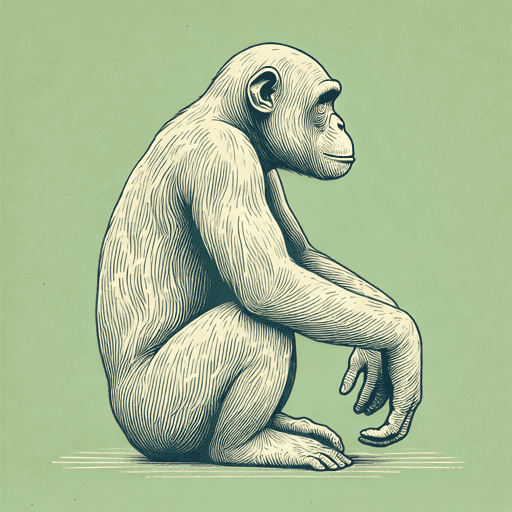
Goodall made groundbreaking discoveries during her time in Gombe. Most notably, Goodall was the first person to observe chimps using tools. Over the years, her findings would become more and more surprising. For example, Goodall was shocked when the chimps began to show inexplicable violence towards each other. One male chimp repeatedly assaulted the other chimps. One mother chimp repeatedly attacked and ate other mother chimps’ babies. Goodall published these findings, much to the chagrin of the larger scientific community. Soon, scientists and theorists were using Goodall’s observations to argue that humans were innately evil. Goodall did her best to ignore this controversy and focus on her work.
As the years passed, Goodall faced more hardship and sorrow herself. She married Hugo van Lawick, with whom she had her son. They were happy for a time, but their relationship soon devolved into fighting. After its end, Goodall despaired. She lost her sense of balance and purpose, especially since she was in England during this time. When she returned to Gombe and rekindled her friendship with Derek Bryceson, Tanzania’s director of parks, she found hope. She and Derek fell in love and got married shortly after a near-death experience.
Goodall continued researching in Gombe, but also taught at Stanford University and founded the Jane Goodall Institute. She began touring and lecturing around the world. Oftentimes she lamented how little time she could spend in the forest, but her touring work broadened her understanding of environmental devastation.
After Derek’s death in 1980, Goodall returned to Gombe to heal. She remarks on how transformative and ineffable her reconnection with the forest was. She eventually let go of her grief for Derek and began to move on. In the months and years following, she became more active in conservationist and humanitarian realms. Her personal spirituality began to evolve, too. She now understood that there was a God, but came to believe that this divine figure was the same in all religions and originated from nature. She also believed that humans had higher intellects than other animals and were thus responsible for caring for wildlife and the natural world.
In conclusion, Goodall urges her reader to reconnect with the natural world. She argues that a relationship with the environment leads to empathy and compassion. Love in turn can combat violence.
In Goodall’s 2003 epilogue, Goodall reflects on notions of hope and peace in the context of a post-9/11 society. She describes her experience of 9/11 and the talks she gave in the aftermath of the tragedy. She holds that her theories of hope still hold, and that humans cannot give up in the face of upheaval.

Get in-depth, chapter-by-chapter summaries and analysis from our literary experts.
- Grasp challenging concepts with clear, comprehensive explanations
- Revisit key plot points and ideas without rereading the book
- Share impressive insights in classes and book clubs