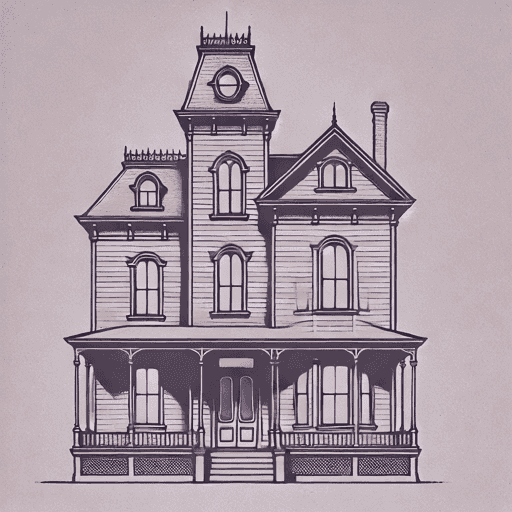
Remain: A Supernatural Love Story
58 pages • 1-hour read
Nicholas Sparks, M. Night ShyamalanRemain: A Supernatural Love Story
A modern alternative to SparkNotes and CliffsNotes, SuperSummary offers high-quality Study Guides with detailed chapter summaries and analysis of major themes, characters, and more.
Background
Content Warning: This section of the guide includes discussion of death, mental illness, and suicidal ideation.
Genre Context: A Paranormal Romance Shaped by Two Masters
As the novel’s subtitle, “A Supernatural Love Story,” suggests, Remain is a work of paranormal romance, a subgenre of both romantic fiction and speculative fiction. The latter contains elements that defy or stretch scientific explanation. Paranormal romance, which merges a love story with supernatural, fantasy, or science-fiction elements, saw a massive surge in popularity in the early 2000s with series like Stephenie Meyer’s Twilight saga, which explores human-vampire romance; Charlaine Harris’s The Southern Vampire Mysteries series, which follows a telepathic waitress who becomes involved with a vampire; and Jennifer L. Armentrout’s Blood and Ash series, which interrogates love as an aspect of self-exploration and individualism in resisting a government’s societal control through religion. These stories often use supernatural circumstances to explore human themes such as mortality, destiny, and the power of love to overcome insurmountable barriers.
Remain fits this mold because it centers on the romance between Tate, a grieving architect, and Wren, the ghost bound to the house he’s staying in. Their connection explores whether love can transcend even the finality of death. The novel’s unique tone arises from the collaboration between Sparks and Shyamalan. Sparks is one of the world’s most recognized romance novelists, known for works like The Notebook, which feature poignant, emotionally charged relationships often marked by tragedy and enduring connection. Conversely, Shyamalan is a filmmaker celebrated for supernatural thrillers like The Sixth Sense, which are defined by suspense, plot twists, and eerie, unexplained phenomena. In Remain, Sparks’s influence is visible in the tender, character-driven development of Tate and Wren’s bond, while Shyamalan’s hand is apparent in the novel’s suspenseful elements, including Tate’s unsettling visions, the mystery surrounding Wren’s death, and her nighttime manifestations, which build toward a dramatic final revelation.
Psychological Context: Grief, Trauma, and Mental Health
Remain is deeply rooted in the psychological effects of grief and trauma. The novel introduces the protagonist, Tate Donovan, shortly after his four-month stay in a psychiatric hospital for “paralyzing depression” following the death of his sister, Sylvia. To realistically ground his experience, the novel references specific therapeutic modalities. Tate explains that his treatment emphasized dialectical behavior therapy (DBT), a real-world psychotherapy approach developed by Dr. Marsha Linehan. According to the American Psychological Association, DBT helps individuals develop the skills to manage painful emotions and navigate crises, particularly in patients who are considering self-harm. Through a combination of structured individual and group therapy, telephone coaching, and a therapist consultation team, DBT involves modular training in “‘change skills’ (interpersonal effectiveness and emotion regulation) and ‘acceptance skills’ (mindfulness and distress tolerance)” (Lineman, Marsha M., PhD, ABPP, and Chelsea R. Wilks, MS. “The Course and Evolution of Dialectical Behavior Therapy.” The American Journal of Psychotherapy, Apr. 2015). Tate’s explanation that DBT “focuses on the importance of behaviors as opposed to feelings” reflects one of its core principles (11).
Furthermore, neurologists initially diagnose Tate’s mysterious “peripheral oscillopsia,” or flickering visions, as a “symptom of stress associated with the loss of his sister” (21). This detail mirrors real-world cases in which significant psychological distress, such as complicated grief (a clinical condition characterized by persistent and debilitating sorrow), can manifest in visual or perceptual disturbances:
Oscillopsia is the sensation of illusory movement within the visual percept leading to a degradation of visual functioning and quality of life. The constellation of conditions manifesting with oscillopsia marks the overlap between ophthalmology and otorhinolaryngology. (Kamath, Archith, Wen Chun Huang, and Stephen A. Madill. “How Should I Approach and Manage Adult-Onset Oscillopsia?” Eye, Aug. 2024).
Tate’s journey thus begins with fundamental uncertainty about whether his encounters with Wren are genuine supernatural events or hallucinations stemming from trauma. This psychological framework provides a rational lens for the unfolding paranormal events and frames Tate’s connection with Wren, a spirit who likewise experiences unresolved trauma, as a journey of mutual healing.

Unlock all 58 pages of this Study Guide
Get in-depth, chapter-by-chapter summaries and analysis from our literary experts.
- Grasp challenging concepts with clear, comprehensive explanations
- Revisit key plot points and ideas without rereading the book
- Share impressive insights in classes and book clubs