Remain: A Supernatural Love Story
58 pages • 1-hour read
Nicholas Sparks, M. Night ShyamalanRemain: A Supernatural Love Story
A modern alternative to SparkNotes and CliffsNotes, SuperSummary offers high-quality Study Guides with detailed chapter summaries and analysis of major themes, characters, and more.
Chapter 25-EpilogueChapter Summaries & Analyses
Content Warning: This section of the guide includes discussion of death, graphic violence, substance use, and mental illness.
Chapter 25 Summary
At a diner the day after speaking with Tessa, Tate and Oscar rehash the conversation, struggling to separate truth from lies. Tate reluctantly considers that Wren may have omitted her history with Griffin and Sandra. Oscar offers to confirm with their waitress that Griffin and Sandra were engaged, but Tate declines, already suspecting that it’s true. He speculates that Griffin might have pursued Wren after her grandmother’s death, exploiting her vulnerability.
Back at the house, Tate is drawn to the bookshelves and finds a highlighted Emily Dickinson poem about telling the truth slantwise, which mirrors his confusing investigation. On the opposite page, a hopeful marginal note annotates another Dickinson poem, urging belief.
Outside, Tate approaches Reece, who is loading a wheelbarrow. Reece correctly guesses that Tate wants to discuss Wren, saying Louise told him about the ghost claims. He insists that there’s no ghost, citing the 40 hours he spent refinishing the floors without incident, and accuses Tate of fabricating a story to devalue the property. When Tate asks about Wren’s death, Reece explains that she wasn’t found until Monday because festival guests used the house minimally. He says Wren seemed like a good kid, but he was too busy to know her well. He confirms that he saw Nash and Griffin at the house, scowling at the mention of Griffin. Reece didn’t see Wren on her final day; he was cutting firewood. When Reece asks what Wren’s spirit is waiting for, Tate, recalling the poem, answers: tomorrow.
Chapter 26 Summary
On Friday morning (the first day of the festival and the anniversary of Wren’s death), Tate runs, eats breakfast, and does laundry. Unable to concentrate on work, he walks about the property, hoping to entice Wren to appear. When he sees Louise and Reece leaving, dressed up, he retrieves Wren’s recipe box from the shed and drives to town for ingredients to make coq au vin.
In the early afternoon, he hears Wren’s voice from the parlor. She appears, dressed for the festival, wearing a heart-shaped locket that belonged to her grandmother. She says she feels less confused and plans to see Monkey Tears at 7:30 am before returning for a warm bath. Tate, knowing what’s coming, feels a knot in his stomach. Over wine in the parlor, Wren discusses her plans to sell the house and asks if she can call him for financial advice. She suggests that they play the game Two Truths and a Lie; they play for 20 minutes, and she guesses correctly every time.
Back in the kitchen, Wren fiddles with her locket and says their relationship isn’t a good idea, though neither wants to stop. For the first time, Tate tells Wren he loves her. She invites him upstairs. With the curtains drawn, they undress in turns without touching, yet both feel it as if they have. She says she loves him, too. They lie together until sunset, when her form begins to fade. Tate begs her to tell him how to help. Her parting words are that all he needs to do is come back to her, and she vanishes.
Downstairs, Tate finds Paulie pacing anxiously, and the power is out. He decides to reset the breaker himself. As he opens the cellar door, Paulie snarls. He hears footsteps behind him, feels a hard shove, and falls down the stairs, losing consciousness.
Chapter 27 Summary
When Tate regains consciousness, he sees a blurry figure at the top of the cellar stairs. The figure descends and attacks him with a heavy object, striking him repeatedly as he crawls in the dark. He hurls laundry detergent and bleach at his assailant, to little effect, and then swings a heavy iron wildly, landing blows that make the attacker yelp, drop the weapon, and flee. Tate staggers after the attacker but sees only a figure disappearing into the woods.
In severe pain and without his phone, he hobbles to the cottage, borrows Louise’s flip phone to call Oscar, and drives to the festival, where Oscar picks him up. They conclude that the attacker must still be nearby and decide to verify alibis. At the festival office, a frantic staffer tells them that Griffin has been at Stage Five since five o’clock, dealing with a blown generator, which provides him with an alibi.
Tate tricks Nash out of the crowd by calling his cell and falsely reporting damage to his Prius. When Nash and a burly friend rush to the parking lot, the friend confirms they have been at the festival since before five, with witnesses.
Tate sees a familiar flickering light pulling him toward the road away from the festival, and a fainter one over the festival itself. Remembering Wren’s last words, he realizes he must return to the house. He tells Oscar he must go alone so Wren will appear, instructing Oscar to stay and find Dax and Tessa.
Chapter 28 Summary
Tate arrives at the dark house at 8:30 pm, the exact time Wren returned from the festival two years ago. He lights a candle, searches the ground floor, and then struggles upstairs. He moves a bench into the hallway outside the bathroom and whispers for Wren to tell him how to help. The bathroom door opens, and the pipes squeal as water begins to fill the tub.
Inside, he sees a vision of Wren’s decomposing body in the tub as it was when discovered. He notes that the ornate faucet protrudes too low for someone to bathe with a head at that end, and that a towel is missing, though clothes, sandals, and a wineglass sit near the sink. The vision shifts: The corpse vanishes, the tub is dry, and Wren enters, alive and humming. She starts her bath, locks the door, makes faces in the mirror, and undresses. She removes her earrings but leaves the locket on before wrapping herself in a towel.
As she sits on the tub’s edge, the doorknob turns. She calls out, and the rattling stops. When she turns off the faucet, the door bursts open. A figure in a smiling emoji mask rushes in and attacks, smashing her head against the faucet with a sickening crunch before dumping her limp body into the tub. The vision flickers: Now two figures stand over the tub. The larger figure pushes Wren’s head underwater; the second joins in, drowning her. After a long time, the smaller figure reaches into the tub and manipulates something on Wren’s body before both figures and the towel vanish.
Tate sees Wren’s body moments after her death, a cloud of blood in the water. He realizes that Wren was wearing her locket when she was attacked, but now it’s missing. He connects the smaller figure’s action with the missing locket and realizes that he has seen that locket on someone else. As he staggers out, he hears footsteps, turns to see a familiar face, and is struck on the head, losing consciousness.
Chapter 29 Summary
Wren is in the bathroom, confused, her memory of the evening hazy. She feels an uncanny presence. In a disorienting sequence, her wine and clothes reappear, and she finds herself wrapped in a towel. Compelled to look in the tub, she sees her own dead, swollen body and recoils in shock. She feels a phantom head wound before the vision shifts again, and she’s suddenly fully dressed. As she stares at the corpse, memories of her violent murder flood back. She realizes that she’s dead and, looking in the mirror, is unsurprised to see no reflection.
No longer afraid, she sits on the tub’s edge, grieving the life and future with Tate that she lost. She understands that it’s time for the fragmented parts of her spirit to reunite and move on. Her body vanishes.
At the top of the stairs, she smells smoke and realizes that the house is on fire. Seeing Tate’s car, she panics. In the kitchen, she’s horrified to see Reece spreading fire, using a flaming pan and cognac. She tries to stop him, but her hands pass through him. She frantically searches the smoky parlor and finds Tate unconscious, having been dragged there by his attacker. Headlights appear as Oscar arrives in his SUV. Reece kicks Tate to ensure that he’s still unconscious and then flees as the fire explodes. Wren gets Oscar’s attention from a window, making him understand that Tate is trapped inside. Galvanized, Oscar uses a child’s car seat to break the window, but Louise deliberately runs him down with the truck, hitting him twice.
Wren crouches over Tate as flames consume the house and the heat intensifies. Desperate, she tells him she loves him and urges him to wake up if he loves her. Tate coughs, and his eyes flutter open.
Chapter 30 Summary
Tate awakens to Wren screaming at him to get up because the house is on fire. She tells him that he must save Oscar, who was hit by Reece and Louise’s truck. Spurred to action, Tate struggles to his feet. He reaches the front door as Paulie dashes out. The parlor explodes behind him, throwing him down the porch steps. He finds Oscar lying motionless in the grass.
Reece appears, holding a crowbar, and advances on Tate. As Reece raises the crowbar to strike, the house explodes from within. A large piece of oak debris from the explosion strikes Reece, killing him instantly. Tate returns to Oscar and drags him away from the spreading fire until he collapses from exhaustion. Oscar moans, revealing that he’s alive.
Tate sees Louise wailing over Reece’s body. Her gaze turns to Tate, and, with murderous rage, she picks up the crowbar, raises it, and runs toward him. Two police officers arrive, guns drawn, and order her to drop the weapon. Her rage fades; she drops the crowbar and sinks to her knees, saying it wasn’t supposed to happen like this.
Chapter 31 Summary
Tate has a vivid dream of walking on a beach with Wren, riding a Ferris wheel, and dancing with her. For the first time, he can physically feel her. She asks him to come say goodbye before kissing him. He awakens in a hospital with a severe concussion and knee injury.
Oscar, whose arm is in a cast, visits Tate and reports that Paulie is safe with Lorena. Oscar explains he went to the house that night because he found Dax and Tessa at the festival, confirming their alibis. Chief Dugan is certain that the fire was arson and suspects that Reece started it. Oscar says Louise’s bail is astronomical, and the prosecutor plans to charge her with attempted murder, though the admissible evidence is likely insufficient to prove that she and Reece murdered Wren. He explains the motive: Attorney Aldrich revealed that due to a poorly drafted property trust, Reece, as Wren’s only surviving blood relative, stood to inherit millions if she died before distributing the trust. Oscar confirms that he saw Wren in the window that night, an experience that made him question existence itself.
After being discharged from the hospital, Tate takes an Uber to the property ruins. Amid the charred remains, he calls out to Wren. She appears, looking peaceful in the white dress from his dream. She confirms that she now knows what Reece and Louise did. Tate begs her to stay, but she says she can’t. They profess their love. She urges him to live fully, love deeply, and honor his gifts. She reveals that she met Sylvia in the afterlife and that Sylvia watches over Tate and Mike. He asks why he could see her; she replies that it could only have been him. Tate understands that they were both trapped by their pasts and that their love freed them. He asks if she caused the house to explode to save him; she deflects, asking what he believes. She fades away. As Tate gets into his car, the last section of the house collapses.
Epilogue Summary
Eight months later, Tate watches snow fall on Central Park from his New York City apartment, which he shares with Paulie. The architectural plans for Oscar and Lorena’s new house are finished. Tate’s knee has recovered after months of physical therapy; he’s running again and has taken up yoga. He avoids Heatherington, which holds too many memories. He has visited Wren’s property twice: The debris is cleared, but he no longer feels her presence. He retrieved her family photos and keeps them in an album.
Oscar informs him that Louise pleaded guilty to attempted murder, forestalling further investigation into her role in Wren’s death. Tate has reconnected with friends, and he meets with Mike, his brother-in-law, monthly, having told him the whole story. He’s working again but maintaining a better work-life balance, taking cooking and juggling lessons. He has weaned himself off antidepressants and is no longer in therapy. In addition, he has started dating and is seeing a woman named Rachel, remaining open to loving again.
For the past three days, he has observed the spirit of a young boy in Central Park. He notices that the boy leaves no footprints in the snow and sees a familiar peripheral flicker. Remembering Wren’s advice to honor his gifts, he accepts his ability to see spirits. He decides that he must help the child. He dresses warmly and heads outside, passing his doorman, Adam, who warns him about the icy sidewalks.
Chapter 25-Epilogue Analysis
In the novel’s climax, the point-of-view transition from Tate’s first-person limited perspective to Wren’s omniscient one in Chapter 29 and back is a crucial mechanism for resolving the novel’s central conflicts. By briefly inhabiting Wren’s consciousness, the narrative provides an objective account of the arson and the attacks on Tate and Oscar, events that Tate couldn’t have witnessed. More significantly, this shift grants Wren ultimate agency. No longer a passive victim or an enigmatic guide, she becomes an active protector, using her spiritual energy to wake Tate and save his life. This act is intrinsically linked to the resolution of her own internal trauma: Realizing the full truth of her murder allows the fragmented parts of her spirit to reunite, while saving Tate provides the final catharsis necessary for her to move on. The structural choice validates the supernatural elements as an objective reality within the novel’s world, confirming Wren’s experience as authentic rather than a manifestation of Tate’s grief.
The final chapters fully realize The Deception Beneath Small-Town Charm as a theme by revealing that Wren’s murderers were Reece and Louise, the seemingly unassuming caretakers. Their unmasking subverts the archetype of the harmless, hardworking rural resident, exposing a cold, avaricious core beneath their mundane facade. The novel deliberately misdirects suspicion toward figures like Griffin, Nash, and Dax, whose potential motives (jealousy, betrayal, and obsession) are more melodramatic and align with conventional thriller tropes. The ultimate motive, however, is simple greed: Reece stood to inherit millions from the property trust. This revelation suggests that the most intense evil isn’t born of passionate chaos but of calculated, ordinary wickedness hiding in plain sight. Louise’s final, rage-filled attack on Tate contrasts with her earlier portrayal as a gentle, superstitious woman, exemplifying this theme by demonstrating how the placid surface of small-town life can conceal deep and violent currents.
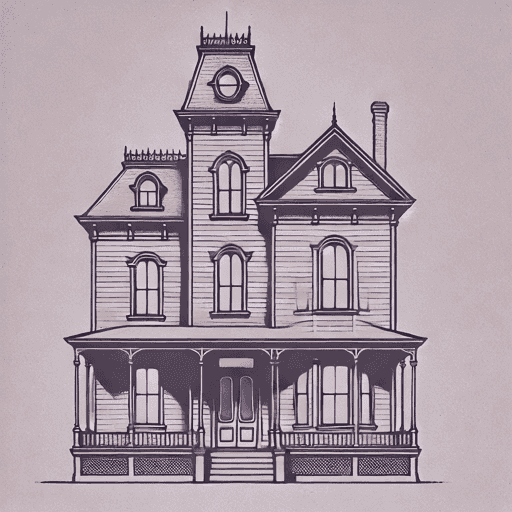
The destruction of the house on the bluff is a symbolic event, representing both violent concealment and radical purification. For the killers, the arson is a desperate attempt to erase evidence, physically manifesting their desire to bury the truth. In a broader sense, however, the fire becomes a crucible that purges the site of its traumatic residue. The house is the physical and psychic anchor for Wren’s spirit, a container for the memories of her life, her murder, and her spectral limbo. Its violent annihilation is therefore the necessary catalyst for her spiritual release. The house’s final, total collapse after Wren’s spirit departs confirms its role as her earthly tether; after she’s gone, the structure gives way until “nothing remained at all” (324).
These concluding chapters bring the intertwined character arcs of Tate and Wren to mutual salvation, thematically illustrating The Redemptive Power of Love and Vulnerability. Tate arrived in Heatherington a man “held prisoner by [his] past” (323), emotionally paralyzed by his sister’s death. Similarly, Wren’s spirit was imprisoned by the unresolved trauma of her murder. Their relationship, founded on a radical vulnerability that allows them to share their deepest griefs, becomes the engine of their reciprocal healing. Tate’s investigation provides Wren with justice and affirms the value of her life beyond its violent end, while her love pulls him from his isolation and saves him from the fire. Their intimate encounter in Chapter 26, which is entirely nonphysical, underscores the purely emotional and spiritual nature of their bond, locating its power beyond the corporeal realm. Before they part, she urges him to “honor the gifts you’ve been given” (322), signaling that his transformation is complete. Tate accepts his psychic ability not as a symptom of trauma but as a tool for connection and purpose in reengaging with life and extending compassion to others.
The literary allusion to Emily Dickinson in Chapter 25 provides a framework for understanding the novel’s narrative methodology and its use of the flickering/fading motif. The highlighted poem, which advises readers to “Tell all the Truth, but tell it slant” (258), is a commentary on the oblique way that truth is revealed to Tate. He doesn’t receive a straightforward account of Wren’s murder but must assemble it from fragmented visions, conflicting testimonies, and deceptive clues. The recurring visual motif of flickering/fading physically embodies this slanted truth, representing the instability of memory, the elusiveness of the past, and the tenuous connection between the spiritual and physical worlds. The narrative climax in the bathroom marks the moment that this motif resolves. The truth is no longer slanted or flickering; Tate experiences a sustained, coherent vision of the murder in all its brutality. This transition from fragmented impressions to direct revelation mirrors Tate’s own journey from confusion to clarity, reifying the connection between the novel’s thematic exploration of truth and its narrative craft.

Unlock all 58 pages of this Study Guide
Get in-depth, chapter-by-chapter summaries and analysis from our literary experts.
- Grasp challenging concepts with clear, comprehensive explanations
- Revisit key plot points and ideas without rereading the book
- Share impressive insights in classes and book clubs