Remain: A Supernatural Love Story
58 pages • 1-hour read
Nicholas Sparks, M. Night ShyamalanRemain: A Supernatural Love Story
A modern alternative to SparkNotes and CliffsNotes, SuperSummary offers high-quality Study Guides with detailed chapter summaries and analysis of major themes, characters, and more.
Chapters 9-16Chapter Summaries & Analyses
Content Warning: This section of the guide includes discussion of death, grief, graphic violence, substance use, and mental illness.
Chapter 9 Summary
The morning after his arrival, Tate meets Oscar at a diner while Lorena and the children are at a trampoline park. Oscar reflects on his unlikely success, having grown up poor yet attending Exeter and NYU on full scholarships. Tate mentions meeting a woman at the house but admits that he knows nothing about her, not even her name. Oscar notices that Tate seems happier than he has in months.
After breakfast, Tate realizes that his encounter with the mysterious woman improved his mood so much that he has stopped obsessively rewatching Sylvia’s video. At the construction site, he presents initial design ideas to Oscar and Lorena, taking notes on their preferences and disagreements.
Returning to the house, Tate finds no sign of the woman. Louise and Reece arrive and inform him that the property’s trustee confirmed that Tate is the only authorized renter. Reece reports that he found illegal campers on the property’s edge, seeking shelter from the previous night’s rain, and suggests that the woman might be one of them. Louise recommends that Tate use the deadbolt for security. Tate privately realizes that the woman couldn’t have slipped past Louise unnoticed when she left that morning.
That evening, Tate researches Heatherington online before securing all doors and windows. He wakes at 2:30 am to faint sounds. The hallway bathroom door is ajar, though he recalls closing it. He hears crying that escalates into piercing screams. Rushing into the dark bathroom, he sees a shadowy figure with dark hair near the tub. When he turns on the light, the screaming stops, and the bathroom is empty. He tests the faucet, but the squealing pipes don’t match the sounds he heard. Terrified, Tate fears that his hallucinations are worsening and now include auditory phenomena.
Chapter 10 Summary
From a window, the woman watches Tate leave for his morning run; she then browses the parlor bookshelves, rediscovering her childhood copy of Charlotte’s Web. She reflects on her past, admitting that she was too afraid to leave Heatherington for college or culinary school despite her grandmother’s encouragement. She had feared that she wasn’t smart enough and worried about becoming someone she didn’t know.
Paulie meows for food, but the woman tells Paulie she doesn’t know how much to feed her. Sitting on the sofa with Paulie, she considers going to town to pick up a cookbook, but recoils at the thought of passing her shop, where her business partner, Nash, would be. He betrayed her, taking out a $50,000 loan against their business and creating fake invoices. The discovery filled her with rage.
She feels trapped in Heatherington and thinks about the application for Le Cordon Bleu (a culinary academy) in Paris that she bookmarked. She sees Tate as an inspiration: If he can heal from his loss, perhaps she can heal from hers. Needing a distraction from her troubles, she descends to the cellar to find a jigsaw puzzle.
Chapter 11 Summary
Tate’s morning run provides no clarity about the previous night. At the diner, he rationalizes that the sounds were merely the old house settling. Returning home, he sees Reece and Louise working outside. After feeding Paulie, showering, and napping, he starts to leave for the construction site.
As he walks to his car, Tate sees the mysterious woman through the parlor window and rushes back inside. The parlor and kitchen are empty, but he finds her under the dining room table, searching for a puzzle piece. On the table, which was empty moments ago, are a partially completed jigsaw puzzle and a glass of ice water. When Tate asks how the woman got in, she laughs and says she lives there.
After he helps her find the puzzle piece, she introduces herself as Wren. She mentions that the Keats poem Endymion might comfort him regarding Sylvia. When Paulie approaches, Wren says she’ll allow the pet despite her usual rules because the cat clearly likes her.
Tate insists that she isn’t supposed to be there and asks her to wait while he fetches the caretakers. When he returns with Reece and Louise, however, Wren has vanished along with the puzzle and the glass of water. Tate insists that she was just there and suggests that perhaps she used a cellar storm door, but Reece says none exists. When Tate repeats the details of their conversation, including her name, Louise and Reece look shocked, and Reece angrily reveals that Wren Tobin died almost two years ago.
Chapter 12 Summary
At the construction site, Tate is disoriented and considers the possibilities: Wren could be a hallucination, a ghost, or part of a gaslighting scheme involving Reece and Louise. He tells Oscar everything. Oscar suggests that a hallucination is the most plausible explanation, but Tate disagrees.
Searching online for Wren Tobin, Tate is shocked to find photographs of the woman he has been seeing. Oscar examines the photos and concedes that it can’t be a hallucination, warming to the possibility that she’s a ghost. When Lorena joins them, Tate tells her the woman’s name.
Returning to the house, Tate thoroughly inspects the exterior, crawl space, and cellar, but finds no hidden entrances. He sees Reece and Louise arguing in their truck; when Louise exits, she stares at the house with a frightened expression.
Tate sets up a low-tech security system, placing tamper-evident tape on doors and windows and tripwires made of thread on the stairs. He wakes in the middle of the night, starts recording video on his phone, and goes to the hallway bathroom. The door opens. Inside the dark bathroom, he finds a towel-wrapped figure whispering, “Help me.” The figure turns, her hair obscuring her features, and then kneels in the bathtub and repeatedly smashes her head backward against the faucet with sickening crunches.
When Tate flips on the light, the figure vanishes. He records the empty, draining sink and photographs water drops in the basin. Checking his security measures, he finds all the tape and tripwires undisturbed. Playing back the video, he’s horrified to find that it recorded the door opening, the flashlight dimming, the faucet turning on, his own voice, the ghostly whispers, and the head-smashing sounds. He texts Oscar to arrange an emergency meeting. Recalling Wren’s suggestion, he finds the poetry book, reads the highlighted lines of Endymion, and finds a handwritten note in the margin that resonates with his grief for Sylvia.
Chapter 13 Summary
The next morning, Tate meets Oscar and shows him the photographs and video from the previous night. Oscar, startled by the audio of the head-smashing sounds, now leans toward believing that Wren is a ghost. He advises Tate to leave the house immediately.
Tate refuses, saying he feels compelled to help her, citing Sylvia’s wish to help people in pain. He theorizes that two versions of Wren exist: a daytime version closer to her original self and a traumatized nighttime version. Tate and Oscar go into town to buy a game, hoping that it will help Tate earn Daytime Wren’s trust.
They visit Bird’s Toys and Games, where the owner suggests Charades. Outside the store, Oscar admits that he’s supporting Tate’s plan because he hasn’t seen Tate this happy in a long time.
Oscar follows Tate back to the house and inspects the scene, noting that the dining room windows are painted shut. On the stairwell, the tripwires are no longer attached; Tate infers that Louise disturbed them while changing towels and sheets. In the upstairs bathroom, Oscar listens to the squealing pipes and speculates that this room is where Wren died.
Chapter 14 Summary
Tate researches Wren’s death online and confirms Oscar’s suspicion: She drowned in the hallway bathroom two years ago. While sketching house designs, he’s interrupted by Wren’s voice from the parlor.
Wren appears, and they talk about the photograph of Sylvia. Tate notices her form shimmer and become translucent when she grows confused about not hearing Oscar’s earlier visit. As Wren moves to the dining room to view his drawing, a glass of ice water materializes in her hand.
She talks about her past. Her Grandmother Joyce raised her after her mother died, and her cousin Reece is the son of her grandmother’s troubled brother. She mentions that she and her friends used to party at the Old Mill Road bluff in high school.
Tate retrieves the Charades game. When he returns to the parlor, Wren’s outfit has changed from a sundress to black stretch pants and a red crop top, and her glass of water has become a glass of white wine. During their conversation, a bowl of potato chips appears on the table. Because she can’t touch real-world objects, Wren asks Tate to show her the cards.
They play Charades for hours. Tate is comically terrible at it, but he enjoys making her laugh. Between rounds, they share more personal stories. Wren mentions that her life is complicated and that a date is the last thing she needs. She tells him about her dream to attend a culinary school in Paris. As the sun sets and the light in the room dims, Wren vanishes.
Chapter 15 Summary
After cleaning up, Tate takes a walk, realizing that he’s no closer to knowing how to help Wren. He texts Mike, Sylvia’s husband, who sends a second posthumous video message from Sylvia. In the video, Sylvia tells the story of their third date: Mike serenaded her at his classroom piano, and she knew he was the one. She emphasizes that love is found in simple, tender moments and encourages Tate that he’ll find love one day.
Determined not to miss Nighttime Wren, Tate moves a bench into the hallway to sleep on, leaving the bathroom door open. Paulie wakes him. He hears water running and humming from the bathroom. Starting his phone’s video recorder, he enters the dark bathroom and finds Wren by the half-filled tub.
She turns toward him, terrified, screaming at him to get out before shrieking in agony as if being pulled backward. Suddenly, she appears inches from him, her face and body showing the horrific signs of her drowning death. Tate falls backward, hitting his head on a doorknob and collapsing as the bathroom door slams shut. He gets up and finds the bathroom empty and the water gone. His hand comes away bloody from the back of his head.
Chapter 16 Summary
Tate wakes with a clotted head wound. Downstairs, Wren appears in a yellow sundress and teases him about having a hangover. Her form flickers, turning transparent for a moment. She says she needs to talk to her business partner, but isn’t ready. She suggests adding window boxes to his house design.
Delighted to learn that Tate doesn’t know how to do laundry, Wren teaches him how to use the machines in the cellar. She accompanies him to the door but remains just inside the threshold as he steps onto the porch, leading him to wonder if she can leave the house.
Tate meets with Oscar and Lorena to review general contractors. Afterward, Oscar suggests meeting the next day, sensing that Tate needs distance from Wren. On his way back, Tate stops at Bird’s Toys and Games to buy another game. A strange flickering in his peripheral vision guides him to a collector’s edition of Boggle. The owner, Nash, reveals that his deceased former partner had special-ordered the game. Tate asks who his partner was, and Nash confirms that it was Wren Tobin.
Back at the house, Wren appears and recognizes the Boggle game from her store, but she seems out of sorts. Her form blurs and stabilizes as they talk. She reveals that Nash was stealing from their business through a line of credit and was faking invoices. She planned to confront him to spare his wife, Sheila, and their children from a legal battle. She confesses to Tate that she was married to a man named Griffin, but they separated, and she was trying to finalize a divorce.
They play Boggle. During the game, Wren fades in and out a few times. Tate tells her about his past depression and suicidal thoughts. As the sun sets, he watches her gaze out the window before she vanishes.
That night, sleeping in the hallway again, Tate awakens and enters the bathroom, recording video. He finds Nighttime Wren on her knees. She raises her head, revealing her death mask, and whispers, “I wanted to take a bath. I couldn’t get away” (146). As water begins to fill the tub behind her, she repeats the words louder. She suddenly appears inches from him, her jaw unnaturally dropping as she screeches the same words. Tate squeezes his eyes shut in terror. When he opens them, she’s gone, the sound of running water has stopped, and the tub is empty.
Chapters 9-16 Analysis
The narrative structure in these chapters reinforces the novel’s central psychological and supernatural conflicts through the use of alternating perspectives. The shift in Chapter 10 to Wren’s point of view is a pivotal narrative choice, establishing her as a character with agency and an internal life rather than merely a spectral projection of Tate’s psyche. This chapter provides a crucial window into the consciousness of “Daytime Wren,” who is grounded in personal history, Nash’s professional betrayal, and her aspirations for a future in Paris. Her narration indicates no awareness of her death, creating dramatic irony that positions her as a ghost haunting herself. The novel’s structural duality (juxtaposing Tate’s external encounters with Wren’s internal monologue) thematically externalizes The Haunting Nature of Unresolved Trauma. Daytime Wren represents the coherent self, preserving memories and personality, while Nighttime Wren is the fragmented, preverbal embodiment of the traumatic moment of death, trapped in a cyclical reenactment of violence. The novel’s refusal to privilege one perspective over the other presents them as two facets of a single, fractured consciousness.
Tate’s character arc accelerates significantly in this section, driven by his developing relationship with Wren. His initial state is one of passive grief, marked by obsessively rewatching his sister’s videos and withdrawal from the world. Wren disrupts this stasis, pulling him out of his isolated mourning and into a mode of active engagement. This transformation thematically illustrates The Redemptive Power of Love and Vulnerability, as Tate’s motivation shifts from self-preservation to a desire to understand and help another. His decision to stay in the house, despite Oscar’s practical advice to leave, is a turning point, reframing his sister’s mandate to help those in pain from an abstract concept into a tangible mission. As vehicles for this connection, games (Charades and Boggle) emerge as a motif, creating a space for intimacy and vulnerability that starkly contrasts with the house’s nocturnal horrors. Oscar confirms this shift, remarking that he “hasn’t seen [Tate] like that in a long, long time” (108). Tate’s growing affection for Wren isn’t just a romantic subplot but the primary mechanism for his own psychological healing.
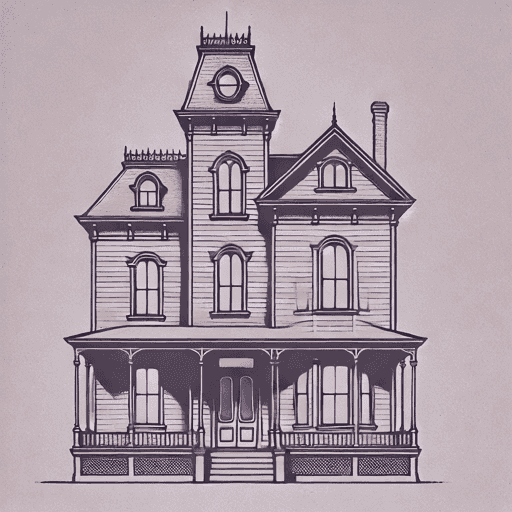
The setting of the house on the bluff operates as more than a backdrop; the rental property is a liminal space where the boundaries between past and present, and between life and death, are permeable. The house is a repository for Wren’s trauma, and specific locations, particularly the upstairs bathroom, are focal points for supernatural energy. Water is central to this dynamic. As the instrument of Wren’s drowning death, water in the bathroom (specifically the faucet turning on and the tub filling) manifests as a sign of her presence and distress. The recurring presence of water, including in Daytime Wren’s water glass, underscores the dual nature of water as a source of both life and destruction, both cleansing and defilement. The physical properties of the house, such as the lack of doors to the outside and the windows painted shut in the dining room, contribute to a sense of entrapment that mirrors Wren’s spiritual confinement and Tate’s initial emotional paralysis. The house becomes a character in itself, its creaks and groans providing a naturalistic explanation for supernatural sounds that Tate, and readers, must constantly question.
These chapters use misdirection and irony to cultivate an atmosphere of suspicion, thematically reflecting The Deception Beneath Small-Town Charm. Readers learn of Wren’s death before Tate accepts it, heightening the suspense surrounding his investigation. The behavior of Reece and Louise is a key source of this ambiguity. When Tate mentions Wren to them, the novel presents their shock and anger as genuine reactions, yet their behavior contributes to an atmosphere of uncertainty, raising significant questions about whether their response stems from surprise or a desire to conceal something. Similarly, the text introduces Nash as a financial betrayer, a plausible antagonist whose conflict with Wren provides a logical, albeit incorrect, motive for her death. This narrative layering creates a web of potential suspects and hidden agendas, forcing Tate to navigate a community where seemingly trustworthy figures may harbor dangerous secrets. Wren’s statement that she “can’t shake this feeling that it’s too late for me to ever change anything” (140) is imbued with irony that she can’t comprehend, emphasizing her entrapment.
The recurring motif of Tate’s flickering and fading visions of Wren is a visual metaphor for her precarious existence and the fragility of her conscious identity. Her form becomes translucent or shimmers when she confronts a detail that contradicts her perceived reality, such as learning of Oscar’s visit, which she doesn’t remember. This physical instability represents the erosion of her soul and the constant threat of the traumatic past overwhelming her present consciousness. Likewise, the novel explores the concept of masks through the stark difference between Wren’s two forms. Daytime Wren presents a mask of normalcy and life, while Nighttime Wren reveals the “death mask” beneath: the bloated, discolored face that is the true, unfiltered representation of her violent end. This horrifying visage physically manifests her trauma, a truth that erupts when she can no longer maintain the daytime facade. Her cryptic, repeated whispers, culminating in the screech, “I couldn’t get away!” (146), are fragmented clues, utterances from the traumatized self that bypass the coherent narrative of Daytime Wren. The simple, direct statement refers to both a past event and her current spectral state, and provides Tate with a substantial clue about the violent, involuntary nature of her death, shifting his understanding of her from a mysterious visitor to a trapped spirit.

Unlock all 58 pages of this Study Guide
Get in-depth, chapter-by-chapter summaries and analysis from our literary experts.
- Grasp challenging concepts with clear, comprehensive explanations
- Revisit key plot points and ideas without rereading the book
- Share impressive insights in classes and book clubs