Remain: A Supernatural Love Story
58 pages • 1-hour read
Nicholas Sparks, M. Night ShyamalanRemain: A Supernatural Love Story
A modern alternative to SparkNotes and CliffsNotes, SuperSummary offers high-quality Study Guides with detailed chapter summaries and analysis of major themes, characters, and more.
Symbols & Motifs
Content Warning: This section of the guide includes discussion of death, grief, graphic violence, and mental illness.
The House on the Bluff
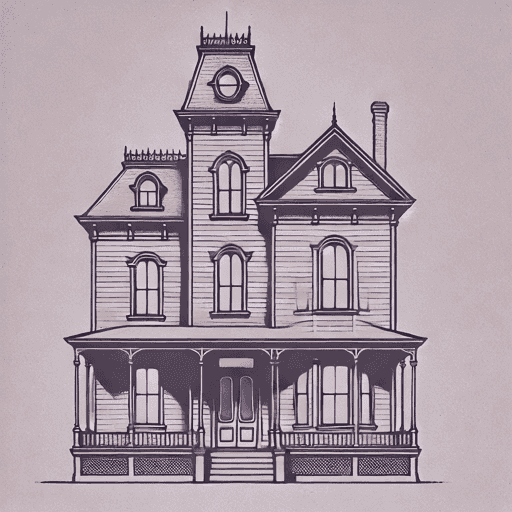
A significant symbol in Remain is the house on the bluff, which represents both a prison of past trauma and a potential sanctuary for healing. For Tate, it initially offers a physical place to escape from his grief over Sylvia’s death, but he soon finds himself psychologically confined by its isolation and the haunting presence within. The house is a liminal space, caught between the living world and the spirit world, just as its inhabitants, Tate and Wren, are caught between their pasts and their futures.
Key spaces within the house deepen this symbolism. The parlor, with its fireplace, becomes a center of warmth and burgeoning connection for Tate and Wren, a space where they tentatively build trust. In stark contrast, the upstairs bathroom is a place of terror and unresolved violence, the cold epicenter of Wren’s trauma. The house itself seems to react to their emotional states; for example, during the storm, the power fails just as their connection reaches a breaking point, plunging them into darkness. Ultimately, the house’s destruction by fire symbolizes a violent but necessary exorcism. For Wren’s spirit to be free and for Tate to truly heal, the physical structure that held them both captive had to be purged.
Flickering and Fading
The recurring motif of Wren’s form flickering or fading provides a visual and narrative barometer for her spiritual state and the strength of her connection to Tate. Early in their acquaintance, this instability is frequent, representing her tenuous hold on the world of the living. It’s a constant reminder that she isn’t fully present; her existence is fragile and dependent on forces that Tate doesn’t understand.
The fading intensifies when Wren is emotionally distressed or when the memory of her trauma surfaces, as when she discusses her ex-husband or the approaching anniversary of her death. She tells Tate, “I feel like I’m in a fog […] Like none of this is real, and if I blink, I might suddenly be somewhere else” (217). This physical manifestation of her psychological turmoil illustrates how the past literally threatens to erase her present. Conversely, as her bond with Tate deepens through trust and shared vulnerability, she appears more solid and present for longer periods. The flickering becomes a symbol of the central conflict: the battle between the painful past that threatens to pull her into nothingness and the redemptive power of a new, living connection that grounds her in the present.
Games
In Remain, games are a vital motif that structures the development of Tate and Wren’s unconventional relationship, allowing them to build intimacy within the supernatural constraints they face. Initially, simple games like Boggle provide a safe, neutral ground for them to interact, laugh, and learn about one another’s personalities without the pressure of a conventional courtship. These shared moments establish a foundation of genuine friendship and affection.
The significance of this motif culminates in the no-touching game, a poignant invention by Wren that addresses the physical barrier between them. As she explains, the rule is simple: “get as close to each other as you can without touching. The first person who touches the other loses” (178). This game transforms their limitation into a nonphysical yet deeply fulfilling intimacy. It forces them to connect on a purely emotional and spiritual level, fostering vulnerability and trust that physical contact might have overshadowed. This unique form of courtship allows their love to develop in a space defined not by what they lack, but by the creative and personal connection they build, despite that, thematically illustrating The Redemptive Power of Love and Vulnerability to transcend even the boundary between life and death.

Unlock the meaning behind every key symbol & motif
See how recurring imagery, objects, and ideas shape the narrative.
- Explore how the author builds meaning through symbolism
- Understand what symbols & motifs represent in the text
- Connect recurring ideas to themes, characters, and events