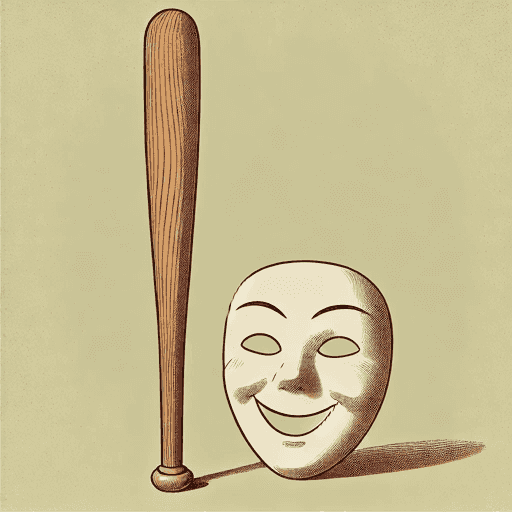
Rivers of London
53 pages • 1-hour read
Ben AaronovitchRivers of London
A modern alternative to SparkNotes and CliffsNotes, SuperSummary offers high-quality Study Guides with detailed chapter summaries and analysis of major themes, characters, and more.
Important Quotes
Content Warning: This section of the guide includes discussion of graphic violence and death.
“‘That would be a bit of a problem,’ said Nicholas. […] ‘On account of having been dead these last hundred and twenty years.’”
(Chapter 1, Page 5)
The dialogue of Nicholas Wallpenny, a Victorian ghost, marks the novel’s inciting incident, where the everyday world of policing collides with the supernatural. Nicholas’s deadpan, colloquial delivery of an extraordinary fact establishes the narrative’s characteristic tone, blending gritty realism with dry humor. The author uses this moment to subvert genre expectations and establish the theme of The Tension Between Magical Reality and Bureaucratic Procedure. The existence of a ghost is presented not as a moment of horror but as a bureaucratic inconvenience for a witness statement.
“At first there was just the smell of disinfectant, stainless steel and freshly washed skin, but after a few moments I became aware of something else, a scratchy, wiry, panting, wet nose, wagging sensation.”
(Chapter 2, Page 29)
While examining William Skirmish’s corpse under Nightingale’s guidance, Peter experiences vestigium for the first time. The passage describes the residual psychic imprint of Skirmish’s dog through a cascade of tactile and kinetic sensations. This use of sensory detail defines the mechanics of magic in the novel, portraying it as a physical, experiential phenomenon rather than an abstract force.
“I was staring right at his face. I assumed it must be Brandon Coopertown, but it was impossible to tell. I could see one of his eyes but a great flap of skin had been peeled back from around his nose and was covering the other eye. Instead of a mouth he had a bloody maw full of the white flecks of broken teeth and bone.”
(Chapter 2, Page 46)
During the confrontation at the Coopertown house, Peter witnesses the result of a magical spell collapsing. The passage uses visceral, grotesque imagery to convey the violent physical consequences of the magic influencing events, transforming a human face into a “bloody maw.” This moment of body horror elevates the stakes of the investigation beyond a simple murder, demonstrating the destructive power that lies just beneath the surface of reality. The description externalizes the internal corruption caused by the possessing force, a key element of the theme The Fragile Boundary Between Social Order and Anarchic Violence.
“He lifted the cover to reveal a human brain. I’m no expert, but it didn’t look like a healthy brain to me; it looked shrunken and pitted, as if it had been left out in the sun to shrivel. […] ‘And this,’ said Dr. Walid, ‘is your brain on magic.’”
(Chapter 3, Pages 53-54)
In the mortuary, Dr. Walid, a cryptopathologist, presents the physical cost of magical overuse. This scene fuses the genres of police procedural and urban fantasy, using the clinical objectivity of an autopsy to explain a supernatural event. The simile comparing the brain to something “left out in the sun to shrivel” conveys the tangible, degenerative, and scientifically observable effects of magic on the body.
“‘Welcome to the Folly,’ he said. ‘Official home of English magic since 1775.’ ‘And your patron saint is Sir Isaac Newton?’ I asked. Nightingale grinned. ‘He was our founder and the first man to systemize the practice of magic.’ ‘I was taught that he invented modern science,’ I said. ‘He did both,’ said Nightingale. ‘That’s the nature of genius.’”
(Chapter 3, Page 61)
This exchange introduces The Folly, a central symbol of a hidden, archaic tradition operating within the modern world. The dialogue reveals the novel’s core conceit by grounding its magic system in the scientific revolution and the figure of Isaac Newton. This connection posits science and magic as parallel disciplines of inquiry, reframing the supernatural as a systemized, if secret, field of knowledge and directly engaging with the theme of London as a Living Repository of History and Power.
“‘I never worry about the theological questions,’ said Nightingale. ‘They exist, they have power and they can breach the Queen’s Peace—that makes them a police matter.’”
(Chapter 4, Page 78)
This quote establishes the pragmatic philosophy that underpins Nightingale’s supernatural police work, addressing the theme of The Tension Between Bureaucratic Procedure and Magical Reality. By framing ancient deities as a potential threat to civil order, Nightingale subordinates the mythological to the logic of jurisdiction and law enforcement. This dialogue exemplifies the novel’s unique genre blend, treating the fantastic as a practical problem to be managed within the existing system.
“I must have gasped or shifted my weight because Molly leaped off the table and spun to face me. Eyes wide, mouth open to reveal sharp pointed teeth, blood, bright red against her pale skin, dribbling down her chin.”
(Chapter 4, Page 61)
In a moment of accidental discovery, Peter observes Molly, the Folly’s maid, eating raw meat. This passage uses stark visual imagery—the contrast of “bright red” blood on “pale skin” and the animalistic detail of “sharp pointed teeth”—to convey her non-human nature through action rather than exposition. Molly’s startled, silent flight reinforces her otherness, deepening the mystery of her origins and her role within the Folly, which itself symbolizes a hidden, archaic world.
“‘She had the same kind of sudden mad rage,’ she said. ‘What if her mind had been messed with too?’ […] ‘What if Coopertown was the big splash,’ said Leslie, ‘and she was just an echo.’”
(Chapter 5, Pages 94-95)
While discussing a seemingly unrelated assault case, Leslie May formulates a key investigative theory about the murders. She employs a metaphor of a “big splash” and its resulting “echo” to hypothesize that the violent magical influence radiates outward from a central point, affecting others in proximity. This insight showcases Leslie’s strong detective skills and illuminates the novel’s exploration of The Fragile Boundary Between Social Order and Anarchic Violence, suggesting the entity’s power spreads like a contagion.
“Leslie leaned over the seat back and looked me in the eyes.
‘Can you do magic?’ she asked softly.”
(Chapter 6, Page 117)
After witnessing another inexplicable death, Leslie confronts Peter with a direct question that cuts through procedural formality and skepticism. The scene’s staging—her leaning close, the direct eye contact, and the soft tone—creates a moment of intimacy and vulnerability that marks a turning point in their partnership. Her simple, unadorned query signifies her shift from a strictly evidence-based officer to someone confronting the reality of the supernatural, forcing The Tension Between Magical Reality and Bureaucratic Procedure to be explicitly acknowledged.
“I saw the dissimulo as it happened that time: the courier’s chin seemed to bulge and I heard the distinct cracking of bone and teeth as it jutted forward into a sharp point. […] It wasn’t a real face, it was a caricature man-in-the-moon face that no human could have in real life.”
(Chapter 6, Pages 120-121)
This passage provides Peter’s first clear observation of the dissimulo spell, used by the entity possessing the cycle courier. The author combines visceral auditory imagery (“cracking of bone and teeth”) with grotesque visual description (“man-in-the-moon face”) to portray the violent, unnatural transformation. The description of the face as a “caricature” directly reinforces the novel’s Punch and Judy motif, framing the possessed victims as distorted puppets forced into a violent, theatrical performance.
“This was my phone on magic, I thought. Obviously I couldn’t do magic and carry a mobile phone, or stand near a computer, or an iPod or most of the useful technology invented since I was born. No wonder Nightingale drove a 1967 Jag.”
(Chapter 7, Page 132)
Peter’s internal monologue establishes a fundamental rule of the novel’s magical system: Magic is antithetical to modern electronics. This observation serves as key world-building, creating a tangible barrier between the archaic world of the Folly and contemporary society. The incompatibility underscores how magic cannot easily integrate with the tools of the modern world.
“The division of labor was clear from the start; Nightingale checked the magic library and I hit the books in the Queen’s English.”
(Chapter 8, Page 158)
This statement encapsulates the novel’s central investigative dynamic. The sentence structure creates a parallel between the “magic library” and “the Queen’s English,” symbolizing the partnership between Nightingale’s arcane knowledge and Peter’s modern, practical police methodology. The division of labor illustrates how solving supernatural crimes requires a synthesis of old traditions and contemporary procedure, defining the book’s unique blend of fantasy and police procedural.
“You cannot scratch a pentagram into soft springy turf with anything less than a backhoe […] Instead, I drew the star and circle with charcoal dust […] At each cardinal point of the pentagram I put one of my calculators.”
(Chapter 8, Page 167)
This passage exemplifies the novel’s characteristic blend of the ordinary and the supernatural, using a pragmatic tone to describe a necromantic ritual. The juxtaposition of a pentagram with a common office supply demonstrates Peter’s role as a bridge between the old magical world and modern logic. By substituting calculators for a traditional animal sacrifice, Peter improvises a solution that is both scientifically rationalized and bureaucratically sensible, illustrating the theme of The Tension Between Bureaucratic Procedure and Magical Reality.
“She smelt of cigars and new car seats, horses and furniture polish, Stilton, Belgium chocolate and behind it all the hemp and the crowd and the last drop into oblivion.”
(Chapter 9, Page 183)
The author uses rich olfactory imagery to define the character of the river goddess Tyburn and embody the theme of London as a Living Repository of History and Power. The initial scents represent modern wealth, reflecting Tyburn’s current domain, while the underlying scents evoke her historical past as the site of London’s gallows. This layering of sensory detail illustrates how ancient entities in the city are composite beings, simultaneously shaped by their deep history and their contemporary surroundings.
“Like the manifestation of a social trend, crime and disorder, a sort of superyob. The spirit of riot and rebellion in the London mob.”
(Chapter 9, Page 192)
Through Leslie’s dialogue, the novel foreshadows the true elemental nature of Mr. Punch. Leslie reframes the supernatural antagonist as an abstract concept, directly articulating the theme of The Fragile Boundary Between Social Order and Anarchic Violence. Her use of modern sociological terms and slang grounds the paranormal threat in a contemporary context. This moment of insight from a non-magical character is significant, suggesting that understanding such forces requires not just arcane knowledge but also a sharp intuition about society.
“I looked at Seawoll and he gave me the ‘at last he wakes up’ look so beloved of teachers, senior detectives and upper-middle-class mothers. ‘What do you want to believe?’ I asked. ‘That magic is real,’ Seawoll said, and gave me a knowing smile. ‘Can you give us a demonstration?’”
(Chapter 10, Page 207)
In this scene, DCI Seawoll subverts official police procedure by orchestrating an off-the-record interrogation. By asking Peter to perform magic that will destroy the recording equipment, Seawoll tacitly acknowledges that the established, evidence-based systems of modern policing are inadequate for the current crisis. This moment highlights the novel’s theme of The Tension Between Bureaucratic Procedure and Magical Reality, showing a senior officer forced to operate outside the very rules he is meant to enforce.
“Then I remembered Pretty Polly from the Piccini script—the silent girl romanced by Punch after he’d killed his wife and child. He kisses her most audibly while she appears ‘nothing loth.’ Then he sings: If I had all the wives of old King Sol, I would kill them all for my Pretty Poll.”
(Chapter 10, Page 221)
This quote marks the climax of Peter’s investigation, where he synthesizes historical research with police data to identify Leslie as Henry Pyke’s accomplice. The allusion to the historical Punch and Judy script transforms Leslie from a fellow officer into a puppet performing a prescribed role in a play. The reveal relies on Peter’s unique position between the worlds of policing and magical history, demonstrating his growth as an investigator.
“Leslie looked straight at me and smiled. ‘But of course,’ she said. ‘The play’s the thing.’ There was a crack of breaking bone and her face changed. As her nose became a hooked blade her voice rose to a piercing, warbling shriek. ‘That’s the way to do it!’ she screeched.”
(Chapter 11, Page 232)
This moment is the culmination of Leslie’s possession, dramatizing the collapse of her identity into the archetype of Mr. Punch. The visceral imagery of her facial bones breaking and reshaping signifies the violent intrusion of the supernatural into the natural order. Her direct quotation of both Shakespeare (“The play’s the thing”) and the traditional Punch and Judy catchphrase (“That’s the way to do it!”) reinforces the metatheatrical nature of the crimes, portraying the murders as a horrific performance.
“‘I’m the demon drink,’ shouted the ranting drunk. ‘I’m gin lane and your local crack house. […] I’m the grinning face in the window of the hansom cab, I made Dickens long for the countryside and I’m what your masters are afraid of.’”
(Chapter 12, Page 260)
Peter’s encounter with Mr. Punch on the Tube, as he speaks through a drunken passenger, reveals the antagonist to be an ancient spirit of urban chaos. This personification of London’s historical discontent, from Hogarth’s “Gin Lane” to Dickensian anxieties, frames the novel’s violence as a manifestation of the city’s repressed anarchic impulses. The scene vividly illustrates the theme of The Fragile Boundary Between Social Order and Anarchic Violence.
“‘The Second World War,’ I said. ‘What were you in—the baby brigade?’ To have enlisted even in 1945, Nightingale would have had to have been born in 1929 and that’s if he’d lied about his age. ‘How old are you?’ ‘Old,’ he whispered. ‘Turn century.’”
(Chapter 12, Page 268)
Nightingale’s understated revelation of his true age recontextualizes his character from a contemporary detective to a living relic of a hidden history. This disclosure deepens the theme of London as a Living Repository of History and Power by suggesting that its magical practitioners exist outside of usual human lifespans. The casual, almost dismissive way the information is delivered contrasts sharply with its profound implications, emphasizing the alien nature of the world Peter has entered.
“‘I am a sworn constable,’ I said. ‘And that makes me an officer of the law. And I am an apprentice, which makes me a keeper of the sacred flame, but most of all I am a free man of London and that makes me a Prince of the City.’”
(Chapter 13, Pages 273-274)
Confronting the river goddess Tyburn, Peter declares his authority by integrating the everyday and magical aspects of his identity. The use of anaphora—“And that makes me…”— elevates his status by equating his police role with his apprenticeship, culminating in the metaphor “Prince of the City.” This declaration engages directly with the theme of London as a Living Repository of History and Power, as Peter asserts his place within both its modern legal framework and ancient magical hierarchy.
“It wasn’t like a virtual reality or how you imagine a hologram should work, it was like breathing vestigia, like swimming in stone. I found myself in the Folly’s own memory of the atrium.”
(Chapter 13, Page 277)
This quote describes Peter’s entrance into London’s magical past via a blood ritual. The similes “like breathing vestigia” and “like swimming in stone” use concrete sensory actions to convey the notion of London as a Living Repository of History and Power. This passage marks the protagonist’s transition from an observer of the supernatural to a participant fully immersed in the city’s living consciousness, while the personification of “the Folly’s own memory” reinforces the building’s symbolic weight as a historic entity.
“Only I recognized the face. I’d first seen it on a cold January morning and it had introduced itself as Nicholas Wallpenny—late of the Parish of Covent Garden. But no, not Nicholas Wallpenny, it was Henry Pyke. It was always Henry Pyke, right from the start.”
(Chapter 13, Pages 279-280)
During his journey through the vestigia, Peter experiences an anagnorisis that re-contextualizes the entire investigation. The revelation subverts the police procedural narrative by exposing the initial witness as the murderer. This plot twist underscores the unreliability of perception in a world where magic can create convincing illusions.
“‘That’s the mark of true greatness in an actor—knowing, down to the precise moment, when to make his exit.’ […] ‘Yes,’ said Henry Pyke. ‘To leave them wanting more.’”
(Chapter 13, Page 290)
To save Leslie, Peter persuades Henry Pyke’s spirit to depart by appealing to his theatrical vanity rather than using magical force. The dialogue frames Pyke’s surrender as an artistic choice—a “big exit”—transforming a moment of defeat into a final, successful performance. This resolution highlights Peter’s character development, showing his use of psychological insight to restore order and defuse a threat.
“The Old Man of the River caught my eye and then, very deliberately, touched his hand to his chest and then extended his arm, palm facing down—the Roman salute. […] ‘Oh, did you feel that, Peter?’ he asked. ‘That’s the start of something, if I’m not mistaken.’”
(Chapter 14, Page 297)
At the ceremony sealing the truce between the river families, Father Thames gives Peter a Roman salute. This symbolic gesture creates a direct link to the ancient version of himself Peter encountered during the climax, affirming Peter’s new status among London’s primal powers. The salute reinforces the theme of London as a Living Repository of History and Power. Meanwhile, Oxley’s comment concludes the novel’s main conflicts and foreshadows a new era of magical relations.

Unlock every key quote and its meaning
Get 25 quotes with page numbers and clear analysis to help you reference, write, and discuss with confidence.
- Cite quotes accurately with exact page numbers
- Understand what each quote really means
- Strengthen your analysis in essays or discussions