Second First Impressions
58 pages • 1-hour read
Sally ThorneSecond First Impressions
A modern alternative to SparkNotes and CliffsNotes, SuperSummary offers high-quality Study Guides with detailed chapter summaries and analysis of major themes, characters, and more.
Chapters 18-23Chapter Summaries & Analyses
Content Warning: This section of the guide discusses mental illness.
Chapter 18 Summary
At a diner, Teddy introduces Ruthie to his pregnant ex-girlfriend, Brianna, who jokes that Teddy is the baby’s father before clarifying she is married. Brianna warns Ruthie that Teddy has a history of disappearing from serious relationships and shows Ruthie a bluebird tattoo Teddy designed. Later, Teddy admits he has hurt every girlfriend he has ever had.
The evening is interrupted when Renata calls, reporting the office security alarm is sounding. Ruthie rushes back but finds the office secure. The false alarm triggers a panic attack stemming from her past. At 16, Ruthie was falsely accused of the theft of a church charity fund; her parents used her college fund to repay the money, forcing her to abandon her dream of becoming a veterinarian.
Teddy follows Ruthie and helps calm her. She confides in him, explaining the story of the stolen money. He mentions his therapist and encourages Ruthie to consider reaching out. They spend the night watching Heaven Sent. Before leaving, Teddy asks for and receives a spare key to Ruthie’s cottage.
Chapter 19 Summary
The following workday, Melanie helps Ruthie create an online dating profile. They also plan a vintage prom-themed Christmas party for the residents. Meanwhile, Teddy receives his tax refund, bringing him closer to his financial goal for the tattoo studio.
Teddy arrives and warns Ruthie that his sister, Rose Prescott, might have her own plans for the property. The conversation shifts when Melanie admits she is on a juice cleanse after a man insulted her body; Teddy and Ruthie defend her. To help with her new profile, Teddy takes a photograph of Ruthie.
Later, Ruthie invites Teddy to dinner, telling him she intends to kiss him. A nervous Teddy agrees but confesses he has little self-control around her. He also reveals he only accepted the job and moved into the cottage to be closer to her.
Chapter 20 Summary
On Saturday, Ruthie and Melanie meet Teddy and Renata at a thrift store to find Ruthie a new wardrobe. A helpful sales assistant named Kurt assists her. The prom theme for the Christmas party upsets Renata, who reveals she never attended her own prom. She asks Teddy if he will design a tattoo for her.
As they shop, Teddy becomes possessive. He follows Ruthie into the changing room, where she initiates a passionate kiss. Teddy kisses her back but quickly pulls away. Just then, Kurt speaks through the door and asks for Ruthie’s number. A jealous Teddy tries to interfere, but Ruthie gives her number to Kurt.
Outside, Ruthie confronts Teddy. He reveals that his business partner, Alistair, has rejected his partial payment and is now demanding the full investment for the tattoo studio upfront. Witnessing the exchange, Renata scolds Teddy for treating Ruthie like a “plaything” (245).
Chapter 21 Summary
That evening, while making security rounds, Teddy admits to Ruthie he has self-doubt about opening the studio. Later, in the courtyard, he invites her to have a “real kiss.” Before they do, he tells her his family history. He explains that he is the product of an affair between his father, Jerry Prescott, and his mother, Ruby. His existence was revealed when his mother appeared at his father’s vow renewal ceremony.
Teddy tells Ruthie about his half-sisters and explains that Rose has always resented him. He confesses he is in therapy for abandonment issues and that his primary motivation for opening the studio is to impress Rose. Hearing this, Ruthie asks him to be gentle with her when he eventually leaves. She then climbs onto his lap, and they share a long kiss. Teddy abruptly stops, telling her he needs to maintain control.
Chapter 22 Summary
On Friday evening, Ruthie, Teddy, and Melanie have a picnic by the lake. Melanie gives Ruthie control of her new dating app, revealing a scheduled date with a man named Brendan. During the picnic, Teddy invites Ruthie to join him and the Parloni sisters on a trip to see his new tattoo studio.
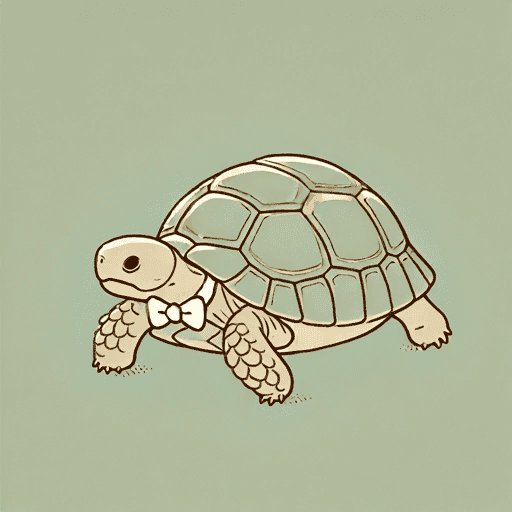
While talking, Ruthie, who has been celibate since her prom night, spots “Number One,” the first endangered tortoise she ever rescued. Inspired, she convinces a reluctant Teddy to release his pet tortoise, TJ, into the wild on the grounds.
Before the evening ends, Teddy makes a deal: He will kiss her again only if she agrees to come on the trip to the studio. She accepts, and they share another kiss.
Chapter 23 Summary
On Sunday, Ruthie joins Teddy, Renata, and Aggie for the trip to the future tattoo studio, named “Always and Forever.” During the drive, Renata has a moment of panic, leading to an emotional exchange about mortality. When they arrive, they meet Teddy’s business partner, Alistair. Seeing Alistair’s skepticism, Ruthie defends Teddy’s work ethic.
Inside, Teddy shows Ruthie the room that will be his workspace, and she realizes she is in love with him. She asks for a tattoo, and he agrees to draw a temporary design on her arm. As he draws, he adds details to his family’s story, explaining Rose’s resentment stems both from her fear of losing their father’s legacy and the scandal of his birth, and her hostility towards him endangers Providence. He finishes the drawing of an angel holding a tortoise and invites her upstairs to see his new bedroom.
Chapters 18-23 Analysis
These chapters excavate the foundational traumas that shape Ruthie’s and Teddy’s core identities, establishing a crucial parallel between their self-imposed limitations. The false alarm in Chapter 18 serves as the catalyst for the full disclosure of Ruthie’s past, linking her meticulous adherence to the checklists and routines motif directly to the singular event of the church theft. Her panic attack is a visceral reliving of the moment she lost her future and her parents’ trust. The scene also demonstrates how the “nice full-stop feeling” of a locked door becomes a hollow reassurance when she cannot trust herself to maintain control (135). This revelation recasts her rigid demeanor not as an innate personality trait but as a constructed defense mechanism. The narrative structurally mirrors this vulnerability by having Teddy disclose his own painful origin story. His confession that “Nobody wanted me completely as a kid and now I have this fucked-up reflex to make everybody love me” (250) provides the psychological key to his charming but noncommittal behavior. By connecting their stories of abandonment, the text suggests that control and charisma are two sides of the same coin and strategies for surviving early wounds. By juxtaposing these confessions, the narrative deepens the theme of The Unreliability of First Impressions, demonstrating that both Ruthie’s perceived fragility and Teddy’s perceived frivolity are shields forged in trauma.
The narrative advances the theme of Embracing Risk to Escape Self-Imposed Limits by charting Ruthie’s deliberate steps away from the safety of her routine. Her panic attack represents the apex of her risk aversion, yet this crisis becomes a turning point. Bolstered by Teddy’s non-judgmental support and Melanie’s Sasaki Method, Ruthie begins to actively challenge her own boundaries. Her invitation to Teddy for dinner, where she explicitly states her intention to kiss him, is a radical departure from her passive nature, representing a conscious choice to pursue desire over safety. This assertiveness signals her shift from reacting to life to actively authoring her own choices. The thrift store episode functions as a condensed representation of this journey; it is a space dedicated to transformation where Ruthie literally tries on new identities. Her decision to initiate their first kiss in the dressing room is a climactic act of agency. Teddy’s conflicted reaction—simultaneously drawn in and pulling away—illustrates that her newfound courage is reshaping not only her own trajectory but also his. This arc culminates in her agreement to leave the Providence grounds for a day trip—a direct confrontation with the source of her deepest anxiety. By risking a repeat of her initial trauma, she demonstrates significant growth.
Symbolism deepens the exploration of personal growth and emotional risk, particularly through the recurring motifs of the golden bonnet tortoises and Teddy’s tattoos. The unexpected appearance of “Number One,” the first tortoise Ruthie rescued, functions as a tangible marker of her own progress. Seeing the creature thriving reinforces her capacity for nurturing and gives her the confidence to advocate for freedom—both for Teddy’s pet tortoise, TJ, and, by extension, for herself. Her successful argument for TJ’s release is a pivotal moment where she projects her own need for liberation. The act of convincing Teddy to release TJ also symbolizes her growing ability to influence others rather than only serve them, a critical shift in her self-conception. Concurrently, the motif of Teddy’s tattoos evolves from a signifier of his rebellious exterior to a medium for intimacy. Tattoos are permanent marks, a concept antithetical to Ruthie’s fear of irreversible mistakes. When Teddy draws on her bare arm, it is an act of immense trust. The design itself—an angel holding a tortoise—symbolizes his perception of her, merging her protective nature with a sense of grace she does not see in herself. This moment redefines permanence not as a trap but as a testament, suggesting that some risks lead to positive permanent changes.
The development of Ruthie and Teddy’s intimacy is woven into the narrative’s use of setting and structure. The claustrophobic intimacy of the thrift store changing room, a space of private transformation, provides the backdrop for their first kiss. In this space of reinvention, Teddy’s declaration that Ruthie is “the thousand-dollar dress on the rack in this thrift store” (238) highlights his ability to see her intrinsic worth beneath her modest exterior. The narrative further reinforces their bond through a balanced structure of reciprocal vulnerability. Ruthie’s confession about the church theft is answered chapters later by Teddy’s detailed account of his family history. This structural parallelism ensures their emotional exchange is one of equals, solidifying their relationship as a safe harbor for their respective traumas. The rhythm of confession and response creates a dialogue of healing, where each character’s honesty becomes permission for the other to shed a layer of protection. Their connection is enhanced by shared interests like the Heaven Sent TV show, but it is solidified on the more authentic ground of shared wounds.
Beyond the central romance, these chapters expand on the theme of Redefining Home and Family Through Connection by exposing the complexities of both biological and found families. Teddy’s history reveals a biological family fractured by resentment and secrets, with his half-sister Rose embodying an obstacle he feels he can never overcome. His desire to succeed is not for his father but for the sister whose acceptance he craves. This yearning positions Rose as both antagonist and inadvertent motivator, tying the stakes of Providence’s future directly to Teddy’s unresolved family dynamics. This contrasts sharply with the burgeoning found family at Providence. Melanie and Ruthie’s friendship solidifies into a supportive, sisterly bond, while Renata Parloni’s character gains depth. Her visceral reaction to the “vintage prom” theme reveals a deep well of personal regret. Her subsequent interaction with Aggie in the car, a moment of fear and affection, strongly foreshadows that their relationship is more than sororal. Renata’s sharp admonishment of Teddy for treating Ruthie carelessly positions her as a fierce, protective matriarch within their unconventional community. Through this layering of surrogate bonds, the novel suggests that chosen families can provide the accountability, affection, and protection that fractured biological ones often fail to offer.
These chapters also demonstrate how humor is strategically deployed to diffuse tension and build intimacy. Teddy’s banter during Ruthie’s panic episode—light touches of wit laced through serious support—functions as a coping mechanism for both characters. For Ruthie, laughter provides a reprieve from spiraling anxiety; for Teddy, it is a way of softening his own raw confessions. Thorne uses these tonal shifts to illustrate how levity can coexist with trauma, making vulnerability less overwhelming and reinforcing that intimacy is not only built through pain but also through shared joy.
The introduction of secondary characters such as Brianna and Kurt complicates the central romance by testing its foundations. Brianna, as Teddy’s ex, embodies the weight of his past patterns of avoidance, forcing Ruthie to confront the reality of his reputation. Kurt, the affable thrift-store clerk, represents the safe alternative Ruthie might choose if she prioritized predictability over passion. By inserting these foils, the narrative underscores that Ruthie’s relationship with Teddy is not inevitable; it is a choice made riskier and more meaningful by the presence of viable alternatives.
The physical journey beyond Providence in these chapters carries thematic weight. The excursions to the thrift store, diner, and tattoo studio symbolize incremental expansions of Ruthie’s world. Each trip pushes her further from the safety of the villa, demanding new confrontations with her fears. The novel aligns this literal mobility with psychological progress, suggesting that healing requires not just emotional but also geographical movement. By contrast, Ruthie’s eventual ability to return home without regressing shows that progress does not erase fear but teaches her to carry it differently.

Unlock all 58 pages of this Study Guide
Get in-depth, chapter-by-chapter summaries and analysis from our literary experts.
- Grasp challenging concepts with clear, comprehensive explanations
- Revisit key plot points and ideas without rereading the book
- Share impressive insights in classes and book clubs