Second First Impressions
58 pages • 1-hour read
Sally ThorneSecond First Impressions
A modern alternative to SparkNotes and CliffsNotes, SuperSummary offers high-quality Study Guides with detailed chapter summaries and analysis of major themes, characters, and more.
Symbols & Motifs
The Golden Bonnet Tortoises, Shells, and Fictional Worlds
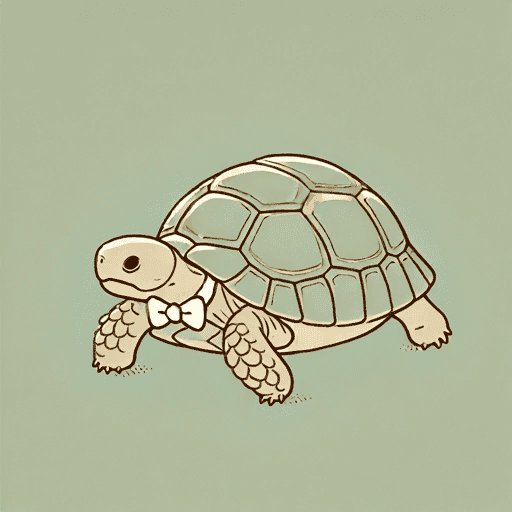
The golden bonnet tortoises are a recurring symbol of Ruthie’s sheltered existence and her slow, determined journey toward personal growth. Living at Providence, which “has the highest concentration of golden bonnet tortoises of anywhere on the planet” (13), Ruthie is surrounded by creatures that mirror her own condition. Like the tortoises, she is encased in a protective shell, moving through life at a guarded, deliberate pace to avoid harm. Her care for these vulnerable, endangered animals reflects her deep-seated need to nurture and protect, a quality she extends to the residents but struggles to apply to herself. The shell motif resonates with Ruthie’s reliance on other protective enclosures, like her devotion to reruns of Heaven Sent. Just as the tortoise shell provides safety but limits movement, reruns offer her predictable fictional worlds where nothing truly changes. The tortoises physically embody the novel’s central theme, Embracing Risk to Escape Self-Imposed Limits, as their existence depends on both their protective shells and their willingness to move across the grounds. For Ruthie, growth requires her to metaphorically leave her own shell and expose herself to the world.
The tortoises also become a crucial plot device, representing the unique character of Providence that is threatened by corporate redevelopment. They symbolize a gentle, slow-paced way of life that is worth preserving. Teddy’s immediate and gentle fascination with them—he “picks it up, talks to it, dances it gently on his palm” (32)—serves as an early indicator of his kind nature, challenging Ruthie’s and the reader’s initial assessment of him as a careless rich kid. This interaction reinforces the theme of The Unreliability of First Impressions. Later, when Ruthie uses the tortoises’ legal protections to fight PDC, and when she shuts down the Heaven Sent forum in the epilogue, these motifs converge: She transforms both the shell and the rerun from symbols of stasis into symbols of empowerment and release. Ultimately, Ruthie’s evolution from a passive caretaker of the tortoises to an active defender of their habitat parallels her own journey. She learns that, like the tortoises, she must inch her way forward, however slowly, to find a life beyond the safety of Providence’s walls.
Checklists and Routines
Ruthie’s reliance on checklists and routines is a pervasive motif that illustrates her need for control as a response to past trauma. This pattern of behavior is the clearest manifestation of her self-imposed limits, making it central to her character arc. Her life is governed by a series of rigid procedures, from her nightly security rounds to her meticulous planning, which create a fragile sense of safety. She tells Teddy, “From that point on, I’ve used checklists and routine to manage myself” (212). This admission reveals that her routines are not mere quirks but a survival mechanism born from a traumatic event where her perceived carelessness had devastating consequences. This motif visualizes the theme of Embracing Risk to Escape Self-Imposed Limits by showing the cage she has built for herself, where every action is premeditated to prevent chaos and emotional exposure. Any deviation from her schedule induces anxiety, reinforcing how her pursuit of safety has led to stagnation.
The arrival of Melanie and Teddy directly challenges this ordered existence. The Sasaki Method, itself a type of checklist, is ironically designed to dismantle Ruthie’s harmful routines by forcing her into spontaneous social situations. Teddy, with his unstructured lifestyle, represents the antithesis of her controlled world. He disrupts her schedule, stays on her couch, and co-opts her routines, gradually breaking down the walls she has built. Her ultimate decision to leave Providence, the very heart of her routine, signifies the motif’s resolution. By abandoning the checklists that once defined her, Ruthie fully embraces an unknown future, demonstrating that true growth is only possible when one is willing to live an unwritten life.
Teddy’s Tattoos
Teddy Prescott’s many tattoos function as a significant motif, representing a life lived with artistic permanence and a history that is worn openly rather than hidden. They serve as a crucial visual counterpoint to Ruthie’s plain, unadorned, and carefully controlled presentation. From her first encounter with him, Ruthie sees his tattoos not as intimidating but as a form of creative expression, noting, “The artistry is lovely. This is a guy who took a lot of care getting trivial, unrelated things printed all over himself” (22). This observation immediately subverts the “bad boy” stereotype, aligning the motif with the theme of The Unreliability of First Impressions. His tattoos symbolize an acceptance of making permanent marks and choices, a direct contrast to Ruthie’s fear of making a mistake. They are the indelible story of his experiences, impulses, and relationships, suggesting a character who is not afraid of being seen for who he is.
Among his many tattoos, the words “GIVE” and “TAKE” inked across his knuckles are the most thematically important. They encapsulate the central conflict in his character and his relationships. He confesses his awareness of his own flawed nature, asking, “What kind of person tattoos TAKE on their own hand, anyway? Apparently, someone who’s acutely aware that that’s what he does” (78). This reveals a deep self-awareness beneath his carefree exterior. The motif comes to represent the dynamic of his relationship with Ruthie, who has spent her life giving to others. Through his connection with her, Teddy’s journey becomes about learning to truly give—support, loyalty, and love—without his reflexive taking. The tattoos are not just a record of his past but a constant reminder of the man he strives to be, one who learns to find a meaningful balance between giving and taking.
This motif culminates when Teddy sketches a temporary tattoo of an angel holding a tortoise on Ruthie’s arm, a design that reflects both her protective nature and the grace he sees in her. The act reframes tattoos not only as marks of self-expression but also as gestures of intimacy, allowing Ruthie to glimpse herself through Teddy’s loving perspective.

Unlock the meaning behind every key symbol & motif
See how recurring imagery, objects, and ideas shape the narrative.
- Explore how the author builds meaning through symbolism
- Understand what symbols & motifs represent in the text
- Connect recurring ideas to themes, characters, and events