Seeking Allah, Finding Jesus: A Devout Muslim Encounters Christianity
62 pages • 2-hour read
Nabeel QureshiSeeking Allah, Finding Jesus: A Devout Muslim Encounters Christianity
A modern alternative to SparkNotes and CliffsNotes, SuperSummary offers high-quality Study Guides with detailed chapter summaries and analysis of major themes, characters, and more.
Background
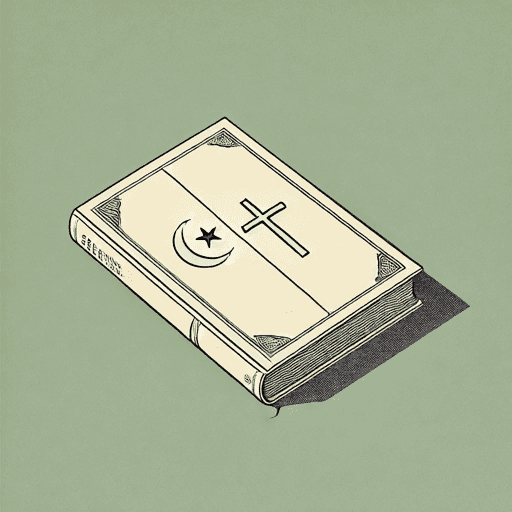
Theological Context: Commonalities and Differences Between Islam and Christianity
Islam and Christianity share significant common ground, including monotheistic belief, a shared ethical heritage emphasizing compassion and justice, and reverence for many of the same prophetic figures from biblical history. Nevertheless, the two faiths diverge sharply on several fundamental theological claims regarding the nature of God, the identity of Jesus, and the means of salvation.
The most significant point of difference concerns the person of Jesus Christ. Christianity affirms that Jesus is the divine Son of God, the second person of the Trinity, who became incarnate, died on the cross for the sins of humanity, and rose from the dead. This claim stands at the very center of Christian faith and worship. Islam, by contrast, reveres Jesus (Isa) as a prophet and messenger of God, born of the Virgin Mary, but emphatically denies his divinity. The Quran explicitly rejects the doctrine of the Trinity as a form of polytheism and asserts that Jesus was neither crucified nor resurrected. For Muslims, attributing divinity to Jesus constitutes a fundamental violation of the oneness and unity of God.
A second major area of divergence concerns the reliability and authority of Scripture. Christians regard the Bible—both the Old and New Testaments—as the inspired Word of God, though interpretations of inspiration vary across denominations, with some denominations taking a very literalist approach to scripture and others advocating for more metaphorical interpretations. Muslims, while acknowledging that God revealed earlier scriptures to the Jews and Christians, believe that these texts have been corrupted over time through human error or deliberate alteration. The Quran is held to be the final, perfect, and uncorrupted revelation from God, delivered through the Prophet Muhammad and preserved without error.
The two faiths also differ significantly in their understanding of salvation. While Christianity usually centers the figure of Jesus in matters of salvation, there are variations in emphasis and interpretation across denominations. Some branches of Protestant Christianity believe that salvation is achieved through faith in Jesus Christ’s atoning death and resurrection alone, with eternal life granted as a gift of grace rather than earned through human merit. Other denominations, such as Catholicism, believe in the efficacy of good works alongside faith, and advocate for prayers of intercession from the living to lessen the time spent by souls in purgatory (a liminal space in the Catholic conception of the afterlife that Protestants do not believe in). Islam, by contrast, emphasizes submission to God’s will as expressed in the Quran and the example of Muhammad, with salvation dependent on God’s judgment of one’s faith and deeds. These theological divergences shape not only doctrine but also worship practices, ethical frameworks, and communal identity, rendering the two faiths fundamentally distinct despite their shared monotheistic heritage.

Unlock all 62 pages of this Study Guide
Get in-depth, chapter-by-chapter summaries and analysis from our literary experts.
- Grasp challenging concepts with clear, comprehensive explanations
- Revisit key plot points and ideas without rereading the book
- Share impressive insights in classes and book clubs