Skylark
40 pages • 1-hour read
Patricia MacLachlanSkylark
A modern alternative to SparkNotes and CliffsNotes, SuperSummary offers high-quality Study Guides with detailed chapter summaries and analysis of major themes, characters, and more.
Chapters 1-3Chapter Summaries & Analyses
Chapter 1 Summary
Content Warning: This section of the guide includes discussion of death.
The narrative picks up after Jacob Witting, a widowed farmer, and Sarah Wheaton, the woman who answered his newspaper ad looking for a wife, are married. Anna, Jacob’s oldest daughter and the novel’s protagonist, and her family pose for a picture so Sarah can send it to her relatives in Maine. The photographer Joshua comments that Maine must be much greener than the prairie, especially since they’ve been in a prolonged drought. Joshua relates the story of his grandfather, who left the prairie long ago due to drought and never returned.
Jacob, or “Papa,” as Anna refers to him, is sure it will rain soon. He asserts they will never leave the prairie because “[Their] names are written in this land” (5). Remembering that Sarah’s family lives far away, Caleb signs her name in the dirt. Anna scolds Caleb for misspelling the name and immediately regrets her cruelty. The chapter ends with Anna’s journal entry as she unpacks the phrase “Happily ever after” as it relates to their life after Sarah came to them. She notes that the first year of Sarah and Papa’s marriage has brought many challenges related to the weather.
Chapter 2 Summary
It is so dry outside that Papa brings in dust when he comes into the house, but he tells Sarah she can’t mop the floor because they must conserve water. Sarah’s cat Seal, which she brought with her from Maine, is pregnant, and everyone is excited about the prospect of kittens.
Anna holds Sarah’s wedding gown in front of her. She tells Sarah that Papa said that when she marries, she will move to her husband’s land, just as Sarah did. Sarah and Anna reminisce about how Sarah loved them even before she met them because of what they wrote in their letters—she says she loved what was “between the lines” (10). When Caleb doesn’t understand what this means, Sarah explains that people express themselves better in writing than speech. Anna understands, however, as she writes in her journal every night and learns about herself and her family through it. In her journal, Anna writes about how much Sarah loves the snow and how she loves to paint the sunsets.
Chapter 3 Summary
The family rides to church in a wagon with their neighbors Matthew, Maggie, and their children. Everyone searches the sky for a cloud. Sarah holds Matthew and Maggie’s baby Tom and says she is “surrounded by motherhood” (14), citing their pregnant cat and cow. Sarah and Maggie figure out that Maggie’s cat, Sam, is the father of Seal’s kittens. After church, Papa warily announces that the church’s well has receded a foot. Tom thinks he sees clouds, and everyone is hopeful for rain.
The calf is born the next day. Sarah wonders if Mame, the cow, likes her calf. The calf’s face is white, and Caleb says they should name it “Moonbeam.” Anna writes in her journal about the times Sarah danced with Papa. When he is worried, Sarah holds his hand while they walk around the farm, with the dogs Lottie and Nick following. Once, Anna heard them laughing and chasing each other through the corn stalks.
Chapters 1-3 Analysis
The novel’s opening scene establishes the theme of The Importance of Family and Home by highlighting the deep bonds between Sarah, Jacob, Anna, and Caleb. As they pose together for a photograph after Jacob and Sarah’s wedding, the moment symbolically represents them becoming a family. The close relationships between these characters were established in the previous novel in the series, Sarah, Plain and Tall, and they serve as the emotional foundation of Skylark.
While Sarah is now firmly integrated into the family, there was some initial unease in the previous novel about whether she would fit in with prairie life; this resurfaces when the photographer mentions her home in Maine. Sarah’s connection to the prairie comes from her attachment to Jacob and the children, not from a deep connection to the land. This reflects the broader question of what home truly means—a tension that will become central to Skylark. These early chapters already foreshadow this, as when Caleb worries about Sarah returning to Maine, just as he did in Sarah, Plain and Tall. His concerns manifest in his gesture of writing her name in the drought-stricken soil, which expresses his desire for Sarah to make the prairie her home. He fears losing her, just as he lost his mother. Caleb’s gesture is a hopeful act: By inscribing Sarah’s name on the earth, he plants her presence into the land, rooting her in their lives and the prairie. The dirt represents the prairie, which is their home and livelihood, while Sarah’s name represents the love and unity she has brought to the family. Together, the family photograph and Caleb’s action symbolize the merging of these two aspects, showing how Sarah’s presence is now inextricably tied to their life on the land.
The novel is narrated from Anna’s point of view, which reveals the emotional nuances of the family’s struggles and triumphs. Her journal entries at the end of each chapter reflect her maturity and deep emotional connection to her family, and they show how she processes the changes and challenges her family faces. These journal entries also record her family’s experiences, capturing special moments that reveal the complexities of their relationships. For example, Anna records how their usually steadfast father playfully chases Sarah through the cornfield. Through these reflections, the novel emphasizes that home is not only a place but also the memories and connections between the people there.
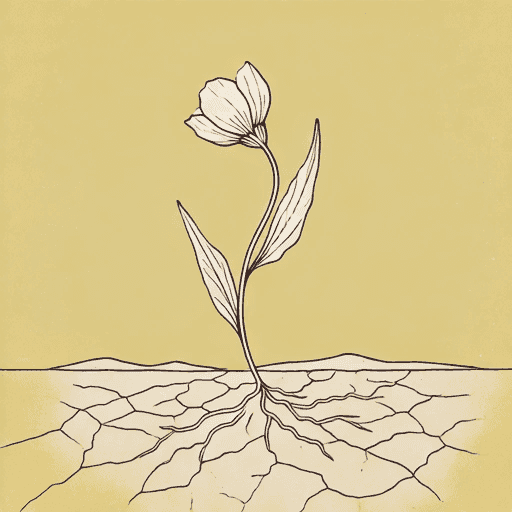
The ongoing drought is one of the main subjects of these chapters, underscoring the experience of living on the prairie and The Power of Nature. The lack of rain is a literal and symbolic challenge, representing uncertainty, instability, and the family’s vulnerability. The drought symbolizes upheaval that could force the family to confront their fears of separation and change. The descriptions of the dry, cracked earth evoke a sense of desolation, which contrasts with the family’s newfound hope since Sarah came to them. Juxtaposed with the parched earth and dwindling water supply is the presence of new life: Seal’s pregnancy, the new calf, and Matthew and Maggie’s new baby, Tom. Sarah’s declaration of “being surrounded by motherhood” holds a layered meaning. In one sense, Sarah express hope that even in the presence of the crippling drought, life is still thriving. However, in Sarah’s statement, Anna senses an undercurrent of longing and a desire to have a child. Though Sarah has become a mother to Caleb and Anna, she is expressing her hope for a baby of her own. The new life that surrounds the Witting family as well as Sarah’s desire for a child underscore the theme of Hope and Resilience in the Face of Hardship. Despite the drought, the family remains optimistic about their future.

Unlock all 40 pages of this Study Guide
Get in-depth, chapter-by-chapter summaries and analysis from our literary experts.
- Grasp challenging concepts with clear, comprehensive explanations
- Revisit key plot points and ideas without rereading the book
- Share impressive insights in classes and book clubs