Skylark
Skylark
A modern alternative to SparkNotes and CliffsNotes, SuperSummary offers high-quality Study Guides with detailed chapter summaries and analysis of major themes, characters, and more.
Summaries & Analyses
Quizzes
NEWReading Tools
Games
Symbols & Motifs
Water
Content Warning: This section of the guide includes discussion of death.
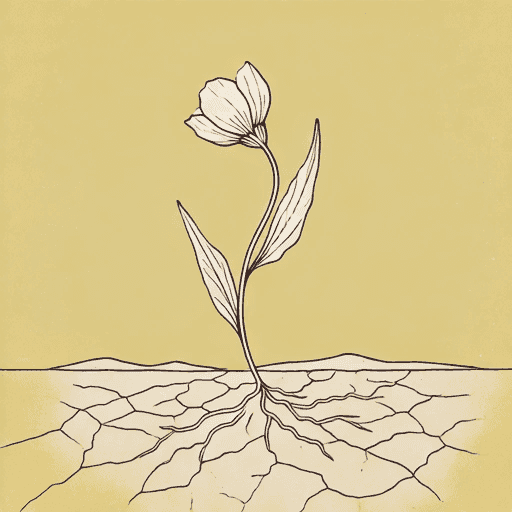
Though water is scarce, its absence dominates the novel, with the water motif shaping both the physical and emotional struggles of the Witting family. The characters focus on the lack of rain, the dwindling water supply, and the relentless dryness of the prairie. Water is essential for life, and its scarcity highlights the contrasts between abundance and deprivation, and hope and despair. Water, or more often, its absence, shapes the central conflict of the novel, emphasizing the harsh realities of prairie life while also serving as a metaphor for emotional sustenance. The drought serves as both a literal and metaphorical crisis, representing the fragility of life on the prairie and the relentless struggle of homesteaders. The dry and cracked land, brittle vegetation, and parched animals create an image of hardship, reinforcing the novel’s exploration of resilience.
The drought’s impact is deeply personal, especially on Jacob, whose identity as a farmer and provider is threatened by his inability to control the land’s fate. It also fuels a growing unease in the children that Sarah doesn’t want to stay in a place where survival is uncertain. The lack of water thus symbolizes the family’s vulnerability, not just to the forces of nature but also to the emotional strain of separation and uncertainty. Sarah’s words, “It will rain […] It’s just the time before it rains that is hard. It always is” (16), reflect the emotional endurance required to survive hardship. Caleb’s homemade rain gauge, which remains empty through most of the novel, is a constant reminder of their plight but is also a symbol of their optimism that relief is possible.
Water’s significance is further reinforced in the letters Sarah receives from Maine and the eventual setting shift when she takes Anna and Caleb there. Maine is leafy, verdant, and teeming with water, unlike the parched plains. Yet, instead of finding joy in it, the children experience deep homesickness. Through this, the novel subverts the idea that water alone will bring happiness. While Maine is rich with water, the children are nevertheless emotionally parched, being separated from Papa and the prairie. The return of rain on the prairie in the final chapters marks a turning point for the family. It coincides with rebirth and renewal: Seal has kittens, and Sarah becomes pregnant, signaling the importance of water in the cycle of fertility and life. The long-awaited rain also reunites the family, symbolizing survival, healing, and the endurance of the land and the Witting family. Ultimately, water in Skylark is a representation of hope and the enduring strength of family.
Anna’s Journal
Anna’s journal symbolizes memory, identity, and emotional connection. Through writing, she processes her experiences, recounts precious memories, and bridges the gap between past and present. Her journal is also a tool for self-discovery, allowing her to make sense of the changing world around her. In times of upheaval, writing provides Anna with a sense of continuity, helping her hold onto her concept of home and reflect on her developing sense of self within her family.
Anna’s life has been shaped by profound changes: losing a mother, gaining a new one, and watching her beloved home in peril. In the midst of these transitions, her journal is her anchor, offering her stability. By writing, she asserts control over her experiences and emotions, and this gives her a sense of agency even when external circumstances are uncertain.
Anna’s journal is also a place for her dreams and hopes. She writes, “My dreams are cool. They are cool and the color of the sky before rain, a dark and peaceful blue” (35), revealing her longing for rain and the renewal that will follow. Her entries offer a door into her inner life, capturing her deepest longings. By documenting her family’s struggles and triumphs, she unknowingly creates a record of resilience. Just as the journal preserves their past, it also envisions a hopeful future where her family happily thrives on the prairie. In essence, Anna’s journal is a symbolic thread connecting her to home, family, and self, highlighting storytelling’s power in shaping identity. It is a quiet, safe place for Anna to process her emotions and affirm that memory and love endure even when places and circumstances shift.
Letters
Letters in the novel symbolize longing for both people and places. Sarah speaks of how the written word allows people to express emotions they may not be able to verbalize in speech. When she receives letters from her aunts and brother in Maine, they are difficult for her to read since she deeply misses her childhood home in Maine. Sarah’s decision to skip reading some parts of her aunts’ letters aloud indicates that the emotions they trigger are too personal or painful to share openly. This selective sharing highlights how letters can be an intimate form of communication that precipitates strong emotions.
In Maine, the children long for their home on the prairie, and Papa’s letters are an emotional lifeline during their separation. Similarly, Jacob’s letters capture his longing for his family’s return. Sarah bids the children to “Read me your Papa’s letters again” (68), revealing her deep yearning for him and the prairie. Despite returning to the familiarity of Maine, she remains emotionally tethered to her husband and their home on the plains. The letters are a physical reminder of that connection, offering comfort and reassurance. Writing and reading letters let the family hold onto their connections and sense of home. Through letters, they remain emotionally intertwined through words and memories.

Unlock the meaning behind every key symbol & motif
See how recurring imagery, objects, and ideas shape the narrative.
- Explore how the author builds meaning through symbolism
- Understand what symbols & motifs represent in the text
- Connect recurring ideas to themes, characters, and events