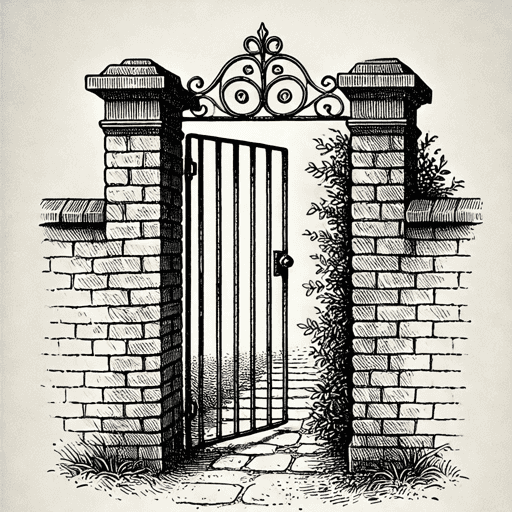
Slade House
58 pages • 1-hour read
David MitchellSlade House
A modern alternative to SparkNotes and CliffsNotes, SuperSummary offers high-quality Study Guides with detailed chapter summaries and analysis of major themes, characters, and more.
Themes
Content Warning: This section of the guide includes discussion of bullying and death.
The Corrupting Power of Wealth
Through the episodic structure of the novel, the narrative pattern that emerges features a desperate visitor seeking some form of relief from the residents of Slade House, only to be consumed by the house’s true owners, the Grayer twins. The guests rely on their hosts’ benevolence, only to have that benevolence leveraged against them at the cost of their lives. This underscores the sinister nature of the Grayers’ motivation: The Grayers want more life, beyond the range of human mortality, and they can only get it by essentially stealing it from others. Their wealth lies in their immortality, and Mitchell uses the Grayers’ exploitation as a metaphor for how the wealthy exploit others, using their own desires against them. In this way, the novel explores the corrupting nature of wealth through the Grayers’ methods of acquiring their immortality, but it also highlights how, through this process, the Grayers lose the remnants of their own humanity.
All the guests who come to Slade House need something, although they don’t necessarily desire monetary wealth. Rita Bishop needs a job so that she can escape her mounting debt, which she thinks she can do by attending the soirée at Slade House. Gordon Edmonds comes to Chloe Chetwynd because he thinks it can help him move past his failure to fit into a world that rejects his ways. Sal Timms comes along to Slade House because she thinks it will allow her to get closer to Todd Cosgrave. Freya Timms comes to Fred Pink because she is desperate to find out what happened to Sal. The orisons that they experience at Slade House indulge all of their desires, implying that they can get everything they want as long as they step through the door to the lacuna. The Grayers tempt people with fulfillment of their desires, for money, relationships, and success, paralleling the way that, in the real world, wealth becomes a lever, used to exploit those who want or need it.
This allegorical connection between wealth and immortality is further supported through Slade House’s location in a working-class neighborhood. Masquerading as Fred Pink, Jonah describes their early neighbors as “laboratory rats” for the experiment of perfecting the operandi, emphasizing the sense of superiority he feels. Because of their abilities and their capacity to transcend the mortal limits of life, the Grayer twins see themselves as a class above ordinary humanity. They dehumanize their prey, extending no sympathy to the suffering of their guests, even before they have reached the lacuna. It is no wonder then that Norah speaks to the corruptive effect that feeding has had on her humanity early on in the novel: “Every time I come back to my body… it feels less of a homecoming, and more like entering an alien shell” (33). To hold onto her life at the cost of others’ literally makes her feel less human. With the Grayers’ story, Mitchell explores how wealth acts as a corrupting influence, both on those who are tempted into the Grayers’ trap, and on Jonah and Norah themselves, who lose what remains of their humanity in their quest for immortality.
Recognizing the Beauty of the Human Soul
One of the common denominators that connects the Slade House guests is that they are all reckoning with insecurity. Before they arrive at the house, something in their history makes them believe that they are not entirely lovable or desirable. In Nathan’s case, his bullying at school and the bull mastiff’s attack cause his anxiety and signal his distrust in the world. Sal’s backstory centers around the inferiority complex she feels alongside her older sister, Freya. Gordon’s ego is wounded by his past faults as a husband and as a police officer, which he tries to relieve by being a noble stranger to Chloe. However, each of the Grayers’ victims comes to a different understanding of themselves as they face death, finally coming to understand their own beauty through reflection on the beauty of their souls as they leave their bodies.
The novel raises the point that this sense of insecurity is a consequence of the uncertainty about what happens to humans after death. It addresses this concern in Chapter 3, when Sal listens to her friend, Fern Penhaligon, who speaks of the assurance and closure that an immaterial world would bring her in the wake of her brother’s death. Although Fern isn’t the Grayers’ target, her visit to Slade House, with its undeniable evidence that life goes on beyond death, would grant her the relief she is seeking. Slade House is haunted by the remnants of the souls that were drawn there for consumption. The fact that even the Grayers’ destructive ritual does not deplete the entirety of the human soul speaks to the novel’s portrayal of the soul’s resilience and beauty, emphasizing the inner beauty of the victims that supersedes their own opinions of themselves.
The novel frames the guests’ journeys to Slade House as opportunities to overcome their insecurities. When Nathan meets Jonah, he takes note of the fact that Jonah is the first boy in a long while who hasn’t bullied him. Similarly, Sal finds herself becoming more confident at the party, especially after Melbourne Mike flirts with her. Gordon finds his self-esteem restored when Chloe shows interest in him, and the prospect of saving Rita Bishop and closing the case on Nathan offers him the opportunity to redeem his tainted reputation as a police officer. Each of the orisons, constructed by the Grayers for each particular victim, proves that all the guests are bigger than their insecurities. They all possess the capacity to be loved, which marks their reaction to the appearance of their souls before they die. They remark on the beauty of the human soul, which is meant to underscore the beauty in all of humanity, demonstrating the novel’s message that human insecurities are unfounded and fade in the face of the beauty of the true core, or soul, of a person.
The Importance of Living for Others
During the final confrontation between Marinus and Norah, the two debate over their methods for achieving immortality, a scene that acts as the novel’s commentary on how the Grayer twins have chosen to spend their extended lives. Norah tries to argue that their methods were necessary for their survival, but Marinus rebuts that the Grayers lived for no one but themselves. This, in effect, turned the Grayers into something other than human: “What’s a metalife without a mission? It’s mere feeding…All of you strangle your consciences, and ethically you strike yourselves dumb” (234-35). This implies that the decision to live for others is a fundamentally human trait, one that the Slade House guests demonstrate in their attempts to redeem their souls.
Mitchell illustrates this message through those still living, who seek out information about their loved ones, like Freya and Fern. Freya is drawn to Slade House out of nothing but the desire to resolve the lingering question of Sal’s fate. She lives not in grief over her loss, but out of hope that Sal is still alive, echoing Fern’s hope that her brother still exists in the afterlife. Freya’s guilt over the unresolved friction in her relationship with Sal underscores the power of their relationship over Freya’s life. Her decision to sit through Jonah’s story and listen for the promise of learning what happened to Sal speaks to her hope as a motivating principle for her life.
However, the decision to live for others is also illustrated with the actions of the ghostly remnants of the victims, still trapped at Slade House. Sal’s intervention at the moment of Freya’s ritual illustrates not only Sal’s love for her sister but also the other guests’ desire to save others from suffering their fate. The other ghosts demonstrate this tendency as well, sacrificing their last remnants to try to save the next victim. In Chapter 2, Gordon hears the voice of Nathan Bishop, who clues him in to the existence of a weapon that he will need to relay for “the next guest” (70), even if it means he can no longer save himself. The concern that Nathan, Gordon, and Sal show for future victims and the love Freya has for Sal contribute to the eventual downfall of the Grayers, weakening them in preparation for Marinus’ arrival. If Sal never intervened, the Grayers would have easily outmatched Marinus, and with Marinus’s victory, the novel emphasizes the power of love and putting others’ needs above oneself.
Marinus herself becomes an important component of this message; as a Horologist, her mission is to serve human life with her immortality. Marinus understands that immortality robs the Atemporals of their humanity, resulting in people like the Grayer twins, who see their guests as means to an end. By using their gifts to serve others instead, the Horologists overcome the gap between immortals and mortals by bringing themselves closer to the everyday suffering of people and actively working to alleviate it. The Horologists see their mission as both necessary and a privilege, and with their distinct perspective, the novel underscores its message of the importance of living for others.

Unlock every key theme and why it matters
Get in-depth breakdowns of the book’s main ideas and how they connect and evolve.
- Explore how themes develop throughout the text
- Connect themes to characters, events, and symbols
- Support essays and discussions with thematic evidence