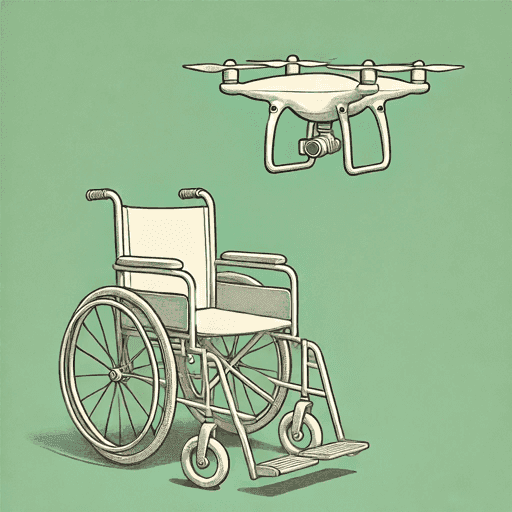
Snoop
54 pages • 1-hour read
Gordon KormanSnoop
A modern alternative to SparkNotes and CliffsNotes, SuperSummary offers high-quality Study Guides with detailed chapter summaries and analysis of major themes, characters, and more.
Important Quotes
“I won’t be doing the Chattanooga Chop anytime soon, but having two broken legs might not be the worst thing that ever happened to me.”
(Chapter 1, Page 9)
This final thought of the first chapter uses foreshadowing to establish a key aspect of Carter’s mindset. He interprets his physical confinement not as a limitation but as an excuse to indulge in the screen time his parents tried to restrict. The line foreshadows his descent into digital obsession, framing his injury as the catalyst for the novel’s central conflict.
“The only time I’ve ever had Lacey all to myself and I’m waving at her with a mop swollen with toilet water.”
(Chapter 3, Page 18)
Situational irony highlights Carter’s feelings of inadequacy and helplessness in the face of his crush. His attempt to be self-sufficient—cleaning a mess with a creative but unseemly tool—backfires in a moment of peak social vulnerability. This scene comically underscores the challenges of his new physical reality and the disconnect between his intentions and capabilities.
“I can’t get out there to spy on them, but maybe I don’t have to. If I can access the feed from that camera, that’s just as good as being there in person. Even better, because no one will know I’m watching.”
(Chapter 3, Page 24)
Carter realizes that technology allows him to be present without being seen. The phrase “Even better” shows that secrecy is part of the appeal, not just convenience. What begins as curiosity now becomes intentional watching because he prefers observation without accountability.
“Videos are awesome, but they’re make-believe. The cameras out there are the real thing!”
(Chapter 5, Page 33)
This internal monologue signals a crucial evolution in Carter’s obsession with screens. He is no longer satisfied with the curated, fictionalized content of viral videos, instead craving the raw, unfiltered reality offered by the surveillance feeds. This distinction elevates his spying from a simple habit to a compelling investigation into the authentic, hidden life of his town.
“‘Yeah, but that’s the store’s camera,’ Ethan argues. ‘Only the employees can see through that.’”
(Chapter 6, Page 40)
Ethan’s dialogue serves as an external moral compass, explicitly defining the ethical boundary Carter is about to cross. By hacking into a private camera, Carter moves from using a public utility to committing a genuine intrusion, escalating his behavior from questionable to illegal. This moment clearly delineates the theme of The Blurred Line Between Observation and Intrusion, showing Carter’s conscious decision to disregard it.
“How’s that for weird? I’m stuck in this wheelchair. […] And yet, at the same time, it’s like the whole world is opening up to me, inviting me in.”
(Chapter 7, Page 46)
Carter recognizes the strange contradiction in his situation: Although he cannot physically move through the world, he can see more of it than ever before. The cameras give him access to events that he would otherwise miss. His confinement limits his body but expands his reach.
“I twist the knob, sending the drone swooping down on Maddox’s big fat smirking face. Honest—I’m not trying to hit him. I just want to buzz him a little—you know, part his hair with the drone’s undercarriage.
(Chapter 8, Pages 52-53)
Carter’s impulsive action physically manifests his internal jealousy and frustration, demonstrating the dangerous potential of his newfound technological agency. The drone, a symbol of his ability to transcend physical limits, is weaponized as a tool for intimidation. This act shows a lack of moral restraint and foreshadows the high stakes of his later, more heroic, drone piloting.
“I never realized what a stabilizing influence school always was in my routine. Without it, I’m all over the place. I can jolt myself out of a deep sleep, ready to start my day, only to find out it’s three o’clock in the morning. There’s no way to get back down again. It’s just not going to happen.”
(Chapter 9, Page 56)
Carter’s reflection on his unstructured life explains the psychological conditions that enable his obsessive surveillance. The collapse of his daily schedule erases normal temporal boundaries, pushing him into the late-night hours when the town’s secrets are most visible. This loss of routine is a direct cause of his insomnia and the subsequent discovery of the endangered animals, which drives the main plot forward.
“What’s an endangered animal doing eating out of a garbage can in downtown Sterling?”
(Chapter 9, Page 58)
This question marks the transition of the plot from a story about personal spying to a genuine mystery with higher stakes. The appearance of the red panda is an anomaly that Carter’s surveillance uncovers, shifting his role from a voyeur to an accidental witness. This discovery provides the first tangible clue to the smuggling operation and begins to test the limits of The Burden of Knowledge.
“If you ever get a chance to put on the brakes and become a fly on the wall, you’d be amazed at what you see. I know Ethan wants me to be concerned about people’s privacy, blah blah blah…but if you don’t notice the fly on the wall, does it really matter if it’s there?”
(Chapter 10, Pages 60-61)
In this internal monologue, Carter uses the “fly on the wall” metaphor to justify his surveillance, framing it as passive observation rather than active intrusion. The dismissive phrase “blah blah blah” reveals his conscious rejection of the ethical concerns raised by his friend Ethan. This line directly establishes the theme of the blurred line between observation and intrusion by questioning the morality of unobserved spying.
“It’s like there’s this whole other side to life I never even knew existed before I broke my legs. It’s full of secret plots and restaurant wars and animals on the street that should be thousands of miles away.”
(Chapter 11, Page 70)
Carter’s physical confinement has paradoxically expanded his perception of his town, transforming it from mundane to mysterious. The expanding list of discoveries—“secret plots and restaurant wars and animals”—creates a cascading sense of wonder. This realization marks the point where his camera use shifts from a tool to alleviate boredom into a compelling investigation of a hidden world.
“How wrong can a guy be? I was so sure Needle-Nose had his eyes on the crown. […] How was I supposed to know Mr. Grimaldi was a starving artist keeping tabs on his first painting? Sherlock Holmes himself probably wouldn’t have gotten this one right.”
(Chapter 13, Page 86)
Carter confronts the fact that he has misread the situation completely. His exaggerated comparison to Sherlock Holmes softens the embarrassment of being wrong, but it does not erase the mistake. The moment shows how easily confidence can replace evidence when conclusions are based on limited information.
“‘All you are is a snoop—and a pretty lousy one at that!’ She pulls some papers out of her backpack and throws them in my face. ‘Here’s your stupid homework! Believe me, this is the last time you’re going to get it from me.’”
(Chapter 14, Page 90)
This moment crystallizes the social consequences of Carter’s misguided surveillance, as his long-time crush, Lacey, confronts him directly. Her accusation is both a literal and figurative blow, as she physically throws his homework at him while verbally attacking his character. Lacey’s dialogue serves as an external verdict on Carter’s actions, forcing him to face the reality that his spying has alienated him from his peers.
“You’ve always had a problem with screens, Carter. Ever since you got your first iPad, you've been hooked. I’d hoped your skiing accident would make you reconsider your relationship to electronics, but instead it’s had the opposite effect. I thought the games and websites and apps were addictive enough, but these cameras! You’re like a piglet exposed to its first mud bath—you can’t get enough.”
(Chapter 14, Pages 92-93)
Carter’s mother articulates the central conflict of his screen dependence, revealing the ironic outcome of his injury: His physical confinement has only deepened his digital obsession. The simile comparing Carter to a “piglet exposed to its first mud bath” vividly portrays his dive into surveillance as a primal, unrestrained indulgence. This speech provides a crucial parental perspective, framing Carter’s behavior not as investigation but as a compulsive habit with negative consequences.
“He starts to tiptoe away. My index finger brushes over the power button. This is it. I’m back online, back in the world. […]
I press the button…and immediately release it.
‘Martin—take this back and put it away.’”
(Chapter 15, Pages 102-103)
This scene marks a significant turning point in Carter’s moral development, addressing his Redemption Through Accountability. The sensory detail of his finger on the power button builds tension, symbolizing the temptation to reconnect with the digital world. By ultimately rejecting his brother’s offer, Carter demonstrates newfound self-control and loyalty to his mother, choosing familial trust over the allure of screens for the first time.
“There’s no way I can go public with this information—not unless I have proof positive that I’m not making it up. Proof positive means pictures or video. […]
After all, I promised Mom that I’d never access the police cameras. I never said anything about drones.”
(Chapter 16, Pages 107-108)
Carter’s internal logic reveals a crucial shift from aimless spying to a focused, evidence-gathering mission. His rationalization about the drone is a loophole, allowing him to technically maintain of his promise to his mother while violating its spirit. This moment elevates the role of the drone, a key symbol, representing a new, more active form of agency that will allow him to pursue the truth on his own terms.
“The drone is like those cameras only better, because I can move it wherever I choose.”
(Chapter 17, Page 114)
Carter prefers the drone because it allows him to choose where to look and when to move. Unlike the fixed cameras, it gives him control over what he sees. The shift from watching screens to piloting a device in real space shows how his involvement is becoming more active and deliberate.
“One thing is clear: Those two men brought the tree kangaroo inside the old courthouse. And I’ll bet the other animals are in there too—the red panda, the swift fox, the bonobo, and who knows what else. They must be running some kind of illegal animal ring from there, specializing in endangered species.”
(Chapter 18, Page 122)
This is the moment of synthesis where Carter’s disparate observations coalesce into a coherent and criminal theory. The declarative sentence “One thing is clear” shows his newfound certainty, backed by direct observation rather than flawed interpretation. This discovery validates his previous sightings and transforms his snooping into a legitimate investigation, fully saddling him with the burden of knowledge.
“But there’s another possibility—one I’m reluctant to admit, even to myself: I’ve turned into a compulsive snoop. […]
That’s how snooping gets to you. It’s all out there, waiting for you—everything under the sun.
Everything except the secret of how to quit.”
(Chapter 20, Page 139)
Here, Carter demonstrates a critical moment of self-awareness, acknowledging that his surveillance has spiraled from a simple pastime into an obsession. This passage directly addresses the theme of the blurred line between observation and intrusion. The personification of snooping as an active, entrapping force (“how snooping gets to you”) highlights the addictive nature of unrestricted observation.
“Only my two broken legs keep me from jumping up and running a mile.
It’s the last person on earth I’d expect to be involved in a ring that smuggles endangered animals.
My teacher, Mr. Grimes.”
(Chapter 21, Page 148)
This quote serves as a major plot twist, related to the misidentification motif that runs through the narrative. The short, declarative sentences convey Carter’s profound shock. This moment exemplifies how surveillance can subvert personal expectations, revealing a shocking truth that contradicts Carter’s perception of his teacher.
“Yes, if the police investigate the abandoned courthouse, it would mean the end of the smuggling ring. There’s only one problem: How can I explain how I know? I’d have to admit that I kept on spying after I promised the police—and my mother, whose laser gaze is burning into the back of my head—that I’d stop.”
(Chapter 22, Page 153)
Carter understands that reporting the crime would expose his own wrongdoing. He has the information needed to stop the smugglers, but he cannot explain how he obtained it without breaking trust. The humor in his mother’s “laser gaze” contrasts with the seriousness of the choice he faces.
“But it doesn’t feel right to be spying on people who have been driven to their most awful moment. It isn’t funny anymore.”
(Chapter 23, Page 158)
This reflection marks a significant evolution in Carter’s ethical understanding, moving him from a detached voyeur to an empathetic observer. His realization that the “food war” is no longer entertaining signifies a crucial development in his character arc. It is the moment he begins to recognize the humanity of his subjects and the inherent harm in treating their lives as entertainment.
“My former best friend is carrying something in his hands. I bring the drone in a little lower for a better view. It’s a sign! Not only is Ethan a member, but he’s allowed to be the bearer of the Chairmen’s famous trademark.”
(Chapter 24, Page 167)
In this scene, the drone symbolizes Carter’s detached yet painfully intimate view of his own social exclusion. The sign, a key motif associated with the Chairmen of the Bored, functions here as a tangible confirmation of his best friend’s betrayal. The use of these layered symbols transforms a simple act of observation into a moment of profound personal loss and isolation.
“Hand over hand I climb, powered by all the chin-ups I’ve been practicing during these weeks of sheer boredom around the house. My casts are finally good for something—they squeeze the shaft and keep me in place as I surge higher and higher.”
(Chapter 25, Page 176)
This quote illustrates the theme of Redefining Strength Beyond Physical Ability by subverting previous symbols of helplessness. The chin-ups, an activity born of confinement and boredom, become the source of his life-saving strength. Similarly, his casts, the ultimate emblems of his immobility, are repurposed as essential tools for his ascent, demonstrating that resilience can transform weakness into an asset.
“There’s a point where snooping turns into spying—where a hobby becomes an obsession—and that’s not good. But it’s proof of how much information is out there if you’re willing to go find it.
You just have to know where to draw the line.”
(Chapter 27, Page 191)
Serving as the novel’s thematic conclusion, this quote articulates the central lesson that Carter has learned. It explicitly defines the moral spectrum of observation, from harmless snooping to obsessive spying, encapsulating the theme of the blurred line between observation and intrusion. This final reflection demonstrates his newfound maturity and acceptance of the ethical boundaries required when wielding the power of modern technology.

Unlock every key quote and its meaning
Get 25 quotes with page numbers and clear analysis to help you reference, write, and discuss with confidence.
- Cite quotes accurately with exact page numbers
- Understand what each quote really means
- Strengthen your analysis in essays or discussions