Snoop
54 pages • 1-hour read
Gordon KormanSnoop
A modern alternative to SparkNotes and CliffsNotes, SuperSummary offers high-quality Study Guides with detailed chapter summaries and analysis of major themes, characters, and more.
Character Analysis
Carter Peregrine
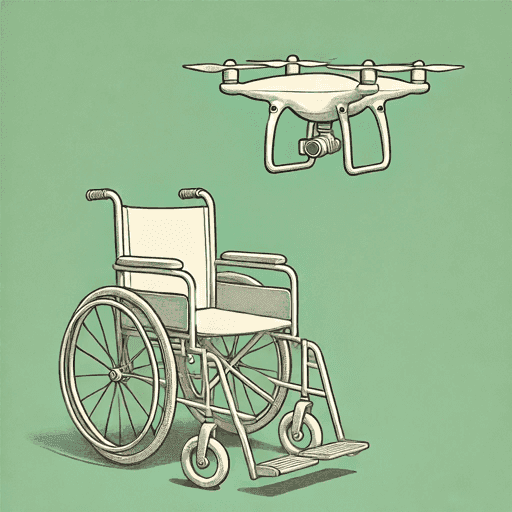
Carter is the novel’s dynamic, round protagonist, whose journey examines how access to information shapes responsibility and social belonging. Initially defined by his fixation on technology, Carter experiences the world primarily through screens, a habit that frustrates his divorced parents. His skiing accident leaves him with two broken legs, causing him to have to use a wheelchair and stay in the ground-floor guest room; the incident also removes restrictions on his screen time.
This new reality forces Carter to rethink how he participates in the world around him. Using a wheelchair after his accident, he turns to public surveillance cameras as a way of engaging with a town from which he feels increasingly excluded. These tools give him a sense of reach and control that compensates for his reduced mobility, but they also encourage distance rather than connection. Carter initially frames his use of the cameras—particularly when watching Lacey—as harmless curiosity, yet this framing reflects his own rationalization rather than an objective assessment. As his watching expands beyond personal interest into habitual monitoring, his sense of agency becomes entangled with intrusion, contributing to growing social isolation and strained relationships.
This arc highlights the growing tension between observation and intrusion, as Carter’s misinterpretation of what he sees leads to a false accusation against the innocent artist Mr. Grimaldi and triggers serious social consequences. Rather than positioning this moment as a moral awakening, the novel presents it as a rupture in Carter’s self-justifying logic. For the first time, he is forced to reckon with the fact that access to information does not guarantee understanding and that acting on incomplete perception can cause real harm. Carter’s development is reflected in how he relates to the tools that enable his watching. Using a wheelchair and surveillance technology shapes how he navigates his environment, encouraging problem-solving and adaptability rather than physical engagement. His efforts to build skill and control—such as practicing maneuverability at home—demonstrate resourcefulness, but they do not erase the ethical limits of surveillance. When Carter later intervenes to prevent further harm, his actions mark a shift from detached observation toward accountability, without resolving the underlying tension between access and restraint.
Likewise, his mother’s drone becomes another tool through which Carter extends his surveillance, allowing him to observe situations that he cannot access directly. Rather than representing an “active life” that he lacks, the drone reinforces how Carter substitutes mediated observation for participation. It enables him to gather information that ultimately exposes the animal-smuggling operation, but it also deepens his reliance on distance and control rather than direct engagement. When Carter later intervenes to prevent further harm, his actions mark a shift from detached watching toward accountability. However, this shift does not resolve the compulsive nature of his snooping or restore him to a position of moral authority. Even as his role in stopping the smugglers is publicly acknowledged, Carter remains aware that his access to surveillance technologies has shaped him in troubling ways. The novel closes with Carter no longer able to justify his behavior as harmless yet still uncertain about how to relinquish the impulse to watch, emphasizing responsibility as an ongoing burden rather than a completed transformation.
Mr. Grimes
Mr. Grimes functions as both a mentor figure and an unwitting red herring in the narrative. As Carter’s math teacher, he represents a stable and caring authority figure who shows genuine concern for Carter’s academic and personal well-being during his remote learning. He makes an effort to integrate Carter into the class via Zoom and even visits his home, demonstrating a level of dedication that extends beyond the classroom. However, his stressed and weary demeanor, which he attributes to his visiting brother, makes him an object of Carter’s suspicion. Carter observes him having dinner with a woman who is not his wife and later sees his twin driving the smugglers’ van, leading him to erroneously conclude that his teacher is involved in criminal activity.
This misidentification is a central element of the plot and reinforces the novel’s emphasis on misinterpretation. The revelation that Mr. Grimes has an identical twin brother clarifies Carter’s misunderstanding and confirms that the teacher himself is not responsible for the crimes being investigated. Mr. Grimes’s stress is legitimate, stemming from the “toxic” dynamic with his criminal sibling rather than from a secret life of wrongdoing. Throughout the story, he remains a static, round character whose integrity is never compromised. His efforts to mediate the social conflict between Carter and his classmates, along with his final conversation with Carter—during which he refuses to hold him personally responsible for his brother’s arrest—underscore his role as a consistently supportive educator.
Lacey D’Agostino
Lacey is a dynamic, round character who serves as Carter’s primary love interest and acts as a barometer for his social standing. Initially, she is the catalyst for Carter’s snooping, as he uses the town’s cameras to watch her. As one of his appointed student ambassadors, she is brought into his isolated world, but her association with the popular antagonist, Maddox, and his group, the “Chairmen of the Bored” (19), establishes her as part of the social sphere from which Carter is excluded.
Lacey’s perception of Carter shifts dramatically throughout the novel. Following Carter’s false accusation against Mr. Grimaldi, which inadvertently gets the Chairmen in trouble, she becomes his harshest critic. She quits her role as his ambassador, declaring him a “snoop—and a pretty lousy one at that!” (90), embodying the social rejection that results from his intrusive behavior. This confrontation highlights the negative consequences of Carter’s actions and forces him to reckon with the harm that his spying has caused. Her perspective shifts again after Carter saves her and her friends from the snow leopard. Her initial shock transforms into admiration, as she tells him, “It was the bravest thing I’ve ever seen!” (182). Her renewed friendship and support mark the end of Carter’s social isolation.
Martin Peregrine
Martin, Carter’s eight-year-old brother, is a flat character who functions as the story’s catalyst and as a foil to the protagonist. It is his skiing mishap that causes Carter’s double leg fracture, setting the plot in motion. In the immediate aftermath, Carter exploits Martin’s guilt, turning his younger brother into a personal butler who fetches him snacks and batteries. This dynamic highlights Carter’s initial selfishness and resentment.
However, Martin’s character develops beyond being merely the source of Carter’s problem. Overcome with guilt and empathy, he makes a significant gesture of loyalty by secretly offering Carter his iPad after their mother confiscates all of Carter’s devices. This act demonstrates a surprising maturity and a deep-seated affection for his brother, marking a turning point in their relationship. Carter’s refusal of the iPad, in turn, signals his own moral growth. Martin’s presence is again crucial during the climax, as his spotting of the snow leopard on the drone’s screen confirms Carter’s discovery and prompts Carter’s confrontation with the animal.
Ethan Harouni
Ethan is Carter’s best friend, and he serves as a loyal confidant, an accomplice, and a moral compass. As Carter’s first student ambassador, he is a crucial link to the school life from which Carter is physically disconnected. He willingly aids Carter in his initial investigation of “Needle-Nose,” even “dumpster diving” for clues.
At the same time, Ethan voices his unease with Carter’s increasingly intrusive surveillance, cautioning him against hacking into private cameras and warning that “[n]o good can come of it” (43). His concerns foreshadow the negative consequences of Carter’s snooping. A dynamic character, Ethan’s loyalty is tested when Carter becomes a social pariah. He succumbs to peer pressure, distancing himself from Carter and joining the Chairmen of the Bored. This abandonment underscores the depth of Carter’s isolation. However, their friendship proves resilient. After Carter’s heroic act saves him and the other Chairmen, their bond is restored, highlighting the theme of Redemption Through Accountability.
Maddox Miller
Maddox is the story’s primary social antagonist and a rival to Carter. As the founder and leader of the Chairmen of the Bored, a group dedicated to pranks, he represents the exclusionary nature of middle-school social hierarchies. He is a flat and static character whose main function is to create conflict for Carter. Maddox’s rivalry with Carter is twofold: He competes for Lacey’s attention and actively works to ostracize Carter, enforcing a “lifetime ban” from his clique.
After Carter’s spying inadvertently leads to the Chairmen getting caught by the police, Maddox successfully turns the seventh grade against Carter, branding him a “tattletale” and a “spoilsport.” His taunting and the party from which he deliberately excludes Carter intensify Carter’s social isolation. Maddox’s role concludes with a visible shift in behavior. After Carter saves him and the other students during the snow-leopard incident, Maddox publicly applauds him, leading the class in a standing ovation. This response signals a reversal in Maddox’s treatment of Carter and reflects the broader change in how Carter is perceived by his peers.
Carter’s Mother
Carter’s mother is a key secondary character who represents parental authority and concern. A professional photographer, her primary conflict with Carter centers on his excessive screen time, a habit that she attempts to limit by encouraging more active pursuits. After Carter’s snooping leads to trouble with the police, she enforces a strict ban on his computer and phone, a disciplinary action that inadvertently pushes Carter toward alternative methods of observation, namely her drone. The drone, a tool of her trade, becomes central to Carter’s ability to observe events beyond his immediate surroundings.
Although she is unaware of his secret activities, her actions remain instrumental to his development. Her eventual pride in Carter’s actions brings resolution to their conflict, as she recognizes that his engagement with technology—while problematic at times—also played a role in preventing harm.
The Smugglers
The smugglers are the flat, static antagonists of the central plot, representing a criminal element hidden beneath Sterling’s mundane surface. Led by Mr. Grimes’s identical twin brother, the group operates an illegal trafficking ring involving endangered animals, using the abandoned old courthouse as their base and a Zippy Airport Service van as a cover for their movements. Their motivation appears to be primarily financial, and their treatment of the animals demonstrates a disregard for their welfare. The repeated escape of these animals draws Carter’s attention and drives the novel’s central mystery. The existence of Mr. Grimes’s twin explains the teacher’s seemingly suspicious behavior and clarifies a major source of Carter’s misinterpretation. As characters, the smugglers function less as individuals than as a collective threat that gives tangible stakes to Carter’s investigation and forces him to act beyond passive observation.

Unlock analysis of every major character
Get a detailed breakdown of each character’s role, motivations, and development.
- Explore in-depth profiles for every important character
- Trace character arcs, turning points, and relationships
- Connect characters to key themes and plot points