54 pages 1-hour read

Snoop

Fiction | Novel | Middle Grade | Published in 2025

A modern alternative to SparkNotes and CliffsNotes, SuperSummary offers high-quality Study Guides with detailed chapter summaries and analysis of major themes, characters, and more.

Themes

The Blurred Line Between Observation and Intrusion

After breaking both legs in a skiing accident, Carter begins using a wheelchair and turns to his town’s public surveillance cameras as a new vantage point. In Snoop, Korman traces how this seemingly harmless access to public feeds gradually erodes ethical boundaries, suggesting that visibility without responsibility can distort judgment and damage real lives. Carter’s early fascination turns into obsessive spying that isolates him from his community. The novel ultimately argues that seeing is not inherently virtuous; information gains moral value only when the person behind the screen uses it with restraint and selflessness.


Carter begins with motives that feel personal and small since he watches the public police cameras in Sterling Park to follow Lacey and Maddox as they walk home from school. From his bedroom, he studies their conversations while trying to understand his crush on Lacey and his jealousy toward Maddox. What initially feels like harmless curiosity shifts once he decides that public access justifies deeper intrusion. After learning to bypass security systems, he enters the private camera feed at the Topping Mad frozen-yogurt shop simply to continue tracking Lacey and Maddox. His casual rationalization that hacking is not that hard reveals how easily access becomes entitlement. The step from public surveillance to private breach marks a turning point: Carter is no longer observing what is openly visible but actively violating spaces never meant for him.


His unchecked snooping leads to real consequences when he misreads scenes filtered through screens. Carter fixates on a man he nicknames “Needle-Nose,” who lingers outside the Paris Art Shop. Convinced that he’s witnessing a robbery in progress, Carter calls in a crime report. The man, Mr. Grimaldi, is actually an artist anxiously waiting to see whether his work has sold. Carter’s false alarm humiliates Grimaldi and simultaneously exposes the Chairmen of the Bored, including Lacey, during a minor act of vandalism. The episode demonstrates how partial visibility creates false certainty. Watching from a distance gives Carter the illusion of authority, yet he lacks context, tone, and nuance. Korman uses this mistake to show that surveillance can construct a convincing but incomplete narrative that harms innocent people.


The fallout isolates Carter and forces him to confront the damage he has caused. Lacey resigns as his student ambassador and tells him, “All you are is a snoop—and a pretty lousy one at that!” (90). Ethan’s parents forbid him from visiting Carter. These consequences reveal that remote watching carries real-world costs; Carter’s technological access cannot shield him from accountability. He begins to regain trust only when he uses his knowledge to help someone else, such as making an anonymous emergency call that brings aid to a pregnant woman in labor at the park. This act reframes surveillance as responsibility rather than curiosity. Through Carter’s progression from voyeur to reluctant guardian, the novel suggests that the power to see is ethically neutral until shaped by intention. In a world saturated with cameras and digital access, Snoop proposes that the true boundary is not technological but moral.

Redefining Strength Beyond Physical Ability

Carter’s sudden loss of mobility forces him to reconsider what strength truly means. At first frustrated by his loss of mobility, Carter gradually develops a different kind of agency through discipline, creativity, and moral resolve. His shift from resentment to purposeful action shows that strength grows from the determination to protect others, even when the body feels vulnerable.


Carter initially struggles with his new limitations, yet he quickly works to regain control over his changed circumstances. He sets up orange cones on his street to practice maneuvering his wheelchair, focusing on speed and precision. The drills help him rebuild confidence and sharpen his coordination. The chair, once associated with dependence, becomes the tool through which he develops a specialized skill. As he practices wheeling and improves his upper-body strength through repeated pull-ups and chin-ups, this training lays the foundation for a redefined sense of physical capability grounded in effort rather than ease.


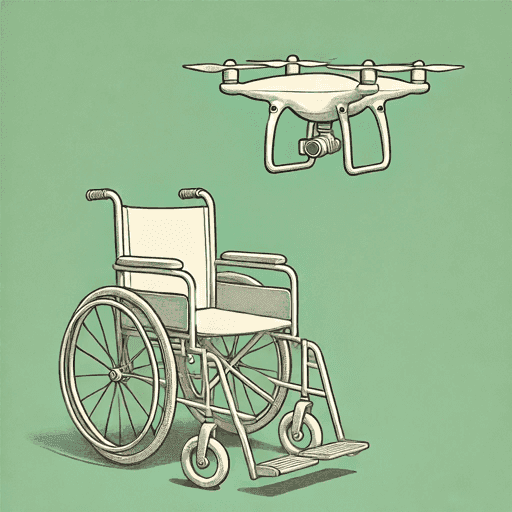
He also discovers that his sharpest tool is his mind. Because he cannot travel around town as before, he turns to technology to expand his reach. The public security cameras give him access to distant spaces, and later, his mother’s drone allows him to track the movements of endangered animal smugglers operating out of the old courthouse. Rather than replacing his body, the drone extends his perspective, helping him observe events from above and gather clues. His focus and resourcefulness allow him to assume the roles of investigator and protector. Limited mobility does not eliminate his capacity to act; instead, it redirects his effectiveness toward strategy and problem-solving.


The novel unites his physical practice and mental discipline when the snow leopard escapes and endangers his classmates. Carter propels his wheelchair toward the animal to draw it away from the others. He tells his brother, “I’ve got wheels that are faster than walking […] I’ve been practicing” (172). In that moment, preparation turns into courage. The chair functions not as a symbol of restriction but as the means through which he intervenes. The scene reinforces the novel’s broader claim that strength is defined less by physical condition than by choice, responsibility, and resolve.

The Burden of Knowledge

In Snoop, Korman suggests that knowledge is not inherently empowering; it becomes burdensome when it is detached from context and humility. Carter gains unprecedented access to Sterling through public surveillance feeds and later through his mother’s drone. The more he sees, the more he believes he understands. Yet the novel repeatedly demonstrates that visibility does not equal comprehension. Carter’s growing confidence in what he observes makes him unaware of the limits of his perspective, revealing that knowledge without context can distort judgment rather than sharpen it.


Carter’s mistake with Mr. Grimaldi exposes this illusion most clearly. Watching from his bedroom, Carter fixates on a thin man lingering outside the Paris Art Shop. The silent footage allows him to interpret pacing and glances as criminal intent. Convinced that he’s witnessing a robbery in progress, Carter reports the situation to the police. The man turns out to be an anxious artist checking whether his work has sold. The humiliation that follows does not stem from malice but from misinterpretation. Carter saw movement but not motive; he saw repetition but not anxiety. The camera provided fragments, and Carter filled in the rest with assumption. Korman uses this moment to illustrate how limited knowledge can create false certainty. Distance strips away tone, history, and human complexity, leaving the watcher dangerously confident in incomplete conclusions.


The burden of knowledge lies in recognizing its limits. Carter’s access makes him feel responsible for what he sees, yet he lacks the patience to question whether he truly understands it. His earlier excitement about monitoring town activity shifts into a heavier awareness that information demands restraint. By the end of the novel, he admits that there is “a point where snooping turns into spying” (191), acknowledging that the problem was not curiosity itself but the failure to draw a line. That admission reframes knowledge as something that requires judgment rather than impulse. Snoop ultimately argues that information carries weight: The more a person sees, the more carefully they must interpret. Knowledge becomes meaningful not when it expands vision but when it is guided by humility.

Redemption Through Accountability

While Carter’s misuse of information causes harm, Snoop does not define him by that failure. Instead, Korman frames redemption as something earned through accountability and deliberate change. Carter’s growth is not secured by uncovering smugglers or proving himself clever; it is secured through his willingness to accept responsibility for crossing ethical lines. The novel presents redemption as a process of repair, grounded in action rather than apology.


After the incident involving Mr. Grimaldi, Carter faces the social consequences of his behavior. Lacey withdraws from him, and Ethan’s parents forbid visits. The isolation matters because it strips Carter of distraction. Without friends to validate him, he must confront the impact of his choices. Korman does not allow redemption to occur immediately. Carter’s embarrassment lingers, and he is forced to sit with the recognition that good intentions do not erase harmful outcomes. This pause establishes that remorse alone is insufficient; something more tangible must follow.


That shift begins quietly. When Carter sees a pregnant woman go into labor in the park through his drone footage, he calls 911 and remains anonymous. He does not seek credit or recognition; he acts because someone needs help. Later, when Martin offers him a secret opportunity to break a rule without being caught, Carter refuses. These moments are small, but they signal a pattern: Carter begins choosing integrity even when there is no audience. Redemption, the novel suggests, starts with private discipline before it becomes public courage.


The transformation becomes undeniable during the snow-leopard crisis. Carter propels himself toward danger to draw the animal away from his classmates, risking injury in the process. Afterward, he confesses to the police, admitting that he violated his promise about using the drone. The confession is voluntary and complete and marks the difference between accidental heroism and moral growth. By owning his mistakes openly, Carter restores trust not through spectacle but through honesty. Snoop ultimately portrays redemption not as the erasure of wrongdoing but as the decision to accept consequences and act differently moving forward.

blurred text
blurred text
blurred text

Unlock every key theme and why it matters

Get in-depth breakdowns of the book’s main ideas and how they connect and evolve.

  • Explore how themes develop throughout the text
  • Connect themes to characters, events, and symbols
  • Support essays and discussions with thematic evidence