Son of the Mob
Son of the Mob
A modern alternative to SparkNotes and CliffsNotes, SuperSummary offers high-quality Study Guides with detailed chapter summaries and analysis of major themes, characters, and more. For select classroom titles, we also provide Teaching Guides with discussion and quiz questions to prompt student engagement.
Summaries & Analyses
Quizzes
NEWReading Tools
Games
Symbols & Motifs
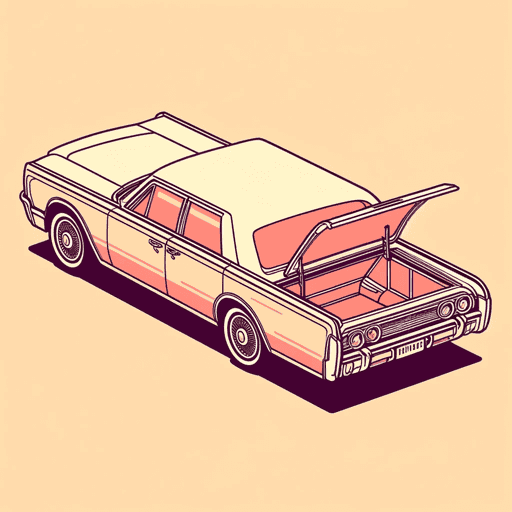
Vince’s Mazda
Vince’s Mazda is a potential status symbol, but one that he subverts. He has chosen a Mazda, rather than a fancier car, thereby signifying his desire for independence and autonomy from his family; he also insists on paying for this car by himself. His family is mystified by his rejection of a fancier car, even after they gave him a stolen Porsche for his sixteenth birthday, which was then spotted by the cops. Yet it is not merely stolen cars that Vince is rejecting; it is flashy cars that advertise the driver as being rich and powerful. To Vince, such cars represent all of the embarrassing attention that is directed at him and exceptions that are made for him, because he is the son of a powerful gangster. They represent a type of specialness from which he wants only to escape.
His independence from his family, however, is only partial, as is illustrated by the fact that he later learns that his father secretly paid for part of the Mazda. The incident in the first chapter of the book, in which a body turns up in the trunk of Vince’s Mazda at a very inconvenient moment, further illustrates the challenge that Vince faces in trying to escape his family and become his own person. For most teenagers, a first car signifies a milestone, a sign of both adult responsibility and escape. For Vince, a first car is especially charged, and it is significant that he wants a shabby nondescript car, rather than a glamorous one. In his world, it is the normal civilian life that is exotic.
Family Dinners
Family dinners are very important in the Luca household, which might seem incongruous at first, since they are a family of criminals. Yet it is for this very reason, perhaps, that they value the appearance of normalcy and domesticity so much; they need it as a kind of disguise, not only for others, but for themselves. Even if their house were not bugged by the FBI, one suspects the Luca family would talk in the same evasive way about their business, and would probably not refer directly to committing murders at the dinner table. For most families, dinner is a time for decorum and good behavior, a time to be a better, more civilized version of yourself. For the Lucas, who are anything but polite in their work life, this ritual is especially important.
Along with a commitment to good manners and decorum, family dinners signify loyalty and togetherness, and this is also an important value to the Luca family. The importance that they place on loyalty can be seen in Anthony Luca’s various henchman all being called some variation of “Uncle,” rather than their actual names. Their identity becomes about their place in the family and the jobs that they do, rather than about who they are as individuals. One reason why the Lucas so value loyalty is that, for them, the outside world is a dangerous and unpredictable place. They are always planning and carrying out assassinations, and they are therefore paranoid–probably reasonably so—about becoming targets themselves. Vince describes his mother as being obsessed with dinnertimes and becomes particularly anxious when any member of her family is late. Vince is impatient with her anxiety, dismissing it as trivial and neurotic; he seems to see his mother, in general, as a peripheral, hand-wringing figure in his life, when, in fact, she is at the very center of the Luca family, and her anxiety comes not from being isolated but from being a witness, and a felon. She has already staved off one attack on her family, and she does not want to have to stave off another.
Finally, family dinners can serve to gloss over small–and large—differences among family members. They can be a staid, quiet reminder that the family bond is larger than any family strife. This is important for the Lucas, given Vince’s restlessness and tendency to clash with his father, and his repeatedly-stated desire not to go into the family business. The family dinner can be seen as a way of keeping Vince in line and reminding him where he comes from.
Uncle Pampers Singing Karaoke
While Vince’s girlfriend, Kendra, is good at singing karaoke, Vince understands Uncle Pampers to be on a different level, something closer to a frustrated artist. Uncle Pampers chooses mournful country-and-western songs to sing, rather than upbeat pop songs, and he sings them with an unnerving degree of feeling. His singing, like much real art, makes the audience uncomfortable at first, then wildly enthusiastic: “And because the music is so grating, it takes everyone a minute to realize how fantastic he is” (119).
Uncle Pampers is a minor character in the book, a sinister henchman who is saddled with a silly and babyish nickname (one that refers, however, to the fear that he inspires in people). His performance in the karaoke bar is also a minor episode, but one that haunts Vince for a few reasons. First, it makes Vince wonder if Uncle Pampers, and other men like him, could have led an entirely different life, had they not been in the Mafia. It shows him that all of these “Uncles” in his life, who up until now have been presented as faceless, cardboard figures might have more than one dimension to them. This, in turn, gets Vince to thinking about the randomness of fate and the difficulty of making the right choices.
Uncle Pampers’ performance is also haunting in itself. It can be seen as a kind of confession in disguise, an outlet for feelings of loneliness and regret that these violent, unreflective men probably do not usually allow themselves, or even know that they have. It is a rare, contemplative and sorrowful moment in the book, in which the psychological toll of being a contract killer is registered.

Unlock the meaning behind every key symbol & motif
See how recurring imagery, objects, and ideas shape the narrative.
- Explore how the author builds meaning through symbolism
- Understand what symbols & motifs represent in the text
- Connect recurring ideas to themes, characters, and events