39 pages • 1-hour read
Sounder
A modern alternative to SparkNotes and CliffsNotes, SuperSummary offers high-quality Study Guides with detailed chapter summaries and analysis of major themes, characters, and more.
Background
Historical Context: Sharecropping in the United States
Set in the 19th century, William H. Armstrong’s novel Sounder is the story of a Black sharecropping family in the southern United States. In this work, Armstrong’s characters struggle to survive in the impoverished and discriminatory conditions that were an inherent part of the sharecropping system. This system became common on Southern farms in the years following the American Civil War. Although enslaved Black Americans were officially freed by the federal American government in 1863, many remained enslaved until the end of the war in 1865.
Over the next several years, the federal government reneged on its promise to provide farmland and other resources to formerly enslaved Black Americans. In the absence of this support, many Black families struggled to survive, as there were limited jobs for them in the cities. Lacking the necessary money to buy land for themselves, Black Americans had little choice but to labor on others’ properties and submit to the demands and conditions of those property owners. To make matters worse, formerly enslaved people were often intimidated into remaining on the same plantations on which they had been enslaved, and they risked vigilante violence from racist whites if they tried to leave.
The sharecropping system benefited plantation owners by guaranteeing them continued access to cheap labor: a deeply exploitative arrangement that they had taken for granted as enslavers. In “Sharecropping: Slavery Rerouted,” Jared Tetreau explains that these landowners devised sharecropping as a way of continuing their usual farming system, which was dependent upon the labor of Black Americans. He writes, “Many landowners at the end of the Civil War were furious at the idea of paying Black workers whom they’d owned only months before. As a result, landowners developed systems adjacent to [enslavement]” Tetreau argues that this system intentionally kept Black farmers dependent and indebted to the white plantation owners. He explains, “Sharecropping proved a fundamentally unequal arrangement, organized to keep Black farmers from ever achieving economic or social mobility” (Tetreau, Jared. “Sharecropping: Slavery Rerouted.” American Experience, PBS. 16 Aug, 2023).
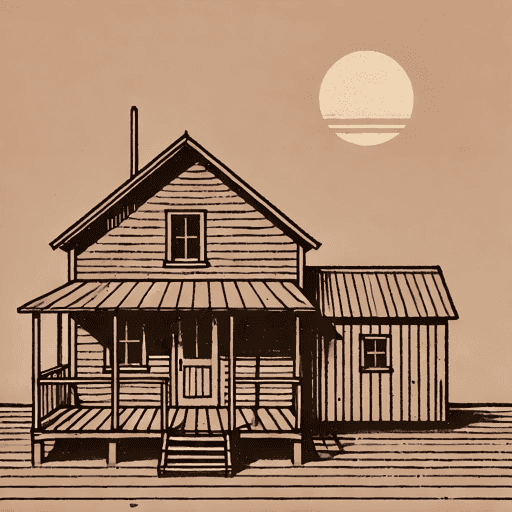
Like the characters in Sounder, sharecroppers usually lived in simple cabins on large acreages that were a part of a larger plantation owned by a white family. The sharecroppers grew crops on the land allocated to them, but they usually had to give about 50% of their harvest—or a cash payment—to the plantation owner in exchange for their rent of the cabin and their use of the land. The rest of the crop was theirs to eat or sell. With unequal access to markets and hampered by oppressive tenancy rules, sharecroppers struggled to survive on this meager living. Debts to their landlords prevented them from leaving the plantations and making a fresh start elsewhere. Because they were “forced to purchase food, seed, clothing and other goods on credit, typically from a plantation ‘commissary’ owned by the landlord,” it was possible for sharecroppers to produce a crop, but they also became poorer and more indebted to the plantation owners with each passing year (Tetreau, Jared. “Sharecropping: Slavery Rerouted.” American Experience, PBS. 16 Aug, 2023).
By the mid-20th century, sharecropping declined due to changes in farming methods. As agriculture became more mechanized, farmers found it more profitable to employ machines rather than sharecroppers in order to complete farm labor. The burgeoning civil rights movement also began to make progress, and Black Americans in the South soon had more rights and opportunities than previous generations did. Finally, the system of sharecropping, which for decades had “defined Southern agriculture and hindered Black economic advancement,” came to an end (Tetreau, Jared. “Sharecropping: Slavery Rerouted.” American Experience, PBS. 16 Aug, 2023).

Unlock all 39 pages of this Study Guide
Get in-depth, chapter-by-chapter summaries and analysis from our literary experts.
- Grasp challenging concepts with clear, comprehensive explanations
- Revisit key plot points and ideas without rereading the book
- Share impressive insights in classes and book clubs