39 pages • 1-hour read
Sounder
A modern alternative to SparkNotes and CliffsNotes, SuperSummary offers high-quality Study Guides with detailed chapter summaries and analysis of major themes, characters, and more.
Important Quotes
Content Warning: This section of the guide features depictions of racism, violence, physical abuse, incarceration, cruelty to animals, and animal illness, and death.
“‘Sounder and me must be about the same age,’ the boy said, tugging gently at one of the coon dog’s ears, and then the other. He felt the importance of the years—as a child measures age—which separated him from the younger children. He was old enough to stand out in the cold and run his fingers over Sounder’s head.”
(Chapter 1, Page 9)
This passage emphasizes the strong bond between the boy and his dog, Sounder, enhancing the novel’s thematic focus on The Bond between Dogs and Their Humans. This quotation also adds detail to the characterization of the boy by noting his place as the eldest in the family, and the boy’s inclination to compare his own age to Sounder’s indicates that the dog is considered to be one of the family.
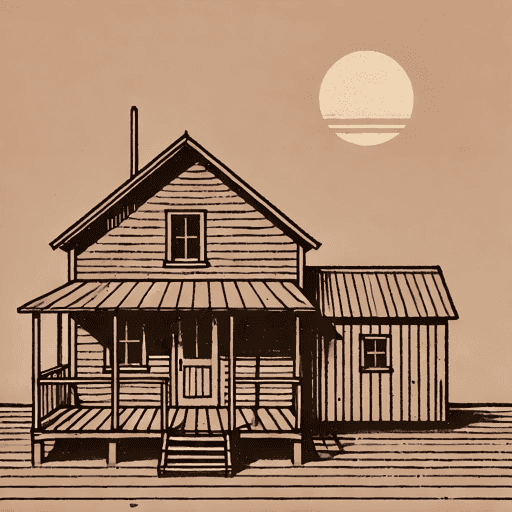
“The white man who owned the vast endless fields had scattered the cabins of his [Black] sharecroppers far apart, like flyspecks on a whitewashed ceiling.”
(Chapter 1, Page 9)
This description establishes the novel’s setting on a large plantation in the South. Because the “white man” owns the plantation and manages the sharecroppers and their residences, the boy and his family have little influence over their work or home. This passage therefore provides necessary context on the physical setting and the social dynamics of the story.
“Sounder was well-named. When he treed a coon or possum in a persimmon tree or on a wild-grape vine, his voice would roll across the flatlands. It wavered through the foothills, louder than any other dog’s in the whole countryside.”
(Chapter 1, Page 10)
In this scene, the novel provides a positive impression of Sounder and his hunting abilities, and the admiring tone captures the boy’s deep love for his dog. In these early passages, the narrative’s emphasis upon Sounder’s unique voice creates a rich, vibrant baseline that contrasts sharply with the ruined body of the traumatized dog when he finally returns home after being shot by the white men.
“This winter, the hunting was getting worse and worse. The wind came stronger and colder than last year. Sometimes, Sounder and his master hunted in the wind. But night after night they came home with an empty brown sack.”
(Chapter 1, Page 11)
This quotation reveals the extent to which the family depends upon Sounder’s hunting skills to provide furs that they can sell in town in order to survive. By focusing on the difficult conditions of this particular winter, the author foreshadows the family’s deepening struggle for survival and provides a logical reason for the father’s theft of the ham.
“He wished his mother or father could read. And if they had a book, he would hold a lamp by the chair so they could see the words and never get tired. ‘One day I will learn to read,’ he said to himself. He would have a book with stories in it, then he wouldn’t be lonesome even if his mother didn’t sing.”
(Chapter 1, Page 16)
The boy’s longing to read emphasizes The Power of Storytelling and reveals the depths of the protagonist’s determination and ambition to improve his lot in life despite the difficulties ranged against him. His dream of accessing stories on his own will fuel his decisions as he grows older and finds creative ways to seek out the education that society has denied to him. This passage therefore emphasizes the boy’s focus on Surviving Racism and Hostility in the world around him.
“Sounder lay still in the road. The boy wanted to cry; he wanted to run to Sounder. His stomach felt sick; he didn’t want to see Sounder.”
(Chapter 2, Page 21)
The short, abrupt sentences and unvarnished phrasing of this passage capture the stark nature of the boy’s devastation as he cringes from the ruined form of his fallen dog. At this point, Sounder’s survival is far from certain, and the narrative is designed to create intense suspense and convey the moment in which the boy’s last vestiges of innocence are utterly shattered.
“The loneliness that was always in the cabin, except when his mother was singing or telling a story about the Lord, was heavier than ever now.”
(Chapter 2, Page 23)
With Sounder missing, the boy loses his main companion, and the morose tone of this passage adds depth to the novel’s focus on the bond between dogs and their humans. In this moment, Sounder is conspicuous in his every absence, and the silence in the house emphasizes the important role that the dog plays in the lives of the boy and his family.
“People would be very mean to his mother today, the boy thought… They might push and pull his mother and put her in the back of a spring wagon and take her away too.”
(Chapter 3, Page 27)
This passage captures the lingering effects of the boy’s trauma in the aftermath of witnessing his father’s brutal arrest. When the mother leaves the children to sell nuts in town in order to ensure that the ravaged family survives, the boy worries that she will meet the same fate as his father. This passage highlights the family’s vulnerability due to their low position in society as sharecroppers. By revealing the boy’s fearful inner thoughts about his mother, the author further emphasizes the narrative’s focus on surviving racism and hostility.
“He hurt his head and shoulders on nails sticking down from above as he crawled. He hurt his knees and elbows on broken glass, rusty sardine cans and broken pieces of crockery and dishes. The dry dust got in his mouth and tasted like lime and grease. Under the cabin it smelled stale and dead, like old carcasses and snakes.”
(Chapter 3, Page 29)
By invoking the imagery of death in the debris beneath the cabin, the narrative illustrates the extent of the boy’s loyalty to Sounder, as well as his fears over the dog’s continued absence. As the boy desperately searches under the cabin to try to find Sounder, dead or alive, he braves the filthy conditions, remaining true to the dog who, for all he knows, may very well have given his life in the effort to protect the family. This scene therefore shows that the boy is as faithful to Sounder as the dog is to him, highlighting the bond between dogs and their humans.
“‘I gave the stuff back,’ she said when she got to the cabin. The boy’s throat hurt with a great lump, and when he swallowed, it would hurt more. If his father had come, it would have been easy. Together they could have found Sounder’s body and buried him.”
(Chapter 4, Page 32)
When the mother returns from town, she reveals that she returned the stolen ham and sausages. Although her news is connected to the family’s most momentous tragedy, the boy remains more preoccupied with the missing Sounder, even in the face of the family’s difficulties. His reaction therefore indicates the strength of the bond between dogs and their humans. Likewise, when the boy wistfully thinks that matters “would have been easy” in his father’s presence, it is clear that the boy relied on his father for practical and moral support and now misses his presence at home.
“His mother fed him and said, ‘Child, child, you must not go into the woods again. Sounder might come home again. But you must learn to lose, child. The Lord teaches the old to lose. The young don’t know how to learn it. Some people is born to keep. Some is born to lose. We was born to lose, I reckon. But Sounder might come back.’”
(Chapter 4, Page 35)
The mother’s bitterly pragmatic warnings to the boy bolster the novel’s underlying focus on the issues involved in surviving racism and hostility. By telling the boy that he was “born to lose,” the mother tries to lower her son’s expectations because she understands the systemic injustices that govern their entire world. Her jaded attitude reflects her weariness at the necessity of coping with the challenges of a difficult life, and although her words are designed to lessen his hope, she wants to prepare her son for the hardships that he will also face throughout his life.
“The boy’s fearful feeling increased as he got nearer town. There were big houses and behind the curtained windows there were eyes looking out at him. There would be more people now, and somebody might say, ‘What you got in that box, boy?’ or ‘Where you goin’, boy?’”
(Chapter 4, Page 36)
The boy dreads his trip into town to bring a homemade cake to his imprisoned father at Christmas time. The boy’s “fearful feeling” shows his self-consciousness and vulnerability as a Black boy traveling on his own in a Southern town. The boy’s feelings of insecurity add to the novel’s focus on surviving racism and hostility.
“The boy hated the man with the red face with the same total but helpless hatred he had felt when he saw his father chained, when he saw Sounder shot. He had thought how he would like to chain the deputy sheriff behind his own wagon and then scare the horse so that it would run faster than the cruel man could. The deputy would fall and bounce and drag on the frozen road.”
(Chapter 4, Page 39)
This emotional passage reveals the boy’s inner thoughts toward the cruel deputy who manages the town prison. By framing the boy’s hatred as “helpless,” the author creates a succinct yet eloquent description of the boy’s oppressed status—both in this moment and in the broader scheme of the world. Unable to express his rage, he keenly feels the constraints of his social position, and his own violent fantasies of retribution highlight the psychological damage endured by those who must struggle desperately to endure the endless battles involved in surviving racism and hostility.
“‘Sounder might not be dead,’ the boy said. He knew his father was grieved, for he swallowed hard and the quiet spells came to him too. ‘I’ll be back ‘fore long,’ said his father.”
(Chapter 5, Page 41)
In this scene, the boy nervously visits his father in prison, and the unspoken volumes of meaning in the pair's “quiet spells” convey far more intensity than a lengthy dialogue ever could. With their pained, halting exchange, the characters’ silent suffering is on full display, and the entire scene is punctuated with the sense of invasiveness that comes from the hostile sheriff’s presence nearby. When the father tells his son that he will return home soon, his morose tone makes the promise ring hollow, and the narrative implies that it will be very long indeed before the father is allowed to see his family again.
“A great part of the way home the boy walked in darkness. In the big houses he saw beautiful lights and candles in the windows. Several times dogs rushed to the front gates and barked as he passed. But no stray pup came to him along the lonely, empty stretches of road.”
(Chapter 5, Page 44)
The emphasis upon the boy’s loneliness in this section highlights the painful absence of Sounder, and as he bravely walks home by himself, his view of the different homes along the country road emphasizes his innate separateness from those households. The passage therefore serves as a reminder that the boy and his family do not enjoy the luxuries that the families in the “big houses” of the local plantations take for granted. As the boy fantasizes about finding a stray puppy, his inconsolable grief in Sounder’s absence emphasizes the bond between dogs and their humans.
“There on the cabin porch, on three legs, stood the living skeleton of what had been a mighty coon hound. The tail began to wag, and the hide made little ripples back and forth over the ribs. One side of the head and shoulders was reddish brown and hairless… The stub of an ear stuck out on one side, and there was no eye on that side, only a dark socket with a splinter of bone above it. The dog raised his good ear and whined.”
(Chapter 5, Page 44)
In this passage, the narrative invokes the former majesty of the “mighty coon hound” in order to create a grim, stark contrast with the “living skeleton” that now stands before the boy. Thus, the elation that the family feels at Sounder’s return is marred by his terrible condition. Sounder’s injuries also serve as a constant reminder of the hazards involved in surviving racism and hostility. In this moment, the dog’s suffering and disability become symbolic of the family’s collective pain and fight to survive in an unjust world.
“But why couldn’t he bark? ‘He wasn’t hit in the neck’ the boy would say to his mother. ‘He eats all right, his throat ain’t scarred.’ But day after day when the boy snapped his fingers and said ‘Sounder, good Sounder,’ no excited bark burst from the great throat.”
(Chapter 5, Page 45)
The boy puzzles over why Sounder only whines when he used to howl and bark, and the image of the voiceless hound once again serves a symbolic purpose, representing the family’s own silenced voices in the face of systemic racism and oppression. This passage implies that Sounder’s voice is gone because of the emotional pain of losing his master, the boy’s father. Sounder’s connection with his master and the boy also adds to the theme of the bond between dogs and their humans.
“The boy noticed that sometimes his mother would stop singing when she put the food pan down at the edge of the porch. Sometimes she would stand and look at the hunting lantern and possum sack where they hung, unused, against the cabin wall.”
(Chapter 5, Page 46)
When the mother feeds Sounder, she recalls better times when he was a healthy and happy dog hunting in the woods with her husband. This passage is therefore designed to invoke everything that the family has lost, implicitly drawing attention to the loss of the father and the family’s constant struggle against racism and poverty.
“More often a guard would chase him away from the gate or from standing near the high fence with the barbed wire along the top of it. And the guard would laugh and say, ‘I don’t know no names, I only know numbers. Besides, you can’t visit here, you can only visit in jail.’”
(Chapter 6, Page 48)
As the boy tries to find his father at the different convict work camps around the county, he confronts guards who shoo him away and mock his efforts. The guards’ reference to the prisoners’ numbers, rather than their names, emphasizes the prison system’s habit of dehumanizing convicts as they serve out their sentences as unpaid workers for the county. By describing the father’s forced labor and the boy’s desperation to find him, this passage adds a new level of bitterness to the novel’s focus on surviving racism and hostility.
“In his lonely journeying, the boy had learned to tell himself the stories his mother had told him that night in the cabin. He liked the way they always ended with the right thing happening.”
(Chapter 6, Page 50)
The boy relies on his mother’s biblical stories for comfort and inspiration as he travels the county alone, looking for his father. With his real life so challenging and frightening, the boy’s only source of comfort comes from the stories in which deserving heroes achieve triumph over their enemies, and the boy therefore uses the power of storytelling to cling to hope in the face of adversity.
“The voice of the wind in the pines reminded him of one of the stories his mother had told him about King David. The Lord had said to David that when he heard the wind moving in the tops of the cedar trees, he would know that the Lord was fighting on his side and he would win […] The boy listened to the wind. He could hear the mighty roaring. He thought he heard the voice of David and the tramping of many feet. He wasn’t afraid with David near.”
(Chapter 6, Page 51)
In this passage, the boy’s reliance upon biblical stories as sources of comfort becomes vividly clear as he focuses on the figure of David to shield himself from the imagined terrors of a dark, windy night in the woods. As the boy finds himself comforted by David’s heroism and God’s presence, the scene adds a new angle to the novel’s focus on the power of storytelling.
“And the stone that David slung struck Goliath on his forehead; the stone sank into his forehead, and he fell on his face on the ground, the boy thought. But he left the iron on the ground.”
(Chapter 7, Page 56)
As the boy fantasizes about throwing an iron back at the prison guard, his seething fury reflects the darker aspects of surviving racism and hostility, for it is impossible for an oppressed person to remain unscathed, physically or psychologically, by the injustices of his oppressors. By comparing the guard to the villainous giant Goliath, the boy nonetheless regains an intangible measure of control, likening himself to David, the biblical hero who won the battle against all odds.
“In his many journeyings among strangers the boy had learned to sniff out danger and spot orneriness quickly. Now, for the first time in his life away from home, he wasn’t feared. The lean, elderly man with snow-white hair, wearing Sunday clothes, came down the steps.”
(Chapter 7, Page 58)
This passage captures a vivid sense of the boy’s hypervigilance as he ventures into areas dominated by white people who may cause him harm. His determination to “sniff out danger and spot orneriness” reflects behaviors learned from years of systemic abuse. However, this attitude proves unnecessary with the kindly schoolteacher, and the boy is immediately at ease as the man comes out of the schoolhouse. This encounter foreshadows the aid and support that the teacher will provide.
“The man sat in a chair between two tables that held the lamps. There were books on the tables too, and there were shelves filled not with pans and dishes, but with books. The mellow eyes of the man followed the boy’s puzzled glances as they studied the strange warm world in which he suddenly found himself. ‘I will read you a little story from your book.’”
(Chapter 7, Page 59)
This description captures the differences between the boy’s stark cabin and the “strange warm world” of the schoolteacher’s home. In addition to highlighting the differences in the characters’ respective social positions, this quotation also depicts the schoolteacher’s insightful response to the boy’s interest in books. His offer to read to the boy demonstrates his kind and generous nature.
“Sounder ain’t got no spirit left for living. He hasn’t gone with me to the woods to chop since Pa died. He doesn’t even whine anymore. He just lies on his coffee sacks under the cabin steps. I’ve dug a grave for him under the big jack oak tree in the stalk land by the fencerow.”
(Chapter 8, Page 69)
The boy’s pragmatic prediction of Sounder’s imminent death combines with his hard, jaded tone, indicating just how profoundly the family’s collective tragedies have influenced his outlook on the world. Rather than shying away from the potential for yet another source of sadness, he matter-of-factly prepares for the eventuality of his beloved dog’s death by preemptively digging a grave even before the dog has passed on. By connecting the dog’s sadness over the father’s death with the dog’s own inevitable demise, the author strengthens the symbolic connection between Sounder and his master, as they both have been broken by the injustices of a harsh world.

Unlock every key quote and its meaning
Get 25 quotes with page numbers and clear analysis to help you reference, write, and discuss with confidence.
- Cite quotes accurately with exact page numbers
- Understand what each quote really means
- Strengthen your analysis in essays or discussions