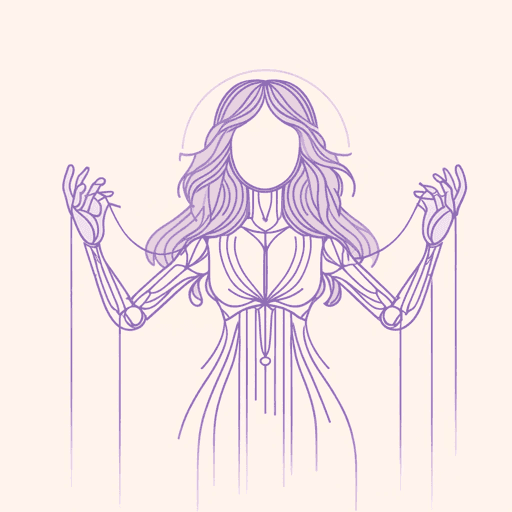
Splendors and Glooms
56 pages • 1-hour read
Laura Amy SchlitzSplendors and Glooms
A modern alternative to SparkNotes and CliffsNotes, SuperSummary offers high-quality Study Guides with detailed chapter summaries and analysis of major themes, characters, and more.
Important Quotes
“At the thought of seeing him again, her heartbeat quickened, and she felt a tug in her belly that she recognized as hunger—not hunger for food but for something far more shameful and dangerous: love.
She recoiled at the thought. Love Grisini? She hated him. She had cursed him, and she was glad of it. Rather than ask for his help, she would burn alive.”
(Prologue, Page xi)
These lines come as Cassandra tries to decide how to deal with the phoenix-stone’s effects on her. Years ago, Grisini started to tell her something about the stone’s power, but she didn’t let him finish, something she now regrets. Her thoughts here reflect her complex relationship with Grisini, as well as her own flaws. Cassandra loved Grisini years ago, and she wanted to believe he loved her back. In truth, he only loved the power she offered him, yet Cassandra’s thoughts suggest, despite this betrayal, she still loves him. Her protests and justifications about hatred and being glad she cursed him are directly at odds with the hunger she feels for love, showing how we rationalize things we don’t want to feel.
“Dr. Wintermute refused. Professor Grisini was a foreigner; foreigners were invariably dirty and often ill. Clara pleaded. Dr. Wintermute said that the whole thing was out of the question. Clara, accepting defeat, did not argue, but she wept. That settled matters. Spoiled or not, Clara did not cry often. When she did, she generally got her way.”
(Part 1, Chapter 1, Page 8)
This passage introduces the complicated relationship between Clara and her father, as well as the dark situation in the Wintermute house. Despite the heavy atmosphere of grief, Clara has never wanted for anything, which means she knows how to get her way. Dr. Wintermute’s rejection of Grisini calls to the culture of Victorian London and how foreigners were viewed as dirty and unwanted by upper class Londoners. As the center of prosperity at the time, London became a destination for people from poor parts of Europe, including Italy (Grisini’s home country). Foreigners were largely despised because of widespread misinformation about employment—namely that foreigners were taking jobs Londoners should have.
“‘They take plaster,’ Clara said very calmly, ‘and press it over the—the dear one’s face. And then later take more plaster and make a mask. That way—’ She stopped and covered her mouth with her hand. She did not seem grief stricken so much as embarrassed.
Parsefall’s eyes went back to the four white casts. ‘That’s nasty,’ he said. ‘Stickin’ plaster on somebody’s face wit’s dead. It’s ‘orrible.’
Lizzie Rose kicked him a second time, harder. But Clara’s blue eyes met Parsefall’s. Something flashed between them. It was almost as if she said, I think so, too.”
(Part 1, Chapter 3, Page 24)
This exchange between Clara, Parsefall, and Lizzie Rose comes when the children arrive with Grisini for Clara’s birthday party. While Grisini is away, Clara spends time with Lizzie Rose and Parsefall while they set up the puppet show, which will take place in the same room that contains the death masks of Clara’s siblings. Grief played a large role in Victorian London, attributed to Queen Victoria’s mourning period for her husband, and this is reflected throughout Splendors and Glooms. Victorian London had an almost obsessive interest with death and the supernatural, and death masks were just one way loved ones were preserved, both for the family and sometimes for study, as it was believed personalities could be mapped using the masks. Parsefall’s and Clara’s shared opinion of the masks foreshadows the close relationship the two develop throughout the novel and also shows the differences between their social classes. As a member of the upper class, Clara is meant to agree with things, even when she doesn’t. By contrast, society puts no such social pressure on Parsefall, who speaks his mind.
“‘I hate the mausoleum. I hate seeing the caskets and the space on the shelf next to Charles Augustus—I hate looking at it and thinking that I shall have to lie there one day, all dark and dead and cold. And’—her face twisted, making her ugly in her father’s eyes—’my casket will be bigger than his, because I’m older, which isn’t fair, because we’re twins—’”
(Part 1, Chapter 6, Pages 43-44)
Clara says this to her father after her party ends and she disgraced herself by laughing at the dancing skeleton show. These lines call to Clara’s trauma and grief. Living trapped in a home that’s perpetually in mourning has made Clara get lost in the past. She dwells on how her siblings died and experiences survivor’s grief—meaning she feels badly for living when the others died. Her observations about the mausoleum show the danger of letting death rule life. While Clara’s mother sees the mausoleum as a place to visit and mourn her children, Clara sees it only as the future place of her burial. As a result, she is caught between wishing she died seven years ago and being bombarded with her eventual death. The line about being bigger than her twin is a concrete example of Clara’s survivor’s guilt—as she feels guilty that her casket will be bigger than her brother’s.
“‘Dearest child! Did those fiends lay their wicked hands on you?’
‘No, not at all,’ Lizzie Rose answered. She almost said that the policemen had been very kind to her, but remembered just in time that this was not that sort of play.”
(Part 1, Chapter 9, Page 63)
This exchange between Mrs. Pinchbeck and Lizzie Rose comes after the police visit Mrs. Pinchbeck’s home to question Lizzie Rose and Parsefall about Clara’s disappearance. Mrs. Pinchbeck is overly theatrical and treats most of her conversations or encounters like a scene from a play. The play she and Lizzie Rose perform here is one of disbelief and outrage. Mrs. Pinchbeck wants only to discuss how shameful it is that police accosted her in her own home, even though there was little actual accosting. Lizzie Rose’s response shows how she has adapted to her living situation. She knows the part she is set to play in this show, and she knows that anything outside that role will not be welcome.
“His mouth twisted. Only a week ago, he had thought how little he knew his daughter. Now he seemed to know her through and through. Trifles came back to haunt him. He remembered the slippers Clara embroidered for him, and her frown of concentration on those rare occasions when he found time to play chess with her. He remembered the way she crept through the house on tiptoe when Ada had one of her headaches.”
(Part 1, Chapter 12, Page 81)
These thoughts from Dr. Wintermute come after Clara’s disappearance, and they call to yet another type of grief—realizing that we have shoved someone aside. Prior to this scene, Dr. Wintermute was a father to Clara out of a sense of obligation. She needed support, so he helped her, but he took no familial pride or true care in doing so. Following Clara’s disappearance, Dr. Wintermute realizes that he’d been focusing on his dead children at the expense of his living one. The details he recalls here show how we suddenly realize how well we know someone when they are taken away from us, and they represent the guilt Dr. Wintermute feels.
“And his posture had changed. He moved heavily, his shoulders bowed. His hands—Grisini’s long-fingered, theatrical, gesticulating hands—hung from his wrists like a pair of empty-gloves.
Here was a beggar like ten thousand others: a man so cheerless and commonplace that no one would give him a second glance. Only the eyes were Grisini’s: they were hawk bright and angry.”
(Part 1, Chapter 15, Pages 95-96)
Here, Grisini has just stormed into his rooms after realizing a policeman is watching the house. A moment ago, he appeared as his recognizable self. Now after changing his clothes and posture, he is almost unrecognizable, even to the children who know him well. This quotation calls to The Shades of Gray Between Good and Evil. As seen here, Grisini is a superb performer, and he knows how to use wardrobe and physical attributes to change himself into a character. The final line calls to how we can’t completely hide ourselves. Parsefall recognizes the color and anger in Grisini’s eyes because they are too distinct to hide.
“I don’t know wot I know. I don’t look back—not when it’s about Grisini. There’s a black place in my mind wot ‘e made, and if I think about ‘im too much, I fall into the black place. So I don’t do it. See?”
(Part 1, Chapter 18, Page 122)
Here, Lizzie Rose has just told Parsefall about the other child who went missing around Grisini several years ago. Parsefall knows of a third child, but when Lizzie Rose asks for details, Parsefall refuses to give them because he can’t and won’t look back on his past with Grisini. The blackness in his mind is both an example of how trauma affects the mind and a plot point that becomes important later on. Parsefall can’t deal with what Grisini did to him—turning him into a puppet and removing one of his fingers—so he hides those memories away. Later, Cassandra unlocks those memories in hopes it will motivate Parsefall to steal the phoenix-stone. When Parsefall does remember, he is enraged, showing how hiding away past pain doesn’t make it affect us any less.
“She was relieved when they reached the Egyptian Hall. It was a queer-looking building, she thought, with two nearly naked statues above the central door. She supposed they were heathen gods, though they wore wigs. It seemed odd that supernatural beings should be unable to provide themselves with adequate hair.”
(Part 1, Chapter 21, Page 147)
In this passage, Lizzie Rose and Parsefall have just arrived outside the building where the royal puppet masters will perform. Lizzie Rose observes the distinctly Egyptian architecture of the building, and this calls to Egyptomania—a phenomenon from Victorian London that defines how people became obsessed with antiquities, particularly those from Egypt. The statues also represent the desire for discovery and exploration that captured the public opinion in Victorian London. Lizzie Rose’s reaction to the statues shows how she differs from popular culture of the time. Rather than enthralled by the statues, she thinks they are odd and even questions why gods have to wear wigs. Lizzie Rose is a level-headed contrast to the craze of the world she lives in.
“The drunken man jerked his thumb at her and said, ‘Look at that!’ and she wanted to smile at him. Why, he was—she searched for the right word and found it—innocent. He might be coarse and dirty and drunk, but he was as hungry for enchantment as she had been at her birthday party.”
(Part 1, Chapter 23, Pages 158-159)
This passage of Clara’s thoughts comes during her first public performance as a puppet with Parsefall. The show has drawn a decent-sized crowd, including children and drunkards. Most of the audience members are from a much lower class than Clara, and this initially makes her uncomfortable because she was raised to believe such people were very different from her and possibly dangerous. As the show progresses, though, Clara starts to understand that class has nothing to do with who a person is. Through this drunk man, the novel discusses how the class system of Victorian London divided people across lines that didn’t truly exist. As Clara notes, the man is just like she was at her birthday party, showing how class doesn’t dictate personality.
“She could almost imagine that her limbs stretched and swayed by their own free will. It was not true, of course. But she wondered if one day it might be true—if somehow Parsefall might help her to cross the border between paralysis and life. With every touch, the bond between them grew stronger. When he played upon her strings, Clara glimpsed the splendors and glooms that haunted his mind. She shared his appetite for prodigies and wonders, for a world where spangles were stars and skeletons frolicked until their bones fell apart.”
(Part 1, Chapter 25, Page 166)
These lines from Clara’s thoughts show the bond between her and Parsefall growing, as well as their shared love for performance and the strange. Clara is realizing who she truly is for the first time here, as well as how constricted she was by her upper class lifestyle and the grief in her home. The book’s title appears here, defining what Clara sees in Parsefall’s mind as their connection grows. At first glance, “splendors” and “glooms” are two different things—splendors are beautiful and glooms are frightening. However, these lines show that this is not the case. The splendors that Parsefall pictures have a gloominess to them—especially those incorporating death—but that does not make them any less wondrous.
“They had come to a new world, a world of immense space and ample light. Everything was foreign, majestic, and sublimely clean. Three inches of pristine snow lay on the grass. The sky was coldly blue. White clouds soared like galleons overhead, shadowing the snowy fells. The train station stood in the midst of steep hills: great, curving humps, one beyond the other, like a pod of whales breaching and diving.”
(Part 1, Chapter 28, Page 194)
Here, Lizzie and Parsefall have just arrived at the train station near Cassandra’s home, and this passage highlights the stark contrast between London and the countryside. Even in the upper class areas, London is dirty and dingy, owing to the large amount of people who live there. Life in the city is a bustle of activity, and for Lizzie Rose and Parsefall in particular, everyday life is spent in squalor. By contrast, the countryside is clean and brightly colorful. The use of words like “pristine” and “clean” immediately call to how different this place is to London and how amazed the children are. This also shines a hypocritical light on how Londoners view foreigners. Lizzie Rose thinks that this place feels “foreign,” but it is not dirty, showing that different places are not inherently dirty. This place is also populated by the rich, which shows how those with money can afford to live under better conditions.
“The branches had not been trimmed and pressed close, tapping the sides of the coach and sending down miniature snowfalls. Parsefall tensed. He could navigate the thickest traffic and the narrowest alley, but he didn’t like being surrounded by trees. They seemed alive to him: they had too many fingers.”
(Part 2, Chapter 29, Page 201)
Similar to the previous quotation, these lines call to the differences between the land around Cassandra’s home and London. The previous lines looked at the differences from Lizzie Rose’s perspective, showing her infatuation with the beauty of a clean land. Here, we get Parsefall’s perspective as it relates to how uncomfortable he feels, a direct contrast to Lizzie Rose’s joyful wonder. The difference Parsefall notes between trees and London’s streets shows how similar things (narrow, twisting corridors) are perceived differently when they are formed by different things. Parsefall knows London, and he feels comfortable in its back alleys. By contrast, the trees are unfamiliar and don’t offer the same comfort. The reference to grabbing fingers foreshadows the hold Cassandra tries to take on the children.
“Witchcraft begins with passion. You’ve a world of strong feeling locked up inside, haven’t you, Clara Wintermute? You think it makes you weak, but it doesn’t. It might make you strong, if you knew how to use it.”
(Part 2, Chapter 31, Page 216)
Cassandra speaks these lines to Clara the first time she summons Clara’s mind to her. Through the link Cassandra establishes between the two of them, she sees Clara’s innermost thoughts and fears, particularly how Clara views her desire to express herself as something bad. Cassandra’s speech here is meant to tempt Clara into using her own power to steal the phoenix-stone, but that doesn’t make the words any less true. Witchcraft is not inherently good or bad. It is a tool that becomes good or bad based on how it is used. Cassandra uses her strong emotions to cast harmful spells, but Clara begins to realize here that she can use witchcraft for good by tapping into her love for Parsefall and Lizzie Rose.
“He kept still for some time. Then he crept to the door, rocking from toe to heel with each step, making no sound. He thought longingly of Mrs. Pinchbeck’s cramped house, where only a spangled curtain separated him from Lizzie Rose. Lizzie Rose had always tried to comfort him when he was afraid. He thought of how indignant she would be if she could see the blood on his ear. All at once, he wanted her desperately, all the more because he could not go to her. Even if he were brave enough to venture into the corridor, he dared not confide in her. Only by saying nothing could he protect her from Grisini.”
(Part 2, Chapter 33, Pages 241-242)
These lines come after Grisini sneaks into Parsefall’s room and threatens him into stealing the phoenix-stone. After Grisini leaves, Parsefall begins to understand his relationship with Lizzie Rose in a new way. Up until now, Parsefall has pushed her away because she wasn’t his real sister, and he didn’t want to do his sister’s memory a disservice by caring too much for Lizzie Rose. Here, Parsefall finally understands that he loves Lizzie Rose, even if he doesn’t use that word. He also realizes how much he appreciates her love for him and how much he’s come to rely on her. His final lines show that he truly thinks of her as family because he wants to protect her. He craves the comfort of her presence, but he knows that going to her will only invite Grisini’s wrath, something he’s not willing to have pointed at Lizzie Rose.
“It struck her that for Cassandra Sagredo, the men in the miniatures were no different from the butterflies in the glass trays. They were specimens, not people. The old woman couldn’t have loved any of them, or she wouldn’t have lumped them together in a single display. What she had cared for was the number, the variety—and the fact that all forty-eight men had surrendered a lock of hair.”
(Part 2, Chapter 34, Page 248)
Here, Lizzie Rose searches Cassandra’s home for things to present to the woman on Christmas. Lizzie Rose finds a room with displays—one of locks of hair and another of dead butterflies. The comparisons Lizzie Rose draws between these two things reveals much about who Cassandra is. Cassandra’s entire house is filled with fine things from all over the world, but rather than having relationships with how she obtained each item, Cassandra simply has the things so she can claim they belong to her. The same goes for the locks of hair—Cassandra didn’t care for the men who surrendered their hair. She only cared that she could make them give her something. This embodies the opposite of how Managing Grief Through Love. Cassandra never let herself love and believed she was unlovable. Instead, she lived in grief and collected objects to fill the void in her heart, something mere objects could not do.
“‘Not the principal puppet,’ Parsefall said, as if she’d asked a stupid question. ‘‘E can’t go to hell, ‘cos he’s the hero, innee? He tricked somebody else into taking it—the wicked Spaniard with the mustaches—and then ‘e went to hell. The Bottle Imp dragged ‘im down, and there woz flames.’
Cassandra’s skin crawled. ‘But that was only a story.’ She spoke lightly, trying to regain the ground she had lost. ‘My fire opal is real. Demons and bottle imps—they’re things in stories. You wouldn’t be frightened by a story, would you?’
Parsefall shouldered his pillowcase and stepped away. ‘How do you know we ain’t in a story?’”
(Part 2, Chapter 35, Page 258)
This conversation between Parsefall and Cassandra comes after Parsefall tries and fails to steal the phoenix-stone. Cassandra wakes, foiling his plan, and in what follows, Parsefall realizes the stone is dangerous and that Cassandra wants someone to steal it so she can be rid of its negative effects. Parsefall likens the stone to the bottle imp show he does with the puppets, realizing that the temptation of power is meant to entice him only for it to destroy him later. The final lines of this quotation call to the fine line between a story and reality. The lives we live are stories in their own right, and Parsefall recognizes that his life could have the same danger as the bottle imp show.
“She had never been able to make up her mind whether she was a good person or not. From books, she had gathered that if you thought you were good, you probably weren’t, because thinking you were good was conceited. On the other hand, she knew how hard she tried to be good, and she couldn’t help thinking that Madama’s word inconvenient was entirely apropos. It had not escaped her notice that being good was often very inconvenient.”
(Part 2, Chapter 36, Page 266)
Here, Cassandra has just told Lizzie Rose she is a truly good person, and Lizzie Rose struggles to cope with what this means. Her inner debate calls to how goodness is often a conflicting trait in stories. Main characters are typically described as good, and defined such, they are expected to fit into a specific mold where they always act for the benefit of others and never take more than they need for themselves. Cassandra says this type of goodness is inconvenient because it means tempting Lizzie Rose to steal the phoenix-stone will be more difficult, but the inconvenience also appears in how Lizzie Rose fears to find her true self and admit she wants more than she has. These lines also call to the inner war we wage within ourselves. Lizzie Rose wants to believe she is good, but she fears the very act of thinking this makes her bad, showing the conflicts we face when trying to identify ourselves.
“He stopped before the door of the breakfast room, wondering if his wife would be at the table. Sometimes she asked for a tray upstairs. Since Clara’s disappearance, she had eaten very little. As a medical man, he disapproved; as a parent, he felt that her thinness was seemly, a tribute to Clara. His own appetite shamed him, surfacing with ruthless regularity. He might be heartsick, but he was also an active and hardworking man; his stomach insisted on breakfast, luncheon, tea, and dinner.”
(Part 2, Chapter 40, Page 285)
This passage of Dr. Wintermute’s thoughts comes before a confrontation with his wife about what has happened to Clara, and the lines set up for the wedge that her disappearance, as well as the deaths of their children, has put between them. These lines also show the conflicting parts of who Dr. Wintermute is, acknowledging that adulthood does not immediately provide us with the clarity to define who we are. As a doctor, Dr. Wintermute is concerned for his wife’s lack of appetite. As a parent, he wishes he could eat so little because he feels that maintaining a steady and hardy diet is a dishonor to his fears about Clara. In truth, there is no one proper way to grieve or show concern. Dr. Wintermute feels guilty for his chosen profession and the necessity of self-care that places upon him. There is no reason for him to feel guilty about this, which shows how grief makes us question ourselves.
“The tip of the flame caught the sleeve of her nightdress.
She stared at it, watching the flame swell and the white cloth char. So. It was going to happen, then: the doom she had feared so long. She was going to die by fire. First her nightdress would catch and then the outer layer of her skin, and then the burning agony would possess her whole body. Her mind accepted it and went dead.
But her body, after one moment of frozen horror, was determined to fight. It flung itself against the floor, writhing against the carpet like a dog rolling in carrion. Both hands beat at the flames again and again, long after the last spark had been extinguished. The witch smelled smoke and singed cloth.”
(Part 2, Chapter 43, Page 306)
Here, Cassandra has accidentally brushed too close to a candle and set her nightdress on fire. The prophesy surrounding the phoenix-stone says all who possess it will die by fire, and in this moment, Cassandra sees her death come to claim her. The death her mind experiences shows how we shut down in moments of terror. Cassandra fears she will die here, and rather than fight it, she believes there is no point in prolonging the inevitable. Her body’s reaction shows the strength with which we cling to life. Rather than giving up, Cassandra beats back the fire until it is long gone, showing how desperately she wants to live, or at least not be consumed in such a terrible manner.
“‘That was—discipline,’ Grisini answered at last, pronouncing the last word with the utmost delicacy. ‘It was necessary that the boy should obey me. Have I not been a second father to him? Did I not feed him and teach him my art? Should he not obey me?’”
(Part 2, Chapter 44, Page 313)
Grisini speaks these lines after Cassandra realizes what he did to Parsefall. Parsefall isn’t yet aware of the details, but that doesn’t matter here. These lines are about Grisini’s twisted view of the world and how others should respond to him. These lines show his desperation to be seen as a man of importance. Whether he believes what he says here or not, he thought his actions with Parsefall were justified because it got him closer to what he wanted. Grisini’s outlook on discipline and obedience call to The Shades of Gray Between Good and Evil. Elsewhere, it’s made clear Grisini is an excellent performer, but these lines make it clear he has no compassion for others and is truly a bad man. He makes decisions based only on what is best for him, not caring how those decisions will affect others.
“I was the stronger one. I could make men do what I wished; he could only jerk the strings of puppets!’ She glowered at Clara. ‘He changed you—but that wasn’t my fault. And you.’ Her face changed as she looked at Parsefall; for a brief moment, her eyes were profoundly sad. ‘He took your finger. I wouldn’t have done that. He was worse than me.'
Then all trace of sadness vanished. She laughed aloud and threw up her hands. ‘Ah, but he was handsome when he was twenty-three! That young, young face—all sharp angles, and that queer cruel smile—and the graceful way he bowed and kissed my hand! I was a fool, but it’s all right now, because I can enjoy him being dead.’”
(Part 2, Chapter 47, Page 339)
Cassandra speaks these lines to the children after Grisini’s death and the destruction of the phoenix-stone. Losing the stone has given her a type of clarity she didn’t have before, and she is finally able to admit the mistakes she made, as well as how her mindset has been unhealthy. Her conviction that Grisini was worse than her is a justification. Cassandra is trying to come to terms with all the terrible things she’s done. By focusing on this one action from Grisini, she feels justified in how he died, and she feels less terrible about herself because she can definitively say Grisini did something worse than anything she would ever do. In truth, this means nothing—the terrible actions of others do not affect our own deeds. The final lines of this quotation show that Cassandra has finally realized the truth of her complicated feelings toward Grisini. She does not love him, but she admits she did when he was younger because he was handsome and played the part of kindness well.
“‘And as I was sayin’, Mr. Grimes, the pawnbroker, told me as how Lizzie Rose come in just before Christmas and pawned a gold watch. He said it was a fine gold watch, and he thought it might’ve belonged to Mr. Pinchbeck, my poor departed ‘usband. But Mr. Pinchbeck never ‘ad a gold watch, so the watch had to ‘ave been Grisini’s. He ‘ad some very nice pieces of property, Grisini did—jewelry and ladies’ things. I’ve an idea he once knew better days, poor Grisini, and I sometimes wondered if he might’ve been saved by the love of a good woman.’”
(Part 2, Chapter 48, Page 344)
Mrs. Pinchbeck delivers this speech to Dr. Wintermute when she pays him a visit to explain she figured out that Lizzie Rose and Parsefall went to Cassandra’s home—adding that Clara’s disappearance might be tied up with the other two children. This is another of Mrs. Pinchbeck’s performances, and here, she plays the part of a woman who’s just trying to do a good deed by bringing possible news of Clara to her grieving parents. The final lines in this quotation are ironic. Mrs. Pinchbeck has given no indication she knows about Grisini’s past, and her assumptions that he knew better times are based on his belongings, not realizing that he was little more than a common thief. Her observation that Grisini might have been saved by a woman’s love is ironic because the entire book has been about how Grisini could never love anyone but himself.
“He had forgotten my age, he had given me the kind of book I most disliked, and his letter could not have been less affectionate. Since that day, I have had better reasons to weep. I have known betrayal; I have known cruelty. But nothing has broken my heart more than the package my father sent for my thirteenth birthday.”
(Part 2, Chapter 49, Page 356)
Cassandra says this to the children when she finally explains how she came to possess the phoenix-stone. After stealing the stone from her friend, Cassandra discovered its power and used it to try to get what she most wanted—her father’s love. However, she quickly realized that the stone’s magic always exacted a price. Instead of giving her what she wanted, it gave her what she asked for, displaying the difference between the two. Cassandra wanted her father to remember her, and the stone granted this but did not make him love her or even care about what she wanted. This passage illustrates the danger of things that seem too good to be true. The stone is one such thing, and it can never make its wielder happy. Instead, it left Cassandra more bitter and unhappy than she was before she stole it, which calls to The Strength of Youth. Cassandra was a child when she stole the stone, but she did not possess the type of strength shown by Lizzie Rose, Parsefall, and Clara, thus allowing the stone to make her its victim.
“‘Cholera killed him,’ Cassandra said sharply. ‘You stupid, stupid girl! Don’t you know that killing is a decision? You never chose to poison your brother. You chose chestnut pudding over watercress.’”
(Part 2, Chapter 51, Pages 376-377)
Cassandra says this to Clara after Clara confesses she feels responsible for her twin brother’s death because she gave him her watercress. These lines are one of the truest things Cassandra says in the entire book, symbolizing her impending death. The lines themselves call to how we tend to blame ourselves for things we aren’t responsible for. They also harken to the choices we make or don’t make. Cassandra says killing is a choice because it is. Clara didn’t choose to kill her brother. She chose not to eat her watercress, which made no difference in terms of her brother’s death. If she hadn’t given him her watercress, he would have eaten his and died, as Clara would have eaten hers and also died. Clara’s grief keeps her from recognizing this.

Unlock every key quote and its meaning
Get 25 quotes with page numbers and clear analysis to help you reference, write, and discuss with confidence.
- Cite quotes accurately with exact page numbers
- Understand what each quote really means
- Strengthen your analysis in essays or discussions