Splendors and Glooms
Splendors and Glooms
A modern alternative to SparkNotes and CliffsNotes, SuperSummary offers high-quality Study Guides with detailed chapter summaries and analysis of major themes, characters, and more.
Summaries & Analyses
Quizzes
NEWReading Tools
Symbols & Motifs
The Phoenix-Stone
The phoenix-stone (or fire opal), the object around which much of Splendors and Glooms revolves, broadly represents the corruptive influence of power. More specifically, the phoenix-stone symbolizes the greed that power elicits, reflecting the hunger for love that no amount of power can satisfy. Love is gained by offering protection and care and revealing one’s vulnerabilities; the phoenix-stone fosters betrayal and selfishness and enables illusion. Cassandra first finds the phoenix-stone in a trunk of other precious gems her friend inherits from her mother. Taken with the gem because of its shifting colors (primarily red, orange, and yellow) and the sense of power she feels from it, Cassandra steals it from her friend, certain the stone will give her what she wants: love and the attention she craves from her distant father. The theft poisons the friendship, however, and Cassandra comes to believe this friendship was the last time she ever knew love. Her father never shows her the warmth she hopes for.
The phoenix-stone draws on several existing bits of folklore and mythology. The novel indicates that the word “opal” derives from the Sanskrit for “precious stone” and later from the Greek for “to see a change of color.” Opals have a history of association with bad luck and danger, and their shifting colors have caused them to be linked to magic as well. The phoenix-stone of Splendors and Glooms indeed possesses great power, though owning the gem comes at a price: all who have possessed it have died by fire, though the stone itself always escapes its owner’s fate. At first, the stone offers Cassandra power and strength, but as time goes on, it draws from her until she is a shell of her former self. The phoenix, according to Greek tradition, reproduces by setting itself ablaze only to be reborn from the ashes. The phoenix-stone, in addition to the fiery nature of its curse, reflects this element in its ability to heal the owner.
That the stone may only be stolen by a child suggests both its capacity to be overcome by and to corrupt the pure of heart. This duality builds on the theme of The Shades of Gray Between Good and Evil, emphasizing the importance of choice. In the final chapters of the book, the phoenix-stone is destroyed by ice, suggesting how balance undermines its power. When the stone is destroyed, Cassandra is distraught for days. The implication is that the stone acted like a drug on her body. Its power left her forever craving more, even as she recognized that it never gave her anything she wanted.
Puppets
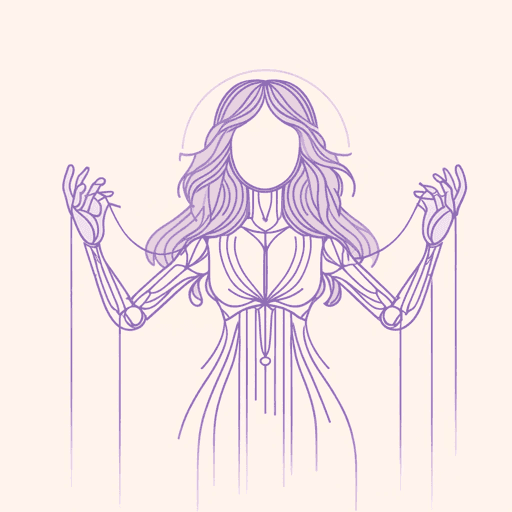
Puppets are an important motif throughout Splendors and Glooms. Puppets are both a representation of control, with the puppet master pulling their strings, and a form of art, which can be liberating. Schlitz uses both associations with puppets in constructing her characters and their arcs.
For Grisini, the puppet show is his means of tricking others. He often uses the show as a distraction while Parsefall pickpockets the audience. At Clara’s home, Grisini uses the show to mask his kidnapping of Clara away so he can ransom her back to her family. Grisini’s traveling show is a physical manifestation of his greed and willingness to manipulate and use whoever he must in order to get ahead. However, the puppets themselves also represent the enduring power of storytelling. In the hands of a skilled puppeteer, the dancing marionettes enthrall audiences. That Grisini uses this effect as a distraction does not make puppets inherently bad. In Chapter 23, Parsefall performs for a growing audience that is enthralled by his artistry. Parsefall does not rob anyone during this performance, showing that the puppets can simply be a work of art for art’s sake. They bring joy to the viewers, and Parsefall leaves the performance to applause and exclamations of excitement. Notably, Parsefall feels most like himself while he’s working the puppets; his art gives him a pathway by which he can connect with others.
Similarly, Clara’s puppet transformation is a metaphor for her character arc, and the link she shares with Parsefall while she’s in puppet form speaks to the relationship between an artist and their art. From the moment Clara gains awareness as a puppet, she is able to sense Parsefall’s memories and emotions when he touches her. This also lets her plant ideas in his mind, and her communication helps Parsefall know she wants to have strings so she can dance and be free. This relationship ultimately lets Clara break the spell Grisini puts on her, and once Clara is a girl again, she uses the love she gained for Parsefall while she was a puppet to take the phoenix-stone and destroy it, saving everyone. In the final chapters when Parsefall tugs Clara back to shore using a rope, Clara is amused at how it’s like he’s pulling her strings; her perception of the moment shows how the relationships forged through art last far past the art itself.
Cassandra’s Home
Cassandra’s home is the setting for the latter half of the novel, as well as select chapters in the first portion of the book. After fleeing Spain and Grisini, Cassandra had the house built and all her belongings brought there. The house itself consists of many rooms and a witch’s tower from which Cassandra casts her strongest spells. In the tradition of Gothic literature, the house is a mysterious, dark place inhabited by a perplexing older woman with dubious motives. For Cassandra, the house is a fortress, built equally to keep unwanted people out and to keep her power safe. Once Lizzie Rose and Parsefall arrive, the house becomes a place of conflict as the children, Cassandra, and Grisini weave around one another to keep, steal, or destroy the phoenix-stone. The tower becomes a place of grave importance to everyone. It is the only room in the house with a bolt on the door, and Parsefall quickly makes it a sanctuary to escape Grisini and his threats. Once he brings Clara there, her powers are further awakened, allowing her to fight Cassandra on the supernatural plain.
While the tower plays an important role in the book, the house itself and its surroundings offer important context to Cassandra’s character and the battle for the phoenix-stone. Cassandra’s offer for the children to take whatever they like is part of her plan to tempt them with the phoenix-stone. Lizzie Rose has no intentions of stealing the stone, but in searching the house for things she wants, she finds objects intricately tied to Cassandra’s past. One such display contains locks of hair from past suitors, which Cassandra later admits she kept as momentous of the power she held to make men pay attention to her. Lizzie Rose also finds an old portrait of Cassandra’s friend from the convent. When she shows it to Cassandra, it unlocks memories that she shares with Lizzie Rose. Lizzie Rose thereby brings up memories that ultimately lead to Cassandra redeeming herself a bit before her death. The lake on the house’s grounds is the final resting place of the phoenix-stone and of Grisini. These two objects of evil are defeated by water—a typically pure and cleansing force. Lizzie Rose also uses the lake as a skating rink, thinking of her parents as she skates, which links the water to her loving nature.

Unlock the meaning behind every key symbol & motif
See how recurring imagery, objects, and ideas shape the narrative.
- Explore how the author builds meaning through symbolism
- Understand what symbols & motifs represent in the text
- Connect recurring ideas to themes, characters, and events