Summer in the City
54 pages • 1-hour read
Alex AsterSummer in the City
A modern alternative to SparkNotes and CliffsNotes, SuperSummary offers high-quality Study Guides with detailed chapter summaries and analysis of major themes, characters, and more.
Symbols & Motifs
Movie Moments
There are many references to “movie moments” throughout the novel that serve as a motif for Becoming the Protagonist of Your Story. During the first chapter at the club, Elle refers to her passionate stairwell rendezvous with Parker as a movie moment. Though it is promptly ruined by him wrongfully judging her as a gold-digger and her subsequently learning that he is a wealthy tech-CEO, this illustrates the first time Elle breaks from the predictable monotony of her life to do something spontaneous and exciting.
After this incident, she moves to LA and isolates herself with her friend, Penelope, serving as the epicenter of her social life. Elle becomes comfortable staying inside in her sweatpants, hate-writing fueled by Parker for inspiration until that runs out leaving her creatively blocked. When she moves back to NYC for the summer and discovers Parker is her neighbor, she views it as “a movie moment […] Only this time, it’s horror” (19). These self-proclaimed “movie moments” are mentioned when a change comes into her life that forces her to actively live it rather than remain stagnant. Over time, the motif evolves from jarring disruptions to welcomed turning points. The shift in Elle’s reaction to these moments signals her growing capacity to see her life as worthy of drama, wonder, and joy—not just her scripts.
When she settles into a daily routine with Parker, makes significant progress on her script, and even entertains an active social life with Taryn, Gwen, and Emily, Elle thinks, “I’ve broken into my story, and it’s like I can’t write words fast enough […] I crave it like a drug; I live it like a second life” (179). Though she is referring to her actual script, this passage doubles as an analysis of her real life. She truly is living it “like a second life” because she is writing a script inspired by her own life, rather than the people and places around her.
Gramercy Townhouse
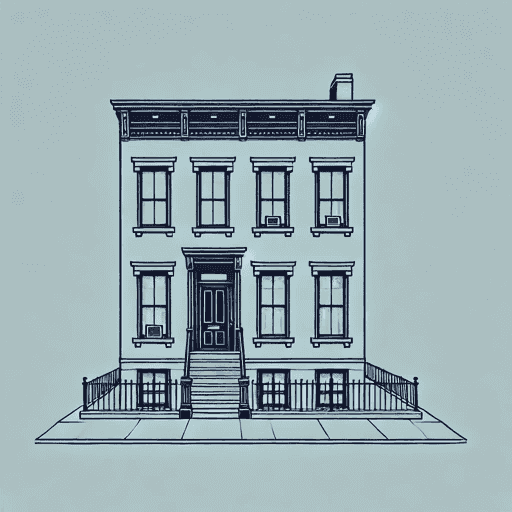
The Gramercy townhouse stands as the clearest material representation of Elle’s dreams for independence and her dedication to controlling her own narrative as she believes her mother would have wanted. From early in the novel, it is revealed that Elle has spent years fixating on this house—not for its aesthetic or luxury, as would appeal to most potential homeowners, but for what it symbolizes: stability, autonomy, and the fruition of ambition. Located inside Gramercy Park, a private space accessible only by rare key, the house represents the kind of extravagant life Elle wants to earn entirely through her own merit, without the interference or credit of others—especially powerful men—or not at all.
This symbolism becomes a source of deep conflict when Parker gifts the house to Elle as part of his marriage proposal. While his intentions are affectionate, Elle interprets the gesture as a violation of her core identity. This dream, which revolves around her core beliefs about money that have prevented her from entering romantic relationships her whole adult life, is taken from her by the exact kind of man her mother warned her about. She responds with dawning horror after the reveal, “It’s not just about control. It’s about pride, it’s about me. I wanted to buy it with my own work, on my own terms. You took that from me. You—you don’t even understand why that means something to me” (263), emphasizing how crucial the act of self-acquisition in regard to this house is to her sense of self. The townhouse functions as a metonym for Elle’s larger fear: that her accomplishments will never fully belong to her, and that love might come at the cost of authorship over her own life.
Later, however, the house reclaims its symbolic weight when Elle returns to New York and purchases it herself for the exact price Parker paid. In doing so, she reopens herself back up to pausing a romance with her, only after she’s wrested control back over her dreams for her life. His willingness to give up the house and allow her to redecorate it how she wants to despite having renovated it for them to share proves Parker’s commitment to being a supportive partner rather than a controlling one.
Flowers
Flowers in Summer in the City symbolize the fragility and beauty of life that must be tended to but that cannot last forever. Elle prefers witnessing flowers in bloom and avoids owning them so she doesn’t have to watch them die. They are a reminder to her that good things don’t last forever. Since her mother’s death, flowers evoke sad memories of the aftermath. In Chapter 18, when visiting the New York Botanical Garden, Elle admits she doesn’t keep flowers, because “she hates watching them die,” a direct reflection of her unresolved grief (169). Her avoidance is not of the flowers themselves, but of the emotional vulnerability they represent. To her, they are symbols of impermanence, representing the periods of happiness in life that inevitably decay.
However, as Elle’s character arc progresses, flowers evolve from harbingers of loss into heralds of renewal. The most potent representation comes at the end of the novel when Parker proposes to her a second time. The ring he offers is not a gaudy gemstone but one with “diamonds arranged into the shape of a flower. One that will never die” (292). The ring symbolizes how Parker and Elle’s love exists on a solid foundation that isn’t delicate or fleeting. Thus, flowers promise both the pain of inevitable endings and but the promise of endless new beginnings. By the end, Elle does not entirely conquer her grief or her fears, but she reframes it. She discovers that not all beauty ends in loss—some of it, like her relationship with Parker, can endure and evolve.
Doors and Thresholds
Throughout Summer in the City, doors and thresholds appear repeatedly as physical and symbolic markers of transformation, vulnerability, and emotional transition. Whether it’s the stairwell door Elle disappears behind in Chapter 1, the digital lock she’s locked out of after her night with the girls, or the Gramercy Park gate Parker unlocks for her near the end of their summer, these spaces signal moments where Elle is either stuck between lives or choosing to step into a new one.
When Elle collapses in the hallway outside her apartment in Chapter 14, too embarrassed to knock on Parker’s door, she literally and metaphorically places herself on the threshold—too ashamed to seek comfort but too weary to walk away. It’s only when Parker brings her inside and cares for her, without expectation, that Elle begins to allow herself to be emotionally received.
Later, when Parker opens the locked gate to Gramercy Park, it’s a moment of emotional access as well. Elle is granted entry into a private, protected place—mirroring how she’s slowly allowed Parker past her own emotional defenses. The motif culminates in the final chapters when Elle returns to New York, buys the townhouse, and steps inside on her own terms. The house is no longer something offered to her; it is something she walked toward, unlocked, and claimed.
Each door Elle passes through represents a subtle shift in agency, openness, or growth. Some are stumbled through; others are consciously opened. But in all cases, they frame her movement—from passivity to authorship, from guardedness to intimacy, from grief to renewal.

Unlock the meaning behind every key symbol & motif
See how recurring imagery, objects, and ideas shape the narrative.
- Explore how the author builds meaning through symbolism
- Understand what symbols & motifs represent in the text
- Connect recurring ideas to themes, characters, and events