Sweat
27 pages • 54-minute read
Zora Neale HurstonSweat
A modern alternative to SparkNotes and CliffsNotes, SuperSummary offers high-quality Study Guides with detailed chapter summaries and analysis of major themes, characters, and more.
Literary Devices
Irony
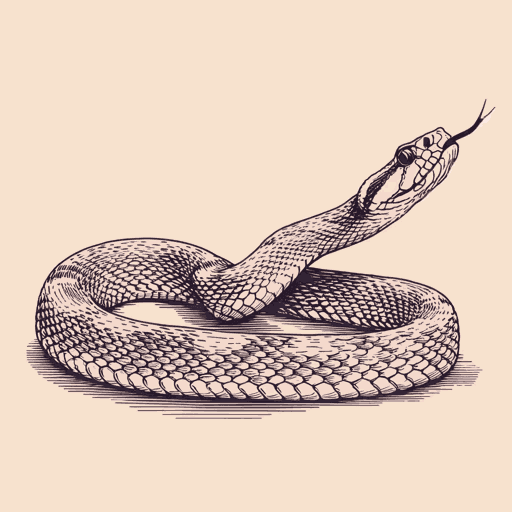
The notable irony in “Sweat” is Sykes’s demise. He brings the snake home specifically to terrorize Delia, and in the story’s final scenes, she finds it inside a laundry basket, presumably because Sykes put it there—perhaps scheming to drive her away from the house or to kill her. Though the narrative doesn’t clarify Sykes’s intentions, it can be assumed that he would be comfortable with either outcome. Delia does flee when the snake gets loose in her bedroom, but only to the barn. She does not purposely plant the snake in the bedroom to attack Sykes, but she leaves the house unattended and gives no warning when he returns at dawn. Thus, Sykes meets his ironic end when the snake strikes him rather than Delia.
Vernacular and Colloquialisms
Hurston is well known for her use of African American vernacular and regional speech, both in her nonfiction and her fiction writing. She used her fiction as a space in which to share these traits as matters of identity. She used idioms from the Black communities of Florida that her characters are based upon and amended the spelling on the page to capture the sound and rhythm of their speech. This phonetically spelled dialect can challenge readers who are from outside that region or unfamiliar with Hurston’s work. However, it imbues Hurston’s stories with a richness of language and characterization that is unique to her work.
This technique may strike some as offensive; both today and in Hurston’s time, some felt that the phonetic language mocked Black speech and could contribute to negative stereotypes of Black people. However, Hurston’s stated intent was to capture the speech of real people and to represent Black communities in a realistic and appreciative light. Many see her work as an anthropologist as a major contributing factor to this choice. Hurston did not believe in inferior or superior cultures or speech styles; she believed that all cultures were to be celebrated and that she should share the unique nature of the communities that she knew.
In “Sweat,” the vernacular comes in the form of nonstandard grammar, diction, and spelling throughout the dialogue. Colloquialisms used in the text include folk sayings and common allusions, and give the dialogue further character. For example, folk sayings include lines such as “whatever goes over the Devil’s back, is got to come under his belly” (Paragraph 26) and Delia’s declaration that she won’t leave her house until she is “toted out foot foremost” (Paragraph 22). Most of the allusions are Christian ones, quick mentions of biblical figures or terms that add greater depth to the depiction of Delia’s religious faith.
Metaphor
Hurston employs metaphor in both her concrete and abstract descriptions. Concrete descriptions are made vivid through the use of metaphor. For example, when describing the snake crawling out of the laundry basket, Hurston writes that Delia “saw him pouring his awful beauty from the basket” (Paragraph 93), with the metaphorical “pouring” replacing a bland descriptor of the snake’s movement.
To capture abstract ideas, the concise use of metaphor can clarify emotions. For example, when describing Delia’s efforts to heal and strengthen herself against her husband’s abuse, Hurston writes: “she was able to build a spiritual earthworks against her husband. His shells could no longer reach her” (Paragraph 26). Earthworks are military fortifications, specifically large embankments made of soil. Sykes’s words are cast as shells or bombs/munitions that cannot reach Delia behind the emotional fortifications she has “built” in her mind.

Unlock all 27 pages of this Study Guide
Get in-depth, chapter-by-chapter summaries and analysis from our literary experts.
- Grasp challenging concepts with clear, comprehensive explanations
- Revisit key plot points and ideas without rereading the book
- Share impressive insights in classes and book clubs