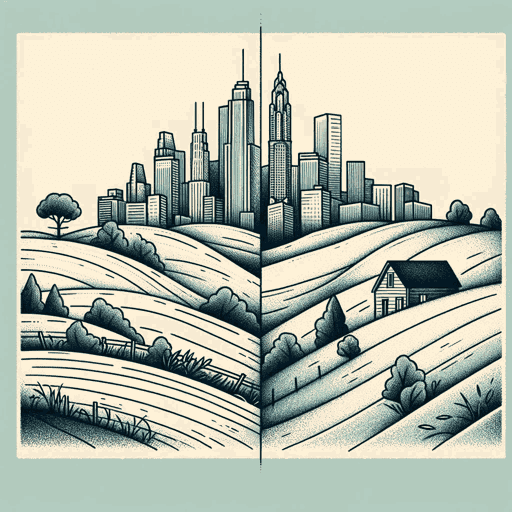
Tales of Two Americas: Stories of Inequality in a Divided Nation
Tales of Two Americas: Stories of Inequality in a Divided Nation
A modern alternative to SparkNotes and CliffsNotes, SuperSummary offers high-quality Study Guides with detailed chapter summaries and analysis of major themes, characters, and more.
Summaries & Analyses
Quizzes
NEWReading Tools
Games
Index of Terms
Class
The term class refers to the socio-economic categories that exist in societies. Those of the same social and economic backgrounds belong to the same class grouping. Tales of Two Americas frequently highlights the issue of class in America, making it clear how people’s class can define the conditions of their lives, either bringing them privilege and comfort or exposing them to stigma and hardship.
Gentrification
Gentrification is the practice of making something more elite, sophisticated, and socially acceptable, often in the context of urban spaces. Wealthy, usually white, individuals move into poor and often non-white neighborhoods, thus transforming the demographic landscape and driving up the cost of living. Gentrification subsequently forces long-time residents out of their homes when rent skyrockets, leading to the fracturing of communities, increased poverty, and homelessness. Chris Offutt shows how this same process can extend to food, as inexpensive, accessible foods become prized by the upper classes.
Privilege
In discussions of social and structural inequality, privilege is not a series of rewards but rather social and legal advantages inherent in society. These advantages may be based on the color of a person’s skin; for example, white people accused of crimes frequently experience more leniency in the justice system. Privilege may also be based on gender, class, sexual orientation, religious affiliation, and/or ability/disability.
Structural Inequality
Structural inequality references the systems of inequality that are built in to institutions and systems that operate in a society. These social institutions fail to address the inherent privileges that some groups possess while simultaneously failing to remove barriers to equity. Certain groups face challenges that others do not based on factors like race or ethnicity, class, gender, sexual orientation, and religious background.
“White Trash”
This term is a slur commonly used in American society to describe impoverished white people, frequently those who come from the southern United States and Appalachia.

Get in-depth, chapter-by-chapter summaries and analysis from our literary experts.
- Grasp challenging concepts with clear, comprehensive explanations
- Revisit key plot points and ideas without rereading the book
- Share impressive insights in classes and book clubs