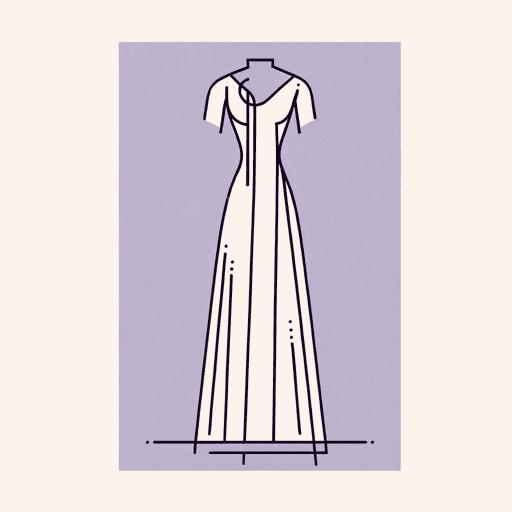
Tender Buttons [A Long Dress]
A modern alternative to SparkNotes and CliffsNotes, SuperSummary offers high-quality Study Guides with detailed chapter summaries and analysis of major themes, characters, and more.
Symbols & Motifs
Clothing
Generally, a literary symbol is an object or image that, among other things, signifies some concept or series of concepts. In Stein’s writing, this model is insufficient. In “A Long Dress,” and Tender Buttons as a whole, no one image or object acts as a stand-in for some abstract concept. Instead, Stein waves motifs throughout her text that hint at and slyly refer to a host of other objects and concepts. Stein’s use of clothing in “A Long Dress” is a prime example of this literary strategy.
While the poem is titled “A Long Dress,” the body of the text does not explicitly mention the article of clothing again. In fact, only one noun in the poem is an example of clothing: the “bow” (Line 4) of the final paragraph. However, the context of clothing undergirds nearly every aspect of the poem. The “machinery” (Line 1) and “current that presents a long line and a necessary waist” (Line 1) evoke both literal sewing machines used to make clothing and to the social uses for and structures surrounding clothing. The “serene length” (Line 4) of the final paragraph feels undeniably tied to the titular dress, and the long list of color statements that follow it evoke the cloth used to construct clothing. Clothing becomes a framework for Stein to discuss domestic life, gender, decision-making, and identity.
Lines and Trajectories
One way to read “A Long Dress” is as a text about motion, specifically motion-toward (though toward what remains ambiguous). The poem begins by asking about “current” (Line 1), a force that “makes machinery” (Line 1), that makes “it crackle” (Line 1) (again, the “it” is indeterminate), and finally “presents a long line” (Line 1). This current, echoed in the “wind” (Line 3) of the middle paragraph, is difficult to pin down, but it is certainly a force toward something, an energy that makes something move and makes motion without an object or determinate destination.
The poem’s second half does not mention the “current” (Line 1) again, but it is dominated by the related “length” (Line 4) and the “line” (Lines 5 and 6). These forces, lines, lengths, and machinations—divorced as they are from identifiable causes or purpose—become purposes themselves in the poem. Understood this way, “A Long Dress” depicts the energies that define experience and motivation, even related to something as mundane as an article of clothing.

Unlock the meaning behind every key symbol & motif
See how recurring imagery, objects, and ideas shape the narrative.
- Explore how the author builds meaning through symbolism
- Understand what symbols & motifs represent in the text
- Connect recurring ideas to themes, characters, and events
Related Titles
By Gertrude Stein