Tex
A modern alternative to SparkNotes and CliffsNotes, SuperSummary offers high-quality Study Guides with detailed chapter summaries and analysis of major themes, characters, and more.
Summaries & Analyses
Quizzes
NEWReading Tools
Character Analysis
Texas “Tex” McCormick
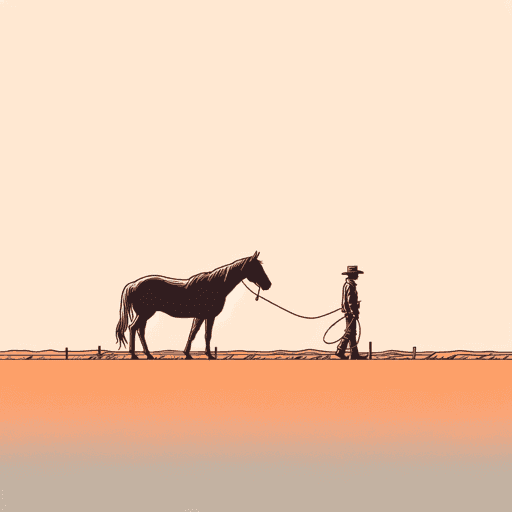
Fifteen-year-old Tex is a laid back, part-time troublemaker from a small Oklahoma town. He has a rapport with his horse that goes beyond the normal human-animal bond. His connection to animals, and his frequent use of animal-themed metaphors to describe other characters, reveals his temperament: he is empathetic, if not always intuitive, and he finds simple happiness in the joys of nature. The city, on the other hand, confounds him, and it is where he finds trouble.
The reader sees all the characters and events through his first-person narration. Tex’s voice and his vocabulary are simple and straightforward, and his point of view is often guileless, even naïve. He grapples with who he wants to be: Should he be like Pop, his negligent and itinerant father, who finds trouble of his own? Or should he be like Mason, his determined and responsible older brother? Many of his childish actions—setting fire to toothpicks in art class, capping typewriter keys at school—derive from his desire to emulate his father. He seeks attention because he has not received it from Pop. Upon discovering that Pop is not his biological father, Tex must reevaluate who he might become.
Tex is written in the mold of a host of iconic rebellious characters that range from Tom Sawyer and Holden Caulfield to Dennis the Menace. He seeks out trouble, but with an innocent heart, and he must ultimately learn how to navigate the world without the guidance of a father figure. He comes of age during the novel, making peace with the fact that he is one who stays—that is, he will is content to stay in Garyville, working with horses and marrying a hometown sweetheart. Others, like his brother Mason, need to leave to explore the wider world.
Mason McCormick
Mason, unlike Tex, wants desperately to leave Garyville. He is counting on a basketball scholarship to propel him to college and beyond. Mason is disciplined and responsible, and he fends for both himself and Tex while their neglectful father is away. He often acts as the foil for Tex in the book. In contrast to Tex, Mason does not have much of a connection with animals. When thinking about Mason’s bond with his horse, Tex muses, “Mason had never treated him like a person, so Red had never acted like one” (3). Mason does not have time for leisurely pursuits, and he can be stern and unyielding. Nevertheless, it is clear how much he cares for his little brother. He defends Tex from Pop from the beginning.
When discussing Mason with Jamie, Tex says, “[m]aybe being popular and being liked ain’t the same thing” (154). Because of his athletic prowess, Mason is one of the most popular boys in school. Many are jealous of him, and he can be aloof. Pop also describes Mason as resembling the boys’ dead mother: “Yeah, Mason is a lot like she was, proud as Lucifer, a bulldog for grudges” (198). Yet, it is Mason who Tex turns to when he is scared. Mason has always been available to him, and it is Mason who would consider sacrificing his scholarship for Tex. There is an undeniable bond between the brothers.
“Pop” McCormick
The father of Mason and, ostensibly, Tex, Pop is absent much of the time. He follows the rodeo circuit, obeys his own whims, and gets caught up in questionable business ventures. He forgets about retrieving Negrito for Tex because he ends up in a pool tournament in a neighboring town. He served a stint in prison for dealing in bootlegged alcohol, and he generally has a knack for trouble. Through Tex’s eyes, Pop is an idol, an ideal to live up to, and a role model. However, Mason finds Pop irresponsible and inexcusable. When it surfaces that Pop is not really Tex’s father, it is revealed that Pop has unconscionably ignored Tex because he still harbors anger over his parentage.
While Tex himself does not always see this, the reader clearly knows that Pop—while not wholly a villain—is, at best, a self-centered pleasure-seeker, and at worst, a callous character who refuses even to comfort Tex when the truth comes out. Pop himself does not have a talent for self-reflection: his young wife took comfort in another man while he was in prison for business that she cautioned him against. He recounts her death with characteristic insensitivity, essentially suggesting that she brought it on herself through stubbornness. Pop cares little about anybody but himself.
Jamie Collins
The love interest of the book, Jamie is a feisty and opinionated young woman. She has been raised with four older brothers, which has made her strong-willed and independent. Her rejections of Tex take a variety of forms, and Jamie does not want her feelings for Tex to trap her in the small town. She admits to loving him, yet she will not allow herself to enter into a relationship with him. She is also insightful in a way that Tex is not, understanding that the vagaries of teenage hormones do not necessarily stand the test of time. She tells Tex, “yeah, I can see me marrying you. It’d last about a year” (159).
She also expresses her own complicated feelings, conveying the turmoil of adolescence in a way that Tex—with his even-keeled ways—does not. At one point, she recognizes her angst: “[a] lot of times I can’t stand the way I act. I mean, I know people think I’m a bitch. And then I think if people don’t like the way I act they can go jump in the lake” (158). The novel was written in 1979, so Jamie’s independent attitudes and desire for autonomy are, if not unthinkable, significant. Jamie’s character is used to express feminist ideas.

Unlock analysis of every major character
Get a detailed breakdown of each character’s role, motivations, and development.
- Explore in-depth profiles for every important character
- Trace character arcs, turning points, and relationships
- Connect characters to key themes and plot points
Related Titles
By S. E. Hinton




Featured Collections
Animals in Literature
View Collection
Brothers & Sisters
View Collection
Childhood & Youth
View Collection
Children's & Teen Books Made into Movies
View Collection
Class
View Collection
Class
View Collection
Coming-of-Age Journeys
View Collection
Family
View Collection
Fathers
View Collection
Friendship
View Collection
Realistic Fiction (High School)
View Collection
The Best of "Best Book" Lists
View Collection