The Acorn People
43 pages • 1-hour read
Ron JonesThe Acorn People
A modern alternative to SparkNotes and CliffsNotes, SuperSummary offers high-quality Study Guides with detailed chapter summaries and analysis of major themes, characters, and more.
Chapters 1-4Chapter Summaries & Analyses
Content Warning: This section of the guide includes discussion of ableism.
Chapter 1 Summary: “Day 1”
As the narrative begins, narrator Ron Jones has been newly hired as a camp counselor for children with disabilities, and he watches them arrive. He signed up for the role because he thought it would be good pay and fun to participate in typical summer activities with the children; he received little notice or preparation for the fact that he would be supporting campers unable to participate in most of the common camp activities. As he watches parents struggle to settle their children into the rugged environment, he regrets his choices and feels apprehensive.
Getting the children settled requires extensive work, and by dinnertime, he is outright angry about having to be responsible for children who can’t operate independently. When he finally goes to sleep, he has nightmares about the bodies of children with disabilities.
Chapter 2 Summary: “Day 2”
The next morning, Ron must help several children who have wet the bed. He then introduces several campers to the narrative: Benny B., a lively child with polio who is preoccupied with acting like a high-speed racer; Spider, who has no arms or legs but loves to talk; Thomas Stewart, a despondent teenager with muscular sclerosis; Martin, an energetic, blind 14-year-old; and “Arid,” or Aaron, who has no bladder and must use urostomy bags that smell unpleasant. These five children are directly under his supervision.
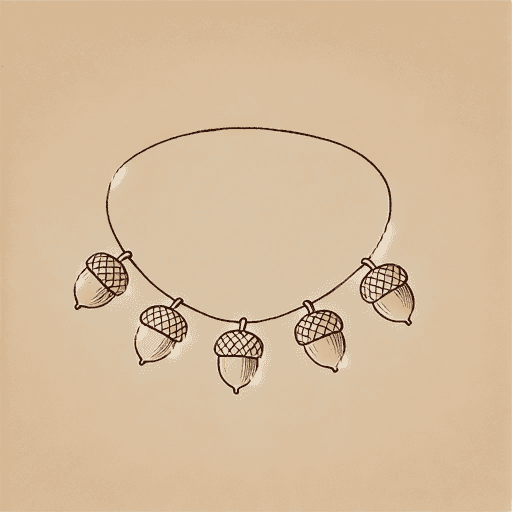
They begin with a craft session, wherein Ron begins stringing acorns together on a necklace because he feels “nutty” in his surroundings. The other kids enjoy this and express how similarly “crazy” they feel in their environment. They begin calling themselves the “Acorn People” and make a necklace as a gift for the other counselor.
Afterward, all the children enjoy time in the pool, to Ron’s surprise, as the buoyancy allows for a reprieve from many of the kids’ harnesses and wheelchairs. His kids particularly thrive in the pool. Benny B. becomes the fastest kid in the pool, Aaron wins many games by threatening to spray people with his urine bag, Thomas appears at peace while floating around, and Martin seems to navigate the pool quite easily because of how the waves and ripples of water guide him.
Spider stuns everyone, however, by showing that he not only swims but also does so with grace. He contracts his body in such a way that he can swim across the pool with speed, and the group cheers when Spider makes his way to the other end.
When Ron settles everyone into their sleeping bags at the end of the second day, he realizes how much happier he is today and feels more hopeful about his time at camp. The “Acorn People” have their first meeting, wherein they begin telling each other stories and bonding.
Chapter 3 Summary: “Day 3”
Ron awakes tired and sick of the camp loudspeaker. At breakfast, he and his campers note that they’re all still wearing their acorn necklaces. He notices the occasional presence of Mr. Bradshaw, the camp administrator, who has a stern affect and shows up randomly to offer cryptic “thoughts for the camper” (24). Ron finds that Mr. Bradshaw’s guidelines for how they should structure their day are based on the expectations for children without disabilities and are thus unfit for his campers.
The children decide to ignore Mr. Bradshaw’s prescribed schedule and go to the pool again, though some girls are already using it. Ron watches as the boys get self-conscious but flirtatious. The two groups eventually blend and have a nice afternoon, with many developing crushes on another camper. Aaron gives his acorn necklace to a blind girl named Mary and must make another for himself, despite his campmates’ teasing. The children decide to make as many necklaces as they can and give them to every camper and staff member.
Chapter 4 Summary: “Day 6”
The campers wake to a loudspeaker announcement stating that special merit badges will be awarded to anyone who successfully climbs Lookout Mountain. Ron’s crew is torn about whether to try, but Martin convinces them to go. They gather supplies and head off, quickly facing difficulties because of narrow paths and undergrowth tangling in wheelchair spokes. When the path inclines, the wheelchairs must be pushed and braked, bit by bit, to make progress.
Exhausted, the group stops. To boost morale, Spider begins playing as if they are an expedition group from a book or film, braving the wilds, and Ron remarks that this allows them to pause and appreciate what they’ve accomplished thus far. They snack and then start again.
They reach the final stretch of trail toward the peak, but it’s a sharp incline, impossible for wheelchairs to overcome. Martin decides to leave his wheelchair and begins scooting up the path backward on his bottom, using only his arms for forward movement. Eventually, they reach the top. He inspires several others to do the same.
They return to the camp food hall, disappointed to find that Mr. Bradshaw was upset at the camp’s “unruly” activities and schedules and demanded that everyone return to the prescribed timeline before the parents visit the following day. “Unruly” conduct included cooking classes, archery, singing with an African staff member, and makeup lessons from the camp nurse.
Chapters 1-4 Analysis
The first four chapters focus mostly on Ron’s adjustment to working with children with disabilities and his growing passion for supporting them. Hoping for a bit of easy pay over the summer, he’s shocked to learn that he’ll be a counselor for children with very limiting physical or cognitive disabilities, particularly considering that the camp infrastructure lacks any accommodations for them: “The woods and paths of Camp Wiggin were accustomed to troops of running feet and the noise of children at play. With these wheelchair children there was only silence. […] All life seemed to stop” (1). It isn’t the fun, engaging atmosphere he expected, even given the brief rundown he received the previous day on how to care for children with disabilities, and he quickly loses hope about how his week will go. His first day only sours because moving the kids, including taking them to the restroom and between buildings, is time-consuming and stressful, and he can’t even enjoy dinner in peace. That first night, his nightmares about bodies with disabilities represent how deeply his internalized ableism has caused him to dehumanize the children, seeing them as nothing but body parts incapable of operating like “able-bodied” children.
The next day, as he gets to know the children in his group, he notes, “The kids were gutsy and maybe even the basis for lots of self-awareness,” but he also concedes that he still isn’t “enamored by the prospect” (13). Despite his reticence, he has no power over how the children will change his mind. His frustration bleeds into their arts-and-crafts activity, during which he proclaims that his acorn necklace represents his feeling “nutty” and thus uncomfortable in the environment, whereupon the kids surprise him by opening up about how frustrating the experience is for them, too. As Ron begins counseling the kids in his care, he also learns from them, which shifts his perspective from disappointed and resentful to sympathetic and hopeful. This introduces the theme of Mentorship and Reciprocal Teaching. Ron reassesses his point of view and realizes how his negative attitude only makes the kids’ time at camp more uncomfortable and isolating. They embrace making the acorn necklaces to symbolize their unity, and from then on, Ron is more considerate toward the campers.
Later, during the two experiences at the pool, Ron admires how much people with disabilities can accomplish. It requires significantly more effort, but the children float, play, and swim like “normal” children, and another theme emerges: Redefining the Meaning of “Ability.” Spider, who has no limbs but can swim the length of the pool like a dolphin, is the ultimate symbol of how ability can emerge in many ways. Reinforcing this lesson is the quest to climb Lookout Mountain, something the kids pursue only because it’s broadcast as a show of capability for the regular Boy Scouts. The Acorn Society members are hesitant, but they want to prove that they have the same potential as other boys.
The mountain trek is incredibly difficult for everyone, introducing the theme of Nature as an Equalizer: Nature forces people to rely on everything their body can offer, regardless of ability. Many of Ron’s children reach the summit by scooting backward on their bottoms, showing how, like a hiker completing a test of endurance, people with disabilities can test the limits of their bodies within nature’s boundless landscapes. Ron notes that they are genuinely like explorers, enjoying the freedom “of always finding another vista, a new thought, an unexpected strength. The comradeship of doing something together [that] no one else would dare. And […] finding something as simple and ever-present as the sky” (41). The journey allows him and the others to develop their bond and enjoy nature’s pleasures together, putting aside for the moment the difficulties awaiting them upon their return to camp.
Mr. Bradshaw emerges as the biggest antagonist, as his stern attitude and strict standards for what is appropriate for the children demonstrate to Ron how limiting ableism can be. The schedule that Mr. Bradshaw recommends is impossible for his campers and restricts them from participating in the events that truly allow them to feel free and enjoy themselves. Furthermore, his reinforcement of the rules in preparation for parental visits makes the children feel boxed in, unable to make decisions for themselves or enjoy the same freedom that other, “able-bodied” campers may have. His actions remind Ron that the camp has no special accommodations for children with disabilities: “The camp was not a place for handicapped children and the kids knew it. […] It wasn’t a place for ramps, sanitized medical facilities, swimming pool rails, or activity schedules. It was a place for children and their expectations and fantasies for life” (46). This demonstrates how little agency people with disabilities often have, unable to control their schedule and their surroundings.

Unlock all 43 pages of this Study Guide
Get in-depth, chapter-by-chapter summaries and analysis from our literary experts.
- Grasp challenging concepts with clear, comprehensive explanations
- Revisit key plot points and ideas without rereading the book
- Share impressive insights in classes and book clubs