The Acorn People
43 pages • 1-hour read
Ron JonesThe Acorn People
A modern alternative to SparkNotes and CliffsNotes, SuperSummary offers high-quality Study Guides with detailed chapter summaries and analysis of major themes, characters, and more.
Symbols & Motifs
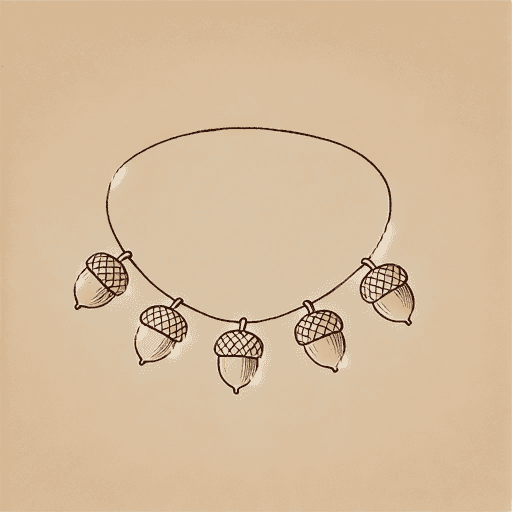
Acorn Necklaces
On his second day at camp, Ron makes an acorn necklace to introduce the first craft activity for his group. When he tells them that the necklace represents how he feels somewhat “nutty,” overwhelmed by the task of working with them, he’s surprised when the campers empathize with him and say that they feel the same way. He realizes that they constantly must face a world not built to accommodate them, as well as judgment and misunderstanding.
In this moment, the exchange over a simple necklace introduces the theme of Mentorship and Reciprocal Teaching. Ron starts to feel bad about his initial thoughts toward them. Soon, he wants to show them how they have inspired him and changed his perspective by seeing them as they strive to be seen: as people, not as disabilities.
They all make necklaces to show that they are united in a common cause, part of a community that prizes solidarity, empathy, and inclusion. Acorn necklaces thus become symbols of inspiration and unity for the group, as the sense of belonging and friendship at Camp Wiggins, not the simple activities, are what make an impression on the children. The necklaces, which inspire Spider to coin the name “Acorn Society,” symbolize The Transformative Power of Community as a theme. The kids make many extras, too, giving necklaces to everyone at camp and inviting them to join their society. After returning home, Benny B. continues to make acorn necklaces and gives them to everyone he meets for the rest of his life.
Lookout Mountain
The steep mountain that the kids climb symbolizes embracing challenge and enduring in the face of adversity. In addition, it represents the theme of Nature as an Equalizer. The hike is strenuous for everyone: Even the Boy Scouts earn a merit badge for reaching the top. When it is announced on day three that, like Boy Scouts, any camper who hikes to the top of the mountain will receive a merit badge, the group quickly decides that they should be able to try just like the campers without disabilities. They know it will be tough, and their assumptions are quickly confirmed, as wheelchairs are completely unsuited to the rugged terrain.
At two points, they’re tempted to quit: when the trail disappears and the landscape makes moving difficult and again upon discovering that the final summit is rocky and steep. By supporting each other, however, they find ways to overcome these obstacles. They develop creative ways to navigate wheelchairs over the terrain and the varying incline, like firmly applying the brakes at intervals to rest. Toward the top, where the path is steepest, Martin begins scooting up backward on his bottom, inspiring others to do the same. The mountain is physically and mentally the most arduous of their tests, but they tackle it with courage, imagination, and joy. Thus, the mountain thematically connects to Redefining the Meaning of “Ability” because they overcome the challenge when offered the support and freedom to try different methods of accomplishing the task.
The Pool
Almost all kids who come to Camp Wiggins enjoy the pool. However, it holds particular appeal for those with disabilities because the buoyancy of floating makes them feel free. Unencumbered by the weight of wheelchairs and other devices inherent to their world, they can find a reprieve from societal ableism. Even those with the most limiting disabilities enjoy the pool. When Spider (who has no limbs) amazes everyone with his dolphin-like motions through the water, the pool, like the mountain, becomes a space that thematically exemplifies Redefining the Meaning of “Ability.” Thus, the pool comes to represent freedom from limitations.
Mr. Bradshaw, an administrator who practices ableism without considering any specific accommodations for children with disabilities at the camp, attaches more importance to pool scheduling and safety. This gives Ron and his group added incentive to use the pool as much as possible, gleefully disregarding Mr. Bradshaw’s prescribed schedule. Mrs. Nelson conspires with Ron’s group, too, suggesting that the kids create a final performance, including a water ballet in the pool, for their parents, an activity that strengthens their bonds by encouraging them to work together to make one another’s abilities really shine.

Unlock the meaning behind every key symbol & motif
See how recurring imagery, objects, and ideas shape the narrative.
- Explore how the author builds meaning through symbolism
- Understand what symbols & motifs represent in the text
- Connect recurring ideas to themes, characters, and events