The Acorn People
43 pages • 1-hour read
Ron JonesThe Acorn People
A modern alternative to SparkNotes and CliffsNotes, SuperSummary offers high-quality Study Guides with detailed chapter summaries and analysis of major themes, characters, and more.
Themes
Content Warning: This section of the guide includes discussion of ableism.
Mentorship and Reciprocal Teaching
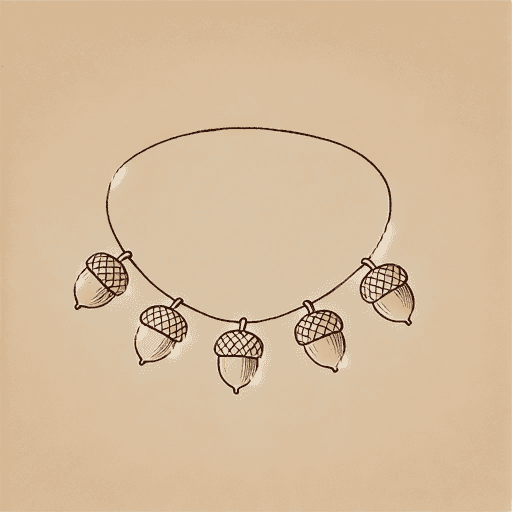
The Acorn People recounts teacher Ron Jones’s experience of both guiding and learning from a group of children with disabilities in his care for a week at Camp Wiggins. He experiences initial trials: “I sensed that the trial was shared. It was hard on everyone. I retreated in thought, remembering how Benny had cried in the bathroom when I tried to change him” (20). His journey from dismayed and deeply ableist at the memoir’s start to supportive and inclusive at its end is rapid but sincere, as his campers never hesitate to show him how complex, capable, kind, and strong they are in the face of adversity. The tipping point for Ron’s attitude occurs in Chapter 2, in which he makes a necklace of acorns during craft time to symbolize how “nutty” he feels surrounded by children so different from those he’s accustomed to. The campers quickly assure him that they also feel “crazy” since they are constantly misunderstood or ignored by those around them; following Ron’s example, they make acorn necklaces to mark themselves as a unified group. This is the origin of the Acorn Society, which grows to include other campers throughout the book.
Ron continues to be wowed by the senses of inclusion, endurance, and humanity among the children, as they don’t allow individual examples or overall societal structures of oppression to keep them from pursuing the same types of activities and experiences that “normal” kids want. They swim, hike, and dance despite their disabilities, accomplishing these feats partly through their bond with each other, which keeps them from giving in to the assumptions that others often make about them. Their relationship with Ron is reciprocal, though, and Ron’s newfound protectiveness and support for them helps motivate them to keep trying even when they’re discouraged. He takes them up Lookout Mountain, despite the risks, because hiking it is important to them; he disregards the schedule that Mr. Bradshaw sets because he knows that it’s impractical and the kids thrive during time in the pool; and he disobeys orders to keep the pool clean before parents arrive so that the campers can decorate it and put on their water ballet.
At every turn from the second day onward, Ron is unwaveringly supportive of their endeavors and considerate of their goals, something many of the children are ostensibly unused to. His influence is reflected in their parents’ excitement during the water ballet, when they yell out encouragement like “‘Faster!’ ‘Faster!’ ‘Come on, Spider!’” (75). Ron’s impact on the kids is evident in the book’s Epilogue, in which he says that he received one of Benny B.’s acorn necklaces from Benny’s mother, who told Ron that Benny gave them to everyone he met, showing how crucial this sense of inclusivity and kindness is.
Nature as an Equalizer
Camp Wiggins is an archetypal summer camp, suited most commonly to Boy Scouts learning how to brave a more rugged terrain than any of the children with disabilities are accustomed to. It’s full of trees and shrubbery, dirt paths, inaccessible restrooms, and cabins with stairs that are difficult for the children in wheelchairs to navigate. Every aspect of the camp is symbolic of structural ableism, as Mr. Bradshaw and the camp investors saw fit to open the area to those with disabilities without providing any customized accommodations for them. Some kids can navigate it more easily, like Martin, who is blind, but even he is frequently tripped up by tree roots. Consequently, the kids are often uncomfortable in their surroundings, and the counselors must work harder to ensure that the campers can participate in activities during their time there.
Nevertheless, an underlying implication in the story is that nature levels the playing field among people, forcing them to rely on their bodies and find their own ways to thrive. In society, infrastructure, education, work, and other institutions may offer limited means of advancement, particularly for those with disabilities. In the camp, however, the children are allowed to swim and hike like other children in whatever way suits them and their bodies. The pool is the favored activity of all the campers. Just like any child, they each had to learn to swim, only several had to do so differently. Those with less significant disabilities and those with more significant ones, like Thomas, can all navigate the pool and play, allowing them equal opportunity to participate in this camp activity.
Lookout Mountain, similarly, offers this chance: Martin may be able to physically hike the biggest incline because he has full use of his body, but those in wheelchairs can’t, at least at first glance. Ron reflects, “This must be the exhilaration that drives explorers. The surprise of always finding another vista, a new thought, an unexpected strength” (41). The book implies that the climb is difficult for everyone: Even Boy Scouts are awarded a merit badge if they reach the peak. While they may have to cautiously hike their way up the steep, rocky, and unstable path, however, the Acorn Society’s method of scooting upward is, if anything, more stable and less dangerous. Nature thus offers all people the same challenge, but each has the space and freedom to meet the challenge in the way that best suits them.
Redefining the Meaning of “Ability”
Much of the time at camp initially shows the children with disabilities how they lack the ability, by the common definition, to do something. These children all have disabilities and are often unfairly defined by them; each feels like they have become nothing more than how they, specifically, aren’t capable of doing some things that others are. Some can’t walk, others can’t see, a few can’t talk, and all are limited in one way or another. However, the campers prove that they can still move, navigate a space, and socialize, just like those without disabilities. What’s crucial is offering them opportunities to do so.
The first example of this is Spider swimming. Some would consider a child with no limbs as incapable of accomplishing most physical tasks, particularly a recreational one requiring the entire body. He takes cues from other creatures, though, mimicking the actions of a dolphin to dive in and out of the water and twisting his body to weave his way through the pool. Other people with this disability in the past and the modern day can move, work, and accomplish various tasks, like Spider, but this is the first chance that Ron (and, later, many of the parents) has had to witness this happening because, in the era when these events took place, people with disabilities were still gaining equal rights and often lacked opportunity.
Activities like the mountain hike, the camp dance, and the water ballet highlight Spider’s capabilities. The natural terrain of Lookout Mountain makes the Acorn Society’s trek to its top slow, arduous, and daunting, yet they find ways to make it work. At inclines, they roll forward, hold their brakes, and then roll again to keep their wheelchairs from rolling backward. When they near the final summit, several leave their chairs and scoot backward on their bottoms, a few carrying campmates in their laps. At the dance, Ron remarks that the dances they do resemble common ones, though not all can participate in the same way. They all dance and have fun regardless, creating square dances and a conga line, and they end the night positively.
Finally, they put on the show for their parents, a mix of theater and water ballet, complete with “[f]ilm. Reporters. These kids [have] never been news. Most [have] been family secrets. They [have] been observers. Now they [have] the chance to be performers” (65). This helps teach the parents, reporters, and Mr. Bradshaw the same lesson that Ron quickly learned: What these children are capable of can be surprising. Ron comments that many of their families underestimate them, in some cases keeping them “secret” because of how they think the child’s disability might reflect on the family as a whole. The show, however, allows the camp to demonstrate how “able-bodied” they truly are, fully capable of performing and thriving if they have the opportunity to do so in their own way.
The Transformative Power of Community
A key reason for the children’s stress, shyness, and lethargy at the book’s beginning is how routinely isolated they have felt. For many, this is one of the few chances, if not their first, to engage with a wider population of people with disabilities, gaining a sense of connection that is crucial in childhood and later in life. Ron initially describes Aaron, for example, as unable to make friends because of the smell of his urine bag, and his sense of alienation has made him withdrawn and soft-spoken. When he is later elected “Camp King,” the transition from lonely to loved is so new and overwhelming that he cries, utterly unfamiliar with the experience of being valued rather than judged.
This sense of bonding is at the core of the Acorn Society. The kids are all hesitant at first, though some are more positive and sociable than others, but with time and conversation, they all realize that supporting and encouraging each other will improve their time at camp immensely. They learn that they won’t receive the same poor treatment they do in society, particularly after Ron’s perspective changes and he dedicates his time there to ensuring that they have the best camp experience possible. Their sense of community often helps them face adversity, such as when their hope about climbing Lookout Mountain diminishes and Martin begins playing pretend and making jokes to help boost their spirits. They don’t keep the joy of these relationships to themselves, either; they strive to include others, handing out acorn necklaces to let campers know that their society is open to anyone who wants to participate.
A primary proponent of community is Mrs. Nelson. Initially underrated by Ron, she quickly becomes central in offering the campers opportunities to participate in many normal activities that children without disabilities would. She lets the girls borrow her makeup, knowing that they have a growing interest in it as pre-adolescents, and tears down the labels after parents visit to ensure that the kids don’t feel labeled and boxed in. In the last days of camp, she suggests the water ballet to distract the kids from their growing anxiety and allow them to work together, strengthening their friendships and overcoming any lingering sense of isolation around others. The project is exactly what the campers need to enjoy their final days at Camp Wiggins, and through their teamwork, they put on a show that makes many of them feel important and seen for who they are for the first time. Ron reflects, “Why can’t life be like this? Human beings in all their magnificence. Working to find that moment of pride. That […] feeling of belonging not just to oneself but to the entire universe” (62).

Unlock every key theme and why it matters
Get in-depth breakdowns of the book’s main ideas and how they connect and evolve.
- Explore how themes develop throughout the text
- Connect themes to characters, events, and symbols
- Support essays and discussions with thematic evidence