The Alloy of Law
55 pages • 1-hour read
Brandon SandersonThe Alloy of Law
A modern alternative to SparkNotes and CliffsNotes, SuperSummary offers high-quality Study Guides with detailed chapter summaries and analysis of major themes, characters, and more.
Important Quotes
Content Warning: This section of the guide contains depictions of graphic violence and death.
“‘The best performances,’ Tan said, smiling and looking down at Lessie’s figure, ‘are those that can be performed only once.’”
(
Spoken by the killer Bloody Tan immediately after tricking Wax into fatally shooting his wife, this line reveals Tan’s philosophy of life as a form of grotesque, unrepeatable art. Tan’s statement transforms a moment of extreme personal tragedy into an aesthetic spectacle, establishing a worldview where human lives are mere props for Tan’s performance.
“He closed the lid of the trunk on his old life. ‘Take this, Tillaume,’ Wax said. […] ‘I won’t be needing it,’ Wax said, turning away from the trunk. ‘Put it somewhere safe, but put it away. For good.’”
(
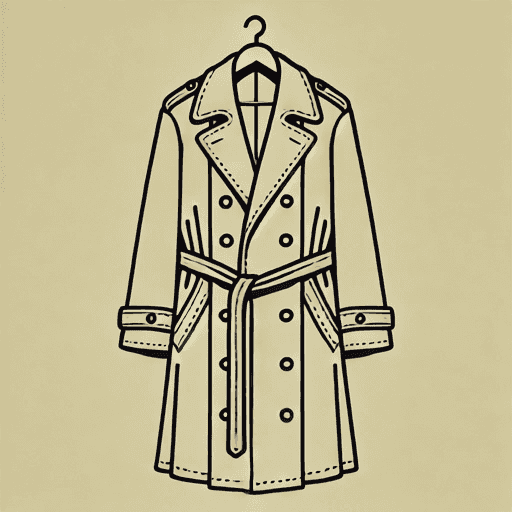
Following a traumatic event, Wax locks away his mistcoat and Sterrion revolvers. This symbolic act, with the trunk representing the compartmentalization of his past self, shows his attempt to abandon his former life. The specific objects are tangible extensions of his identity as a frontier lawman. By putting them away “[f]or good,” Wax attempts to sever himself from his past to embrace his social duty as a lord, establishing the theme of Reconciling Personal Identity With Social Duty.
“Upon marriage, there shall be no more than three conjugal encounters per week and no fewer than one until a suitable heir is provided. After that, the same numbers apply to a two-week span.”
(
This clause from the marriage contract Steris presents to Wax exemplifies the importance of contracts and ledgers to Elendel society, which prioritizes logic and order over passion. Steris’s clinical, bureaucratic language reduces intimacy to a scheduled obligation, reflecting the values of an industrialized Elendel, where personal relationships are managed like business arrangements. This pragmatic, impersonal approach serves as a direct foil to the chaotic, instinct-driven life Wax is trying to leave behind.
“‘This thing, it’s who you are. And no mansion, no marriage, and no mere title is going to change that.’ Wayne tipped his hat. ‘You’re meant to be helping people, mate. It’s what you do.’”
(
After reintroducing Wax to the world of crime-solving, Wayne directly confronts his friend’s attempt to change his identity. Wayne’s argument frames Wax’s role as a lawkeeper not as a profession but as an essential, unchangeable aspect of his character. This dialogue acts as the primary catalyst for Wax’s internal conflict, articulating the idea that one’s true calling cannot be simply suppressed by adopting a new social role.
“But the mark of a great man is one who knows when to set aside the important things in order to accomplish the vital ones.”
(
Observing Wax’s relapse into his old investigative habits, his butler Tillaume offers this piece of wisdom. The quote presents a counterargument to Wayne’s appeal to authenticity, suggesting that true greatness lies in fulfilling one’s obligations, even at the cost of personal passions. By distinguishing between the “important” (Wax’s personal calling) and the “vital” (his duty to his house and its dependents), Tillaume validates the moral weight of societal responsibility, deepening the novel’s exploration of identity and duty.
“‘This isn’t the Roughs, Waxillium. It is the City. We don’t do such things here.’ ‘No, you don’t. Shooting people would be too charitable for City folks.’”
(
This exchange between Steris and Wax establishes the core cultural conflict of the novel, contrasting the overt, physical violence of the frontier with the subtle, psychological cruelty of Elendel’s high society. Steris’s assertion creates a clear dichotomy, which Wax’s sardonic reply subverts by reframing the city’s social machinations as a more insidious form of violence. The dialogue characterizes Steris as a pragmatist and Wax as an outsider who sees through the city’s pretenses, directly engaging the theme of Modernity and the Disruption of Tradition.
“[Y]our ‘savage’ wildlands actually had double the number of lawmen watching over it as we have here in the city.”
(
Marasi uses statistical reasoning to dismantle the simplistic binary of the “civilized” city versus the “lawless” frontier, revealing an intellectual facet of her character that contradicts her shy demeanor. The quote challenges the assumption that urban density equals safety, instead suggesting it masks systemic neglect. This observation is central to the novel’s exploration of The Tension Between Law and Justice, arguing that crime and law enforcement are matters of perception and resource allocation.
“Blood on the bricks. A body in a leather coat slumping to the ground. A grinning face dying with a bullet in the forehead. Winning, even as he died. Not again. Never again.”
(
This passage uses fragmented, visceral imagery to represent Wax’s post-traumatic stress. The short, staccato sentences mimic the intrusive nature of the flashback, while the repetition of “[n]ever again” emphasizes his vow to prevent collateral damage. This internal monologue reveals the psychological core of his struggle with reconciling personal identity with social duty, as the trauma from his past as a lawman prevents him from taking action in the present.
“Ashamed? […] To rob these? After what you people have done to the Roughs all these years? This isn’t shameful. This here, this is payback.”
(
The masked antagonist delivers this line in response to being challenged by a former constable, framing the Vanishers’ crimes as righteous retribution. The diction, particularly the word “payback,” positions the conflict as ideological, casting the bandits as revolutionaries acting against perceived economic and social injustice. This moment explicitly voices a central argument within the theme of the tension between law and justice, forcing the reader to consider the criminals’ perspective and the societal failures that may have created them.
“The result was that he soared across the room in a graceful arc, passing through the space the large chandeliers had occupied. The glittering smaller chandeliers continued to shine on either side of him while crystal showered beneath, each tiny piece splintering the light into a spray of colors.”
(
This description aestheticizes a violent gunfight through imagery and elevated diction. The act of shattering the chandeliers, symbols of high-society opulence, clears a path for Wax, symbolizing his break from the constraints of his lordly duties. This moment marks his full return to his authentic identity as a lawman, embracing his Allomantic powers to save a life.
“A little pinch. That works for people too, oddly. A tiny change can result in creating an entirely new person. How like metals we are…”
(
In this moment of reflection, Wax draws a direct simile between metallurgy and human nature. The comparison demonstrates his analytical mind, contrasting with his more instinct-driven identity as a lawman. By noting that a “tiny change can result in creating an entirely new person,” the quote foreshadows the profound identity shifts that he and other characters undergo, while also reinforcing the novel’s magic system.
“People thought Wayne imitated accents. He didn’t. He outright stole them. They were the only things he was still allowed to steal, seeing as how he’d turned to doing good with his life and stuff like that.”
(
This piece of internal narration establishes the core of Wayne’s character and abilities, comparing his talent for mimicry to an act of theft—a metaphor suggesting that Wayne so thoroughly incorporates “stolen” mannerisms into an original performance that he makes them his own, just as artists assimilate their influences. This metaphor connects his current role as a lawkeeper to his past as a criminal, suggesting that his fundamental nature has been redirected rather than completely changed. This passage introduces the motif of disguises as a key element of his identity and foreshadows the personal history that drives his need to do “good with his life.”
“We call it the ‘broken windows’ theory. If a man sees a broken window in a building, he’s more likely to rob or commit other crimes, since he figures no one cares. […] Just as a hot day can make a person irritable, it appears that a run-down area can make an ordinary man into a criminal.”
(
Speaking to Wax, Marasi articulates a sociological approach to crime that contrasts sharply with his individualistic, action-oriented methods. Her theory posits that environment, rather than inherent evil, is a primary driver of criminal behavior, exploring the theme of the tension between law and justice through a systemic lens. This dialogue characterizes Marasi as an academic and a reformer, one who seeks to change society through data and policy rather than through violence, establishing her as an intellectual foil to Wax.
“‘Aw, hell,’ Wayne said, rolling over to look at the explosion in progress. ‘I warned you. I said things are always blowing up around you.’ ‘I refuse to take responsibility for this one.’ ‘He’s your butler,’ Wayne said, coughing and crawling to his knees.”
(
This exchange occurs within a time-slowing bubble as a bomb detonates, creating a moment of dark humor. The casual, bantering dialogue juxtaposes sharply with the lethal, slow-motion destruction unfolding around the characters, underscoring their desensitization to extreme violence. This verbal sparring reveals the deep familiarity and trust between Wax and Wayne, whose relationship is defined by shared trauma and a pragmatic acceptance of their chaotic lives.
“‘Yeah,’ Wayne said. ‘I only meant to rob him.’ He paused, looking at the cupboard, his expression distant. He shook his head, then crawled inside and pushed hard, breaking in the rear wall.”
(
Wayne’s blunt confession of accidentally killing a man during a robbery is a pivotal moment of character revelation, adding tragic depth to his otherwise comic persona. The stark admission explains his aversion to guns and his compulsive need to “do good,” reframing his eccentricities as products of profound guilt. The subsequent physical action of crawling into a dark, confined space is a symbolic gesture, externalizing his internal state of being haunted and trapped by this past mistake.
“‘I still am,’ Miles said. ‘What we do, it is not outside the law. Not the true law. Oh, the rich will make their own codes, will force us to live by them. But our law is the law of humanity itself.’”
(
The antagonist Miles Dagouter articulates his revolutionary ideology, creating a distinction between the codified laws of Elendel and a higher, natural law. This statement establishes him as a foil to Wax and introduces the theme of the tension between law and justice. The dialogue complicates Miles’s role as antagonist, suggesting that his past as a lawkeeper has led him to a radical interpretation of justice.
“His accent is changing, Wayne thought. […] Move a plant, and it would change and adapt to the environment around it. Move a person, and the way they talked would grow, adapt, evolve.”
(
Through Wayne’s internal monologue, the narrative observes an external manifestation of Wax’s internal conflict. The simile comparing a person’s accent to a plant adapting to a new environment illustrates Wax’s own adaptation to Elendel society. This moment of characterization demonstrates how Wax’s return to the city is reshaping his identity, connecting to the theme of reconciling personal identity with social duty.
“‘I served it too,’ Miles called. ‘But now I serve something better. The essence of the law, but mixed with true justice. An alloy, Wax. The best parts of both made into one.’”
(
During his duel with Wax atop a moving train, Miles gives a name to his violent philosophy. The direct reference to an “alloy” explicitly links his worldview to the novel’s title, solidifying the thematic core of the narrative by suggesting that both law and justice are components that can be combined, for better or for worse.
“When they Push on the bullet as it flies toward them, they’ll yank off the metal portion at the back, but the ceramic should keep flying straight and hit them. […] These they’ll sense and assume they can beat—right up until they’re on the floor bleeding.”
(
The gunsmith Ranette describes her innovative “hazekiller” rounds, designed to counteract the abilities of Allomancers. This technological advancement represents the theme of modernity and the disruption of tradition, as human ingenuity creates weapons that subvert the established power of magic. The specific design of the bullet, which exploits a Coinshot’s own power, illustrates an escalating arms race between technology and innate ability in this industrializing world.
“Upon burning it, Miles split. […] He was two people at once, and each one loathed the other. The lawkeeper was intolerant, angry, and frustrated. […] The robber, the Vanisher, hated that the lawkeeper let others choose what rules he should follow.”
(
This passage uses the mechanics of Allomancy as a literary device to externalize Miles’s internal conflict. By burning gold, he literally sees the two warring halves of his identity: the rigid lawman he was and the disillusioned revolutionary he has become. This visualization of self-loathing provides a moment of characterization, metaphorically depicting the schism that led him to abandon one code of conduct for another.
“He was proud of what he’d become: not merely a thief, but one who captured people’s imaginations. […] They’d never treated him like that in the Roughs. They’d hated him while he’d protected them. Now they loved him while he stole from them. People were baffling, but it felt good not to be hated.”
(
This passage, from the antagonist Miles’s point of view, explores the complex relationship between perception, identity, and morality. Miles’s internal monologue reveals a motivation that transcends simple greed, focusing instead on a desire for public admiration, a validation he never received as a lawman. The ironic contrast between being hated for protecting people and loved for robbing them critiques societal values and directly engages with the theme of the tension between law and justice.
“Suddenly he recognized the box right in front of him. It was his own trunk. […] The one he’d filled with his guns on that night months ago. There was a tassel from a mistcoat hanging out of one side. You’re welcome, the voice whispered.”
(
In a moment of divine intervention, Wax is gifted the tools of his past self, symbolizing the novel’s central argument for integrating one’s identities. The trunk, containing his iconic Sterrion revolvers and mistcoat, literally brings his Roughs persona into the heart of his new urban conflict, representing the necessary fusion of his two lives. The voice of the god Harmony whispering, “You’re welcome,” provides external validation, confirming that Wax’s true purpose lies not in abandoning his past but in embracing it to fulfill his societal duty, directly addressing the theme of reconciling personal identity with social duty.
“He used that weight to Push down with everything he had. […] The building trembled, then undulated, then ripped apart as every nail in its frame was driven downward as if propelled by a rotary gun. There was an enormous crash. The building collapsed into the railroad tunnel on top of which it had been built.”
(
This sequence demonstrates the destructive potential of Wax’s Twinborn powers, showcasing a key element of the world’s magic system. The simile comparing the force on the nails to a “rotary gun” connects his supernatural abilities to the story’s industrial-era technology—pitting this fictional world’s two competing forms of power against each other. This act of controlled demolition to rescue Steris is a climactic expression of his character, wielding immense power to enforce a pragmatic form of justice.
“A small shower of sparks exploded in the air as Wax’s second bullet, propelled with incredible speed by his Steelpush, clipped the other one in midair and deflected it to the side: behind Marasi, into Tarson’s head.”
(
This highly skilled shot serves as the resolution to Wax’s primary internal conflict, which stems from the trauma of accidentally killing his wife. By combining his Allomancy, Wayne’s temporal abilities, and his marksmanship in a novel way, he demonstrates significant character growth and control. The event fuses character development with the book’s magic system, showing that Wax has overcome his past trauma by applying his skills with creativity and precision.
“‘That this was actually the rough part of the world,’ Wayne said. ‘That we had it easy, out past the mountains.’ Waxillium found himself nodding. ‘You can be very wise sometimes, Wayne.’”
(
Wayne’s concluding observation serves as the novel’s final thematic statement, inverting the story’s initial premise of a civilized metropolis versus a lawless frontier. This line argues that the systemic, hidden corruption of Elendel is a far greater challenge than the overt violence of the Roughs. The quote reframes the setting and conflict, solidifying Wax’s decision to remain in the city and fight a new kind of “rough” justice against institutional evil.

Unlock every key quote and its meaning
Get 25 quotes with page numbers and clear analysis to help you reference, write, and discuss with confidence.
- Cite quotes accurately with exact page numbers
- Understand what each quote really means
- Strengthen your analysis in essays or discussions