The Aspern Papers
A modern alternative to SparkNotes and CliffsNotes, SuperSummary offers high-quality Study Guides with detailed chapter summaries and analysis of major themes, characters, and more.
Summaries & Analyses
Quizzes
NEWReading Tools
Chapters 1-3Chapter Summaries & Analyses
Chapter 1 Summary
Having traveled from England to Venice, the narrator prepares for an attempt to access formerly undiscovered papers related to author Jeffrey Aspern. His friend Mrs. Prest has given him an idea he claims he wouldn’t have devised himself: to become a lodger in the home of Juliana and Tita Bordereau, an unmarried aunt and niece who he believes are in possession of the letters. Juliana, the aunt, had a romantic relationship with Aspern many years earlier. The narrator is both an editor and a devotee of Aspern’s work, and his attitude toward the deceased poet is worshipful. The narrator reflects on research he and his friend John Cumnor conducted on Aspern, insisting that “his early death had been the only dark spot in his life” (52). He expresses some trepidation that the papers may change that image, as there have been rumors that Aspern treated Miss. Bordereau badly.
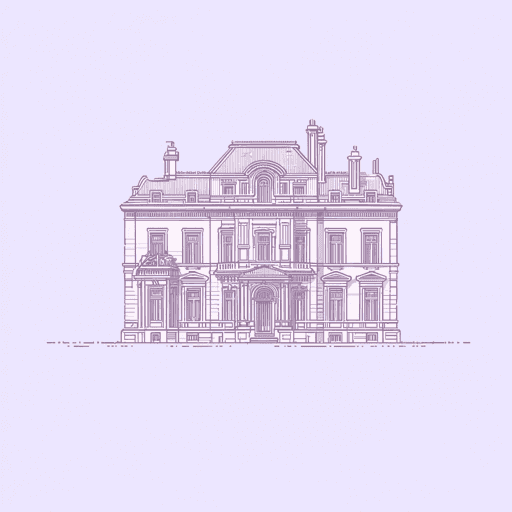
Though he has seen the place before, he accepts Mrs. Prest’s offer to show him the Bordereau house, since she has visited the women before. They observe the house, which the narrator feels seems to have an air of “quiet discouragement,” though it is imposing (54). Its size makes him question whether its occupants would take a lodger, but Mrs. Prest assures him that, despite the palatial house, the Misses Bordereau are not wealthy. He expresses the need to be subtle, given that Cumnor had previously attempted to ask for the papers and was rebuffed with a denial of their existence. The narrator also notes that he’ll use a false name in case the women have seen his publications, and that in order to decrease suspicion of his relationship to Cumnor, he plans to seduce the niece.
Chapter 2 Summary
After making plans to meet Mrs. Prest in a half hour, the narrator is admitted to the house by a maidservant who seems surprised at the presence of a visitor. He decides he needs to “work the garden” (58) into the conversation and compliments Tita on it when she comes to meet him. She is self-deprecating, and he tells her he has been seeking a garden without luck and would hire a gardener to ensure it is soon filled with flowers. He is not direct about his intentions, portraying himself as an honorable eccentric who is in Venice to do some reading and writing.
He eventually asks directly whether he can rent a few rooms, and she tells him she will ask her aunt, which he considers a victory. He makes plans to return the next day. Mrs. Prest is skeptical of the likelihood of his success, but he returns the next day and meets Miss Bordereau. He is awestruck when he sees her, as “her presence seemed somehow to contain [Aspern’s]” (64), and the chapter ends as she prepares to speak.
Chapter 3 Summary
Juliana questions the narrator about why he has selected their house but tells him he may rent as many rooms as he’d like if he’s willing to pay a high price for them. While the amount is much more than expected, he feels so offended by the thought of discussing money with “Aspern’s Juliana” (67) that he thinks he would agree to pay much more just to end the conversation. Tita enters, and he eventually prompts her to show him the rooms. There, she tells him that the money is for her, as her aunt is growing old and worries about how Tita will manage after her death.
Chapters 1-3 Analysis
While the narrator and protagonist of The Aspern Papers uses a pseudonym and eventually tells Tita his real name, the reader never learns either the real name or the pseudonym. The use of first person serves to characterize the narrator in detail, because the reader has access to his thoughts and reactions. At the same time, this narrative perspective emphasizes The Distorting Effects of Hero Worship, as the narrator’s understanding of both himself and the other characters is distorted by his all-consuming obsession with the dead poet Jeffrey Aspern. While James employs dialogue frequently throughout the narrative, some passages feature the narrator paraphrasing a conversation—emphasizing the subjective quality of the narrative. For example, the narrator’s initial conversation with Juliana moves from dialogue to paraphrased dialogue: “‘Please to sit down there. I hear very well,’ she said quietly [. . .] I took possession of [the chair], telling her that I was perfectly aware that I had intruded, that I had not been properly introduced and could only throw myself upon her indulgence” (65). This shift from direct dialogue to exposition is significant because it enables James to include subjectivity and ambiguity; the reader understands the sense of what the narrator said, but not the words he actually used to say it. This ambiguity emphasizes the possibility of unreliable narration: In this case, the narrator may be summarizing the conversation to present himself in a more flattering light. Similarly, James employs parenthetical clauses frequently, as asides in the narrator’s thought process or to provide additional details. Parenthesis creates a sense of intimacy between reader and narrator, as the clauses are often directed toward the audience the narrator is writing for, but it also highlights the degree to which the protagonist is both in control of the story and not fully in control of his own thoughts and feelings.
Due to extensive conversations regarding the cost of the rent, money functions as a motif in this section of the novella. Juliana’s motivation to accept the protagonist as a lodger is monetary, as she hopes the money will help to provide for Tita after Juliana’s death. Surreptitiously, she is also trying to gauge the protagonist’s wealth and thus his suitability as a marriage partner for Tita. If he is willing to pay the exorbitant rate indefinitely and without protest, it suggests that he will also be able to provide for Tita indefinitely. As soon as he does voice a reluctance to continue paying such a high rent, Juliana interrogates him about his work and income. The narrator’s discomfort at discussing money with his idol’s muse characterizes him as a romantic and provides insight into his hero worship of Aspern. The narrator views “chaffering with Aspern’s Juliana” (67) to be odious, which suggests the disconnect between his romantic ideal of her as represented in poetry, and the reality of meeting her. Money therefore provides a tangible representation of the tension between representation and reality that appears throughout the novella’s characterization of Juliana. Money indicates figurative rather than literal value in the novel: The narrator knows that the rooms aren’t worth what he pays for them, but they are valuable to him because they offer the possibility of getting close to the Aspern papers.
The Aspern Papers was first published in a series of three installments in The Atlantic Monthly, and James creates suspense across chapter breaks in keeping with the demands of this publication format. For example, the second chapter ends with a statement about what Juliana is about to say—“the remark she made was exactly the most unexpected” (64)—and the remark itself is the first line of the subsequent chapter. The first-person narrative perspective is another source of suspense, as the narrator becomes increasingly desperate to obtain the letters and his overwhelming emotion begins to overtake the story. The novella also includes more subtle suspense, through instances in which the narrator relates his often-intense emotional response to an event or speech before revealing what was actually done or said. The break between Chapters 2 and 3 is an example of subtle building of suspense, foreshadowing the larger suspense built throughout the novel. Because the narrator is speaking retrospectively, he already knows what has happened to the papers, but the reader doesn’t find out they are eventually destroyed until the end of the narrative. This technique of suspense building in relation to small, everyday events contributes to the reader’s experience of being invested in what might otherwise seem to be a low-stakes event: not life and death, but the preservation or destruction of an archive. While the subject matter could initially be perceived as mundane, James uses suspense and perspective to ensure that the reader feels the all-consuming importance this archive has for the narrator.
Because all primary characters other than the narrator are women, the unreliable narration also functions as an exploration of patriarchal assumptions about gender. The narrator begins the novel with his assessment of the idea Mrs. Prest has given him: To convince the Bordereaus’ to rent him a room to get closer to the Aspern papers. He comments that “it is not supposed to be the nature of women to rise as a general thing to the largest and most liberal view [. . .] but it has struck me that they sometimes throw off a bold conception” (50). This passage exemplifies the narrator’s perspective on women, which vacillates between respect and dismissal. He acknowledges that her idea was the catalyst for the events of the novella, and that he wouldn’t have thought of it himself, but is simultaneously derisive and prone to credit stereotypes, evidenced by the use of “supposed to” and “the nature of women.” Similarly, the narrator’s admiration of Juliana is reserved for the idea of her as represented in Aspern’s poetry, and not for the real woman. He is evidently uncomfortable with the realities of her life and with her as an individual, as suggested by his reaction when she discusses financial matters.
The setting of the Bordereaus’ house is described in detail in this section, and the descriptions of its architecture convey the pathos of Privacy and Reclusiveness. James often employs personification in his physical descriptions of the house, an “air of quiet discouragement” (54), for example, to match what the narrator sees as the quiet discouragement of its inhabitants. The fact that the novel is set in Venice, but the primary characters are all expatriates is also significant. During the narrator’s initial conversation with Tita, he asks whether she and her aunt are American, to which she replies, “I don’t know; we used to be [. . .] it’s so many years ago – we are nothing” (61). This declaration of non-identity represents the dark side of James’s own expatriate life. Like many of his characters, James himself left the US for Europe in search of a fuller immersion in life and culture. The Bordereaus, alone in their decaying castle in a slowly sinking city, have moved in the opposite direction—not toward life and culture but away from these values. They have lost their Americanness without becoming Venetian, or European, and according to Tita they are now “nothing.”

Get in-depth, chapter-by-chapter summaries and analysis from our literary experts.
- Grasp challenging concepts with clear, comprehensive explanations
- Revisit key plot points and ideas without rereading the book
- Share impressive insights in classes and book clubs
Related Titles
By Henry James