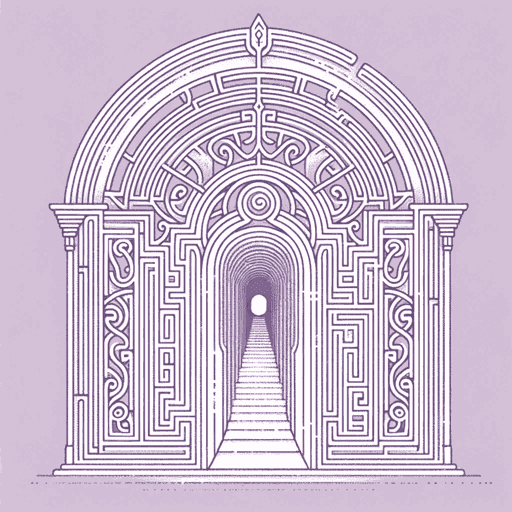
The Battle of the Labyrinth
The Battle of the Labyrinth
A modern alternative to SparkNotes and CliffsNotes, SuperSummary offers high-quality Study Guides with detailed chapter summaries and analysis of major themes, characters, and more. For select classroom titles, we also provide Teaching Guides with discussion and quiz questions to prompt student engagement.
Summaries & Analyses
Games
Before Reading
Reading Context
Use these questions or activities to help gauge students’ familiarity with and spark their interest in the context of the work, giving them an entry point into the text itself.
Short Answer
1. The title of the novel is a reference to the Greek myth of the Labyrinth. What do you know about this myth? What is the Labyrinth, and what purpose does it serve? What lessons or themes does this myth convey?
Teaching Suggestion: In the ancient Greek myth of the Labyrinth, the Athenian hero Theseus had to pass through a huge maze-prison called the Labyrinth to kill the monster known as the Minotaur. It may help to introduce this myth to the class early, highlighting the main figures who feature in it: Theseus, the Minotaur, Daedalus (the designer of the Labyrinth), and Ariadne (Theseus’ love interest and helper). Acquiring a basic understanding of the myth and its interpretations will help students engage more deeply with the themes of Riordan’s novel.
- This National Geographic article discusses sources and origins of the myth of the Labyrinth.
- This article from The Guardian explores the ways in which the myth of the Labyrinth has continued to fascinate writers and artists for millennia.
2. Though the novel’s principal audience is children and young adults, it explores themes of death and mortality. What are some stories and/or beliefs about death? How is the afterlife usually represented in myth, literature, and religion?
Teaching Suggestion: This short answer prompt connects to the theme of The Consequences of Cheating Death. Encourage students to talk about how they and/or their communities talk about death, mortality, and the afterlife. Introduce some of the ways humans have thought about death, both in ancient Greece and in other cultures, highlighting ideas such as the afterlife, the soul, rewards and punishments meted out to the dead, and even reincarnation. You may also discuss popular myths about cheating death, especially in ancient Greek culture (e.g., the myths of Sisyphus, Alcestis, and Orpheus and Eurydice).
- This article from The Collector discusses the concept of the afterlife in Greek and other cultures.
- This article from the Pew Research Center explores statistics concerning afterlife beliefs in the US.
Personal Connection Prompt
This prompt can be used for in-class discussion, exploratory free-writing, or reflection homework before reading the text.
Though set in a fantastical version of the contemporary world, Riordan’s novel does explore some real-world issues, including environmental issues. What are some of the biggest environmental issues facing the world today? Why are these issues so important? What are some steps people can take (or have already taken) toward solving these issues?
Teaching Suggestion: This personal connection prompt connects to the theme of Changing Attitudes About Environmental Issues. Consider encouraging students to think about pollution, animal cruelty, and the destruction of the wilderness, which are all addressed in the book. Students may consider concrete ways that individuals can take responsibility for the way they interact with the environment. They may also brainstorm ways that individuals can change their habits to lead more sustainable lives.

Unlock all 68 pages of this Study Guide
Get in-depth, chapter-by-chapter summaries and analysis from our literary experts.
- Grasp challenging concepts with clear, comprehensive explanations
- Revisit key plot points and ideas without rereading the book
- Share impressive insights in classes and book clubs