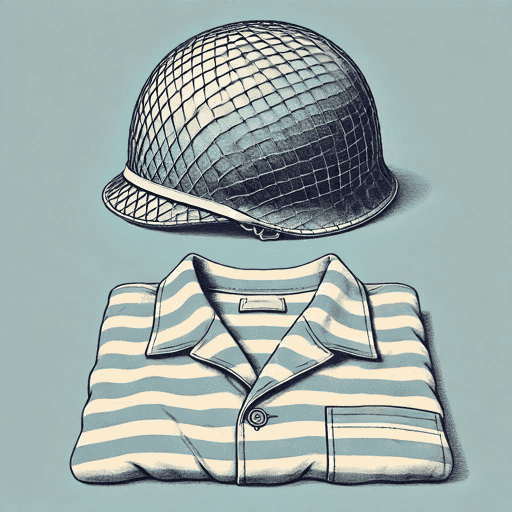
The Boys in the Light: An Extraordinary World War II Story of Survival, Faith, and Brotherhood
70 pages • 2-hour read
Nina WillnerThe Boys in the Light: An Extraordinary World War II Story of Survival, Faith, and Brotherhood
A modern alternative to SparkNotes and CliffsNotes, SuperSummary offers high-quality Study Guides with detailed chapter summaries and analysis of major themes, characters, and more.
Background
Content Warning: This section of the guide features discussion of illness or death, emotional abuse, physical abuse, racism, and religious discrimination.
Historical Context: Forced Labor, Synthetic Fuel, and the Allied Oil Offensive
During World War II, Germany’s war effort depended heavily on synthetic fuel derived from coal hydrogenation, a vulnerability the Allies systematically exploited through a targeted oil offensive. As the United States Strategic Bombing Survey reported, “The German oil supply was tight throughout the war, and was a controlling factor in military operations” (“Summary Report (European War).” US Government Printing Office, 30 Sep. 1945). The Oberschlesische Hydrierwerke plant at Blechhammer North was a critical node in this network, prompting sustained B-24 bomber strikes by the 15th Air Force operating from Italy.
In The Boys in the Light, this strategic conflict is seen from the ground through the primary perspective of Eddie, one of thousands of Jewish forced laborers at the Auschwitz III—Blechhammer subcamp, part of a vast industrial complex supporting Germany’s economic and military production. These men were incarcerated and forced to work for the Nazi war effort, and the Allied air raids created a conflicting mix of hope and terror. Willner shows that, while prisoners felt a surge of morale seeing the refinery burn, they were also left exposed to danger while SS guards hid in bunkers. The guards’ retaliatory fury was immediate, as one yelled to prisoners during a raid, “Good luck, here come your friends. Let them come and kill you” (133), before inflicting punitive “sport” punishments. Prisoners exercised agency through sabotage and by volunteering for high-risk bomb disposal details for extra rations. Ultimately, the Allied oil bombing campaign significantly depleted German fuel reserves, shaping the Ardennes offensive in which the US D Company soldiers fought. This triggered the Blechhammer camp’s evacuation in 1945, the mass “death march” from which Eddie and Mike escape.
Historical Context: Spearhead: US 3rd Armored Division and Armored Warfare
As the “Spearhead” of the Allied invasion of German-occupied Europe in 1944, the US 3rd Armored Division faced tactical challenges upon entering France. For many US soldiers, landing in Normandy was their first combat experience, and the learning curve was steep. Initial encounters in the Normandy hedgerows against superior German tanks and guns resulted in high casualties, forcing crews to adapt rapidly. Although the division advanced rapidly and was the first to reach Belgium, combat was intensified during the assault on the Siegfried Line and the subsequent Battle of the Bulge, which “raged for six weeks, becoming the largest and bloodiest single engagement fought by US forces in World War II” (“Battle of the Bulge.” National Park Service, 8 Jun. 2025). During the war, the Division suffered 10,571 casualties, of which 2,214 personnel were killed. (“Casualty figures.” 3rd Armored Division Data, 2024.)
The Boys in the Light chronicles how these pressures forged D Company’s identity. The unit developed field-expedient solutions like hedge-cutters and sandbag armor while mastering close-in flanking maneuvers and bail-out drills. This learning curve is vividly illustrated when Corporal Vance uses his Sherman’s agility to outgun a veteran SS Panzer ace at Freyneux. The challenges cultivated initiative at the platoon level, leading to the rise of leaders like Lieutenant Hovland. This combat-forged character—a blend of resilience, adaptability, and deep-seated crew cohesion—directly informed the unit’s humanitarian response when they later encountered and rescued the two escaped concentration camp survivors, Eddie and Mike. The soldiers’ care of Eddie and Mike can be seen in the wider context of the liberation of Europe and the aftermath of the Nazi Holocaust. The 3rd Armored Division is recognized as a “liberating division” for its 1945 liberation of Dora-Mittelbau and its involvement in the humanitarian efforts immediately following its discovery of the concentration camps and forced labor camps in that area. (“The 3rd Armored Division.” United States Holocaust Memorial Museum, 2025.)

Unlock all 70 pages of this Study Guide
Get in-depth, chapter-by-chapter summaries and analysis from our literary experts.
- Grasp challenging concepts with clear, comprehensive explanations
- Revisit key plot points and ideas without rereading the book
- Share impressive insights in classes and book clubs