The Boys in the Light: An Extraordinary World War II Story of Survival, Faith, and Brotherhood
70 pages • 2-hour read
Nina WillnerThe Boys in the Light: An Extraordinary World War II Story of Survival, Faith, and Brotherhood
A modern alternative to SparkNotes and CliffsNotes, SuperSummary offers high-quality Study Guides with detailed chapter summaries and analysis of major themes, characters, and more.
Part 3Chapter Summaries & Analyses
Content Warning: This section of the guide features discussion of illness or death, death by suicide, disordered eating, substance use, animal cruelty, animal death, graphic violence, bullying, emotional abuse, physical abuse, child abuse, racism, and religious discrimination.
Part 3, Chapter 22 Summary: “Christmas Eve”
In December 1944, D Company made a hasty 60-mile retreat from Blechhammer to Belgium’s Ardennes Forest to counter Hitler’s final offensive toward Antwerp’s fuel supplies. Conditions grounded Allied air support, giving the Germans a significant advantage. By December 22, near Lamormenil, the company was cut off from supplies and communication. News of the Malmedy massacre—where SS troops machine-gunned 84 American POWs—intensified the fear among the trapped men.
Captain McDowell ordered a failed diversionary and began drinking. Elmer Hovland took charge, gathering the sergeants and platoon leaders. He laid out two options: stay and be overrun, or fight their way out. The men unanimously chose to fight. After planning all night and scouting on foot, Elmer organized the tanks single file with himself in the lead and Myers at the rear. Before dawn, after praying for his men and family, Elmer led the convoy at top speed down a narrow trail without headlights. They broke into a clearing, were spotted by the enemy, but escaped through an unguarded gap between German units. Elmer’s leadership cemented his role as the company’s guiding force.
Two days before Christmas, down to 10 tanks, they rejoined forces in Freyneux and defended a critical junction near Manhay. Myers positioned his tank by St. Isidore Church. On Christmas Eve, while Elmer and Myers attended a briefing, an infantryman alerted Vance to four approaching Panzers from the elite 2nd SS Division led by tank ace Fritz Langanke. The German tanks crested a hill, exposing their vulnerable sides. Acting alone, Vance fired three times in rapid succession, destroying two Panzers and forcing Langanke to retreat. Elmer climbed the church steeple to direct artillery and air support until the Germans blasted the tower, nearly killing him. The American defense held. Vance’s quick thinking and marksmanship blunted a major German attack, contributing to the broader Allied stand in the Battle of the Bulge.
Part 3, Chapter 23 Summary: “Butch”
By Christmas 1944, Germany’s home front was in collapse. With most men at war, only the very old, very young, or wounded remained. Boys as young as 15 were conscripted. The Nazi regime altered traditional Christmas carols, replacing references to Jesus with praise for Hitler. In Mönchengladbach, Fritz wondered if he would ever see his friend Siegfried and the Willner family again, still keeping their trunk hidden in his attic.
On Christmas morning at Venosa Airfield in southern Italy, American B-24 pilot First Lieutenant Arthur Lindell attended church. The next day, he and other crews were briefed for a decisive raid on Blechhammer. Over 500 American bombers took off, including Lindell’s plane, which he had named Butch. As sirens wailed at Blechhammer, the bombers dropped their payloads. Enemy flak struck Butch directly. The plane exploded, broke in half, and plummeted. The wreckage crashed into the plant’s electricity station, causing a blackout and permanently halting fuel production. All nine crew members perished.
The American air campaign against Blechhammer was complete, having cost the lives of 137 airmen over 17 missions. Allied bombing had cut Germany’s synthetic fuel production by 97%. Hitler began moving war production underground.
Part 3, Chapter 24 Summary: “The Long March”
In early January 1945, as Allied Soviet forces approached, Heinrich Himmler ordered the evacuation of Auschwitz and its subcamps. Eddie Willner, now 18, and Mike, 17, joined nearly 4,000 Jewish prisoners from Blechhammer on a forced “death march” westward into Germany. Kurt Klipp, newly promoted to commandant, led the column with Tom Mix and 200 guards on January 21. Each prisoner received one loaf of bread. Soviet forces liberated the near-empty Auschwitz camp six days later.
Eddie initially hoped to escape, but when a few prisoners ran toward the sound of Soviet artillery and were shot, he abandoned the idea. The SS prevented locals from giving the prisoners food or water. Tom Mix shot anyone who faltered. Many prisoners discarded their wooden clogs and walked barefoot. After 13 days and 180 miles, the survivors reached Gross-Rosen concentration camp. Of 4,000, approximately 800 people had died. At Gross-Rosen, hundreds more died or were killed. The survivors were loaded onto a train bound for Buchenwald, joining political prisoners, criminals, and POWs from 23 countries. During a selection, Eddie shouted that he was ready to work and was sent to the right, to live. Mike did the same and also survived. They were put on another train, destined for Hitler’s secret underground labor project in the Harz Mountains.
Part 3, Chapter 25 Summary: “The Talisman”
In January 1945, D Company fought back toward Germany in brutal cold. For his actions at Freyneux, Vance was promoted to corporal. Elmer received a telegram informing him that his wife, Harriet, had given birth to a son. At Brisy, Elmer’s tank was hit; he rescued a wounded crewman, carrying him nearly a mile under fire. When Pepsi’s mess trucks were struck by artillery, half the kitchen crew was killed. Pepsi clutched his photo of Blue Eyes, his lucky charm, believing it saved him. McDowell briefly rejoined the unit but was wounded and evacuated.
The D Company sergeants marched to battalion headquarters and demanded that Elmer be made company commander. The colonel initially refused, citing Elmer’s youth and junior rank, but relented when the battle-hardened veterans insisted they would follow only Elmer. Elmer officially took command. Later, he defied an infantry colonel’s order to advance down a road he believed was a trap, resting his hand on his pistol until the colonel backed down. The road was later found to be mined and set for ambush. For his leadership during the Battle of the Bulge, Elmer was awarded the Silver Star.
Fred Headrick, temporarily transferred to another company, walked back on his own five days later to rejoin D Company. Before leaving Belgium, Elmer asked Pepsi to cook the men a hot breakfast. Lacking supplies and with no cooking grease available, Pepsi secretly siphoned gun oil from discarded rifle stocks. He cooked pancakes in the gun oil and made syrup from burnt sugar. The men devoured the meal, unaware of the secret ingredient. Fred declared them the best pancakes he had ever eaten.
Part 3, Chapter 26 Summary: “The Tunnels”
Deep in the Harz Mountains, Hitler ordered tunnels carved into the mountains to continue weapons production underground. At the Langenstein concentration camp near Halberstadt, forced laborers blasted out a massive network of tunnels for Project Malachit, a secret program to build underground factories for Messerschmitt jet engine parts and V-2 missile components. Eddie and Mike arrived to join 5,000 tunnel laborers.
The camp operated under a policy of extermination through labor, with a life expectancy of six weeks. SS officer Lübeck stated that killing 1,000 prisoners did not matter because they could be replaced. A local farmer made daily trips to collect bodies for the crematorium. Eddie, Mike, and other Jewish prisoners were housed separately in a barracks with no bunks, forced to sleep on the bare floor. Inside the tunnels, thousands of emaciated prisoners worked 12-hour shifts in dangerous conditions. Eddie and Mike were assigned to the blasting crews, where prisoners were killed almost hourly by explosions and falling rock. With poor ventilation, workers choked on dust that coated their bodies and seared their lungs. Roof collapses, electrocutions, and dropped beams were common.
Langenstein was worse than Blechhammer. Prisoners became skeletal, with vacant stares. Many stepped forward when guards called for the sick, seeking relief through death. Others ended their own lives. When the crematorium broke down, mass graves were dug on the camp grounds. Eddie was detailed to grave-digging, where some prisoners were thrown in while still alive. After eight weeks at Langenstein, Eddie and Mike had beaten the odds but were severely emaciated. Each morning, they checked to see if the other was still breathing, realizing they were completely dependent on each other for survival.
Part 3, Chapter 27 Summary: “The Prayer”
After nine months of near-constant combat, the veteran tank personnel of D Company were battle-hardened and exhausted. They developed a casual attitude toward danger, hardly flinching at incoming fire. The unit adopted a distinctive swagger: Private Stubbins wore a top hat, and Rocco drank from looted porcelain teacups. Their tanks were decorated with photos of loved ones, pinup girls, and captured Nazi items.
D Company was chosen to help lead the attack on Cologne, Germany’s first major city to be assaulted. They received a new M26 Pershing tank, far superior to the Sherman, with thick armor and a powerful 90mm gun. The Germans increasingly used the deadly Panzerfaust, a handheld missile that could be fired from close range by a single soldier, making it difficult for the US tanks to advance without infantry protection.
Near Cologne Cathedral, Elmer sensed danger and prayed for a sign. As he began to duck into his turret, a sniper’s bullet pierced his helmet, narrowly missing his head. The close call shook the entire company. Elmer believed divine intervention saved him but was left with a persistent sense of foreboding. After Cologne fell, Elmer wrote increasingly earnest letters to Harriet and his newborn son about faith and brotherhood.
Weeks later, near Altenkirchen, Charles Myers scouted ahead in his tank with his crew: Fred, Vance, driver Hamilton, and new loader Arturo Casillas, a 19-year-old replacement. An 88mm gun fired from a wood line, striking Myers’s tank. Fred and Hamilton escaped, though Fred was wounded by shrapnel. A bloodied Vance appeared in the hatch, then got back inside to fire and destroy an enemy tank destroyer before climbing out. He crawled away just as a second 88mm round engulfed the Sherman in flames. Lieutenant Myers and Arturo Casillas were killed inside.
Elmer was devastated by the loss of his best friend, Myers. Three days later, General Maurice Rose was also killed nearby. Myers’s crew was disbanded. Fred sank into deep depression, refusing to leave his new tank for days. Vance brought him food and tried to help him through his grief.
Part 3, Chapter 28 Summary: “Breakout”
In April 1945, rumors spread through Langenstein that American forces were only 30 miles away. Commandant Paul Tscheu ordered the camp evacuated the next morning, raising fears among the prisoners of a massacre before liberation. That evening, Eddie and Mike joined four other prisoners planning to escape. They agreed to make their break at nightfall near a river, scattering in different directions to divide the guards’ attention.
The next morning, 3,000 prisoners marched out while 1,000 who were too weak remained behind. Fearing execution on the spot, the prisoners were relieved when Tscheu marched them away from the tunnels and into the countryside. Over the next two days, many collapsed and were shot. Villagers witnessed the suffering; Pastor Hager described seeing ashen, emaciated figures shuffling past. An SS guard stopped a woman from giving water to the prisoners, declaring they were “pigs” who had to die.
On the third day at sunset near the village of Welbsleben, as they approached a river, a British fighter plane flew overhead, creating a distraction. The escape team’s leader gave the signal. The six prisoners scattered. Guards opened fire and released dogs. One escapee was shot in the stomach. Eddie was shot in the arm. A German shepherd attacked Mike, clamping onto his leg. Eddie and Mike strangled the dog together until it died. They threw themselves into the river Eine and were carried away by the current. They collapsed on the muddy bank, overwhelmed with euphoria at their impossible escape after nearly five years of captivity.
Part 3, Chapter 29 Summary: “Angels”
Free but wounded and exhausted, Eddie and Mike made a pact to kill anyone who tried to recapture them. That night, they hid in a cellar, treated their wounds with rags and a stick, ate a single raw potato each, and slept. For the next five nights, they traveled toward the sound of artillery fire, hiding in woods by day and moving through fields and streams by night, eating wild berries and whatever they found in barns.
On their sixth night of freedom, they stumbled into a Volkssturm ambush line set up in the darkness. When a child’s voice challenged them for a password, Eddie bluffed in German, shouting that they were a regular army patrol. They snuck past undetected. The next morning, hiding in the woods between Bernburg and Köthen, they heard the rumble of powerful engines, hearts racing with equal parts hope and fear. An American Sherman tank burst through the trees, followed by others. Eddie and Mike sprinted into the middle of the road with their hands raised, walking “from the darkness into the light” (221).
The lead tank halted. Elmer Hovland was called forward. The soldiers—including Fred, Vance, and Rocco—stared in shock at the two emaciated teenagers in tattered striped uniforms. Sergeant Hansen, who spoke German, was summoned. The boys pointed to their prisoner tattoos. Jewish soldiers from the company stepped forward, identifying themselves to the boys as also Jewish.
For the men of D Company, the encounter explained why they had been fighting. For Eddie and Mike, standing before their liberators, it felt as if they “were in the presence of angels” (221).
Part 3, Chapter 30 Summary: “‘They’re with Us Now’”
Through Hansen’s translation, Eddie warned Elmer of a Volkssturm ambush ahead. Elmer ordered the boys hoisted onto the lead tank to guide the column. Following their directions, D Company approached the ambush site. Elmer used a bullhorn to demand surrender. Over a dozen old men and boys emerged with raised hands, taken without a shot fired.
Despite standing orders to bypass all refugees to maintain the division’s momentum, Elmer recognized these boys were victims of an extraordinary crime. He sent them to the battalion aid station to be cleaned up, then declared, “They’re with us now” (224). Medics bathed the boys for the first time in years, deloused them, and treated their wounds. The battalion surgeon examined them, diagnosing advanced malnutrition. Eddie weighed 75 pounds, Mike slightly less, both having lost more than half their body weight. A German woman provided clothing. As the company continued fighting, Elmer wrote Harriet that they had found two boys in terrible condition, and he was praying they would survive.
Elmer assigned the boys to Pepsi’s kitchen crew. When Pepsi asked what they should do, Elmer told them simply to eat. Pepsi understood his mission was to save the boys. He started them slowly on crackers and broth, adjusting their diet carefully as their bodies adapted. Over the next few days, he introduced eggs and canned peaches. The boys slept on cots next to Pepsi, who talked to them constantly in his Boston accent, reassured them, and checked on them throughout the night. When they woke from nightmares, he comforted them. Within weeks, they gained 10 pounds and began helping with kitchen chores. Elmer took on a paternal role, and D Company informally “adopted” the two survivors.
Part 3, Chapter 31 Summary: “Big Brothers”
As fighting continued into the final weeks of the war, Eddie and Mike rode in the kitchen truck with Pepsi and rapidly learned English. Eddie began serving as an interpreter when the crew needed to barter with locals for supplies. When tank crews returned for meals, they were heartened to see the boys recovering, hustling around the mess area in kitchen aprons with radiant smiles. The boys’ joyful presence boosted morale and proved to be a salve for the soldiers’ own war trauma. The soldiers realized that while they had rescued the boys, the survivors were now helping them cope with their own demons. Eddie and Mike became fascinated by the diversity of the American soldiers. They realized America represented everything Nazi Germany was not: a place where different cultures united to work together. A dream took root in them to smehow reach America.
A protective relationship developed. The soldiers taught the boys American skills: how to shave using a helmet, how to salute, and how to smoke a cigarette. They shared photographs of their families and favorite pinup girls. Tank crews debated the merits of the Red Sox versus the Dodgers, taught the boys to pitch and hit a baseball, and showed them how to play craps.
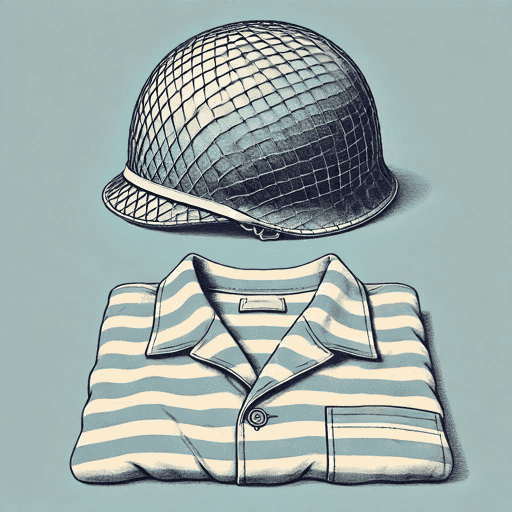
On Elmer’s orders, Pepsi presented Eddie and Mike with their own US Army uniforms, which they donned with immense pride, feeling they had been accepted as part of the unit. Elmer got them on the army payroll, assigned Mike to the kitchen, and made Eddie his personal interpreter. He issued Eddie a Colt .45 pistol as a symbol of trust. Eddie proved skilled at interrogating prisoners and translating documents, using his knowledge of German culture to extract information. The men of D Company pulled the boys into their brotherhood, forging a connection that would anchor them in the world and spark hope for their future.
Part 3, Chapter 32 Summary: “Unbreakable Bond”
On May 8, 1945, Corporal Blume, the company runner, announced that the war was over. Elmer called for a moment of silence for the 34 men D Company had lost and the thousands more killed and wounded across the 3rd Armored Division. The company transitioned to post-war occupation duties.
Eddie continued at Elmer’s side, translating and drafting official orders for German mayors, co-signed with his name and title as company assistant. He used firm, unambiguous language he knew would command compliance from obstinate Germans. In the more relaxed postwar environment, the soldiers and survivors bonded more deeply. The GIs taught Eddie and Mike American slang and customs. One group dressed the boys in Class B uniforms for official-looking photographs, posing them behind the wheel of a jeep and pretending to fire weapons.
Pepsi continued to mother them. The entire crew participated in nursing the survivors back to health, physically and emotionally. The boys idolized the soldiers for it. Pepsi later reflected that they became like little brothers and that after all the company had endured, they realized they needed the boys as much as the boys needed them. In just a few months, D Company forged an unbreakable bond with the two survivors.
Part 3, Chapter 33 Summary: “Liberation”
On May 8, 1945, Germany surrendered unconditionally, ending nearly six years of war in Europe. As Soviet troops stormed Berlin, Hitler shot himself dead in his bunker; his new wife died from cyanide poisoning. Other leading Nazis, including Joseph Goebbels, Heinrich Himmler, and Hermann Göring, also killed themselves. Many fled to unknown locations. President Franklin D. Roosevelt died on the same day Eddie and Mike escaped; Harry S. Truman now led the nation.
Allied troops entered concentration camps and discovered scenes of mass atrocity. At Langenstein, soldiers of the American 83rd Infantry Division found the 1,000 prisoners who had remained behind, many near death. Between 20 and 25 freed prisoners continued to die daily in the weeks following liberation. Days after liberation, an SS guard complained to an American colonel about troops stealing chickens. Inmates recognized the guard and surrounded him. When the colonel declined to arrest him, the prisoners beat him with shovels and pickaxes. An American sergeant finished the job.
General Dwight D. Eisenhower toured the Ohrdruf subcamp and cabled General George Marshall, calling the atrocities “beyond description.” He ordered local Germans to witness the camps and assist in burials, stating that now the Americans knew what they had been fighting against. He urged Marshall to send a congressional delegation to prevent future denial of Nazi brutality. War crimes trials began at Nuremberg. Many SS criminals were tried and convicted, but most escaped justice. At their trials, Blechhammer guards denied everything; Heinrich Schaefer repeatedly claimed he could not remember and did not kill anyone. Commandant Otto Brossmann was sentenced to death but later acquitted. Kurt Klipp died of typhus before trial. The identity and fate of Tom Mix, believed to be Hermann Leinkenjost, remained unconfirmed. Some 1,600 Nazi scientists and engineers, including V-2 rocket program head and SS officer Wernher von Braun, were quietly recruited by the United States and Soviet Union, their war crimes ignored.
Part 3, Chapter 34 Summary: “The Final Goodbye”
After six months together, in October 1945, D Company prepared to return to the United States. The soldiers packed their belongings and turned in their tanks, melancholy that their brotherhood was breaking up. They felt anxious about Eddie and Mike’s future, desperately trying to think of ways to bring their “little brothers” to America. Ultimately, they realized there was no viable path for the boys to emigrate. The company gathered for an emotional goodbye. Eddie and Mike, who had regained about 50 pounds each, stood before their heroes, profoundly grateful for the gift of a second chance. Elmer had provided them with army pay and travel orders to help them navigate postwar Germany independently.
Elmer offered a reassuring handshake, telling them they would always be part of D Company and they would never be forgotten. Fred invited them to visit him in Chattanooga for fishing. Pepsi, fighting back tears, invited them to Boston for a Red Sox game and a home-cooked meal. Other soldiers filed past with handshakes and farewells. Finally, Pepsi embraced both boys, choking back emotion, and told them simply to take care. Wearing their GI uniforms, Eddie and Mike walked away from the men who had saved their lives. Pepsi later recalled the pain of separation.
Part 3 Analysis
The narrative structure of these chapters builds tension by intensifying the crises of both narratives before bringing these together in the resolution of mutual salvation, swiftly followed by the end of the war itself. While Elmer’s unit battles through the freezing Ardennes Forest and advances into Germany, deploying new Pershing tanks and relying on the marksmanship of gunners like Vance, Eddie, and Mike endure a grueling death march from Blechhammer to Gross-Rosen. The boys are subsequently thrust into the forced labor of the Langenstein tunnels, where the SS implements an extermination-through-labor policy. This structural crosscutting highlights the vast discrepancy in agency between the two groups. The soldiers, despite facing lethal threats from Panzerfausts and 88mm guns, retain operational autonomy, cohesive strategy, and the physical means of defense. Conversely, the prisoners are stripped of all agency, reduced to “human wreckage” entirely dependent on chance and mutual reliance to survive. By maintaining this dual focus until the moment of liberation, the text formally underscores the broader historical scope of the war, illustrating how the military theater and the Holocaust occurred simultaneously, fundamentally colliding when the Allied advance penetrated the Reich’s clandestine network of concentration camps.
The integration of Eddie and Mike into D Company demonstrates the reciprocal nature of trauma recovery and the restorative power of Brotherhood Forged Amid the Trauma and Aftermath of War. After discovering the teenagers, the soldiers unofficially adopt them. Pepsi provides the boys with their own US Army uniforms, and Elmer issues Eddie a Colt .45 pistol alongside the title of company assistant. Providing the survivors with military clothing functions as a profound emblem of inclusion, physically replacing their striped prisoner garb—which marked them for death—with garments that signify protection, belonging, and identity. The soldiers offer the boys a surrogate family, equipping them with both practical skills and a renewed sense of safety. In turn, the boys’ presence helps the weary soldiers cope with the devastating recent deaths of comrades, particularly Charles Myers, who perished in a burning Sherman tank. Witnessing the boys’ resilience crystallizes the soldiers’ moral purpose, providing tangible justification for the severe losses D Company has endured. This dynamic transforms the liberation narrative from a unilateral rescue into a symbiotic exchange, developing the reciprocal theme of Finding Strength and Consolation in Acts of Compassion. The ex-prisoners regain their agency and humanity, while the liberators find psychological salvation, acting as a form of rehabilitation before they return to civilian life.
In these chapters, Elmer Hovland’s character arc solidifies as his practical, faith-driven leadership makes him the paternal figure of D Company and, ultimately, for Eddie and Mike. Following Captain McDowell’s retreat into alcohol during a crisis in the Ardennes—posing a moral juxtaposition to Elmer’s wholesomeness—Elmer orchestrates a daring nighttime escape, cementing his role as the company’s guiding force. Later, his battle-hardened sergeants successfully demand his official promotion to company commander, refusing to follow a higher-ranking replacement. As a leader, Elmer defies a superior infantry officer to prevent his men from driving into a mined ambush and relies on a combination of instinct and faith—most notably when a sniper’s bullet pierces his helmet but leaves him unharmed. Elmer’s authority derives not from his rank but from his demonstrated competence and unyielding commitment to his men’s survival. His calculated insubordination emphasizes a leadership philosophy that prioritizes human life over unthinking adherence to military hierarchy. This development illustrates the shifting paradigms of authority in extreme combat environments, where localized trust and shared survival override traditional military protocol, forging an unbreakable unit cohesion necessary to withstand the psychological attrition of near-constant warfare.
Throughout these chapters, the recurring image of food works to explore existential desperation and the painstaking restoration of human dignity. The prisoners are reduced to surviving on wild berries or a single potato, rendering starvation a weapon of systematic dehumanization employed by the Nazi regime. For the American soldiers, food scarcity is a logistical byproduct of chaotic combat, and they miss home comforts, rather than experiencing true hunger. Elmer recognizes the importance of food to morale, leading Pepsi to siphon gun oil from discarded rifles to cook pancakes, a retrospective confession that adds levity to the narrative at a point of tension. After Eddie and Mike are rescued, Pepsi’s primary mission shifts to feeding them, carefully transitioning their digestive systems from crackers and broth to more substantial meals. In this context, the act of nourishment becomes an intimate process of rebuilding shattered trust, underpinning the theme of Personal Survival Enabled Through the Help of Others.

Unlock all 70 pages of this Study Guide
Get in-depth, chapter-by-chapter summaries and analysis from our literary experts.
- Grasp challenging concepts with clear, comprehensive explanations
- Revisit key plot points and ideas without rereading the book
- Share impressive insights in classes and book clubs