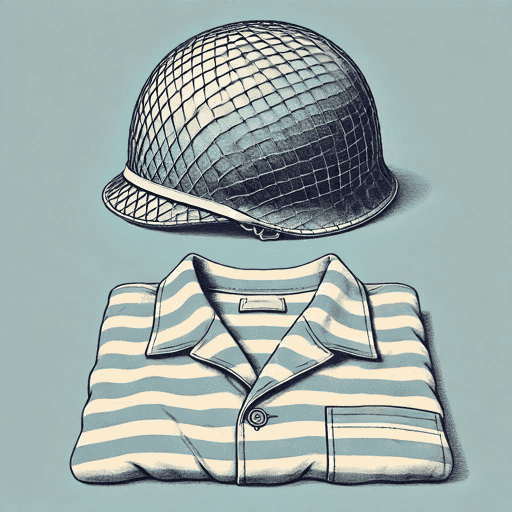
The Boys in the Light: An Extraordinary World War II Story of Survival, Faith, and Brotherhood
70 pages • 2-hour read
Nina WillnerThe Boys in the Light: An Extraordinary World War II Story of Survival, Faith, and Brotherhood
A modern alternative to SparkNotes and CliffsNotes, SuperSummary offers high-quality Study Guides with detailed chapter summaries and analysis of major themes, characters, and more.
Summary and Study Guide
Overview
The Boys in the Light (2025) is a work of narrative nonfiction by Nina Willner, a former US Army intelligence officer and author of the bestselling memoir Forty Autumns. Set during World War II, it tells the story of Willner’s father, Eddie Willner, a German Jewish teenager who experienced Nazi persecution and imprisonment at Auschwitz and Buchenwald and, in parallel, the stories of two young American soldiers, Elmer Hovland and Sammy “Pepsi” DeCola. These storylines intersect when the American Army tank unit rescues Willie and his friend Mike Swaab after they escape from a death march. The book explores themes of Personal Survival Enabled Through the Help of Others, Finding Strength and Consolation in Acts of Compassion, and Brotherhood Forged Amid the Trauma and Aftermath of War.
Willner places her father’s personal journey within the broader historical context of World War II, connecting his incarceration at the Blechhammer forced labor camp to the Allied strategic bombing campaign against Germany’s synthetic fuel production near that location. The story also describes the combat experiences of the 3rd Armored “Spearhead” Division as it fought its way from Normandy into the heart of Germany. Willner’s narrative is based on historical research, including survivor testimonies and extensive interviews with the American veterans who rescued her father. Decades after the war, a search initiated by Willner’s family culminated in a 2002 reunion between her father and the surviving members of D Company, an event that provides the book’s narrative conclusion.
This guide refers to the 2025 hardcover edition published by Dutton.
Content Warning: The source material and guide feature depictions of illness or death, death by suicide, disordered eating, substance use, animal cruelty, animal death, child death, graphic violence, bullying, emotional abuse, physical abuse, child abuse, racism, religious discrimination, and gender discrimination.
Summary
In the 1930s, three boys grew up in vastly different worlds, their lives destined to intersect through the upheaval of World War II. Elmer Hovland was the son of devout Lutheran Norwegian immigrants in small-town Kenneth, Minnesota. Quiet, capable, and guided by deep faith, he built a clock from red pine, taught himself several instruments, and took apart and reassembled a Model T. Sammy DeCola grew up in a lively Italian Catholic family in Waltham, Massachusetts, where his father ran a diner. When 11-year-old Sammy lost his mother, he became angry and directionless, before channeling his grief into work at the family’s diner, where he learned about food and comfort. Across the Atlantic, in Mönchengladbach, Germany, Eddie Willner was a mischievous only child of a middle-class Jewish family that had fully assimilated into the city over seven generations. His father, Siegfried, a decorated World War I veteran with the Iron Cross, imposed strict Prussian discipline on his son, insisting on toughness and self-control.
Eddie’s secure world unraveled as Adolf Hitler rose to Germany’s Chancellor, scapegoating Jews for Germany’s humiliation and economic collapse after the defeat of World War I. The Nazi regime stripped Jews of citizenship and saturated German culture with antisemitic propaganda. Eddie was bullied, kicked off his soccer team, and expelled from school. On Kristallnacht, November 9, 1938, Nazi mobs destroyed synagogues and Jewish businesses across Germany. The Willners were evicted, and Eddie’s grandfather Opa Josef was sent to an overcrowded seniors’ facility. When Eddie’s passport arrived but his parents’ papers did not, Siegfried and his wife Auguste put their 12-year-old son on a train to Brussels with a note pinned to his coat asking a stranger to take him in. A Jewish relief worker placed Eddie with a Flemish couple. Months later, Siegfried and Auguste’s passports arrived, and they fled Germany just ahead of the Gestapo’s arrival, leaving their family treasures with Fritz, their Catholic neighbor. The family reunited in Belgium, but Nazi invasions pushed them further through France, where sympathetic villagers in Ortaffa hid them. During the German occupation of France, the Vichy police arrested the Willners.
In September 1942, the Willners were loaded into Transport 31, a train of cattle cars carrying 1,000 people from the Drancy transit camp near Paris to Nazi-occupied Poland. At the Kosel station, SS guards separated the men from the women and children. Auguste pushed Eddie to go with Siegfried. Both passed inspection and were selected for forced labor. The train carried Auguste to Auschwitz-Birkenau, where she was murdered in the gas chambers, aged 42.
Eddie and Siegfried entered the Nazi forced labor system. Arriving at the Auschwitz subcamp Blechhammer, they were tattooed with serial numbers and forced to labor in the synthetic oil production critical to Hitler’s war machine. A 15-year-old Dutch orphan named Maurits “Mike” Swaab, whose family had already been murdered, attached himself to Eddie. Siegfried became a surrogate father to Mike and coached both boys in survival: how to stand tall during the twice-daily fitness inspections, how to endure hunger, and how to take a beating without flinching. From July 1944, American B-24 bombers attacked the refinery: Despite their danger, prisoners cheered, seeing the raids as proof the world had not forgotten them. On Yom Kippur 1944, guards hanged a 16-year-old boy accused of sabotage. When the rope broke and he was ordered hanged again, he called out to his fellow prisoners, “Friends, do not lose courage!” (144). When, around his 18th birthday, Eddie was shot in the head during a mass shooting, fellow prisoners performed surgery with a contraband needle, and he survived. Siegfried made Eddie memorize the names of 26 Willner relatives. Soon after, Siegfried’s health failed, and he was murdered by the Nazis. Every person on Siegfried’s list, Eddie would later learn, had already been killed. He was the sole survivor of the Willner family.
After America entered the war fully, following the Pearl Harbor attack in 1941, Sammy and Elmer joined the US Army. Sammy became a cook; Elmer was commissioned as a lieutenant. Both were assigned to D Company, 32nd Armored Regiment, 3rd Armored “Spearhead” Division. In late June 1944, D Company landed at Omaha Beach, Normandy, as part of the Allied invasion of German-occupied Europe. Their first combat experience in the terrain of Normandy was a disaster, and the company suffered heavy casualties. The official commander, Captain McDowell, proved ineffective, so Elmer and fellow lieutenant Charles Myers filled the void: Elmer planned tactics and unified the men while Myers scouted ahead. Sammy, now known as “Pepsi,” ran the field kitchen with the same warmth his father had brought to the family diner. The company fought east across France into Belgium.
In December 1944, the Germans launched a massive surprise counterattack in the Ardennes Forest, beginning the Battle of the Bulge. D Company was cut off and running out of supplies. Elmer took charge and led a nighttime escape through a gap in enemy lines. On Christmas Eve, at the village of Freyneux, 19-year-old Private First-Class James Vance, alone in the gunner’s seat, knocked out two elite SS Panzer tanks, helping blunt a major German offensive.
In January 1945, as Allied Soviet forces approached Auschwitz, the Nazis marched nearly 4,000 Blechhammer prisoners westward through the brutal Polish winter. About 8,000 died in 13 days. Eddie and Mike survived further transfers before reaching Langenstein, a concentration camp in Germany’s Harz Mountains, where prisoners carved underground tunnels for secret weapons production. Life expectancy was six weeks. On the eve of evacuation, Eddie and Mike joined an escape team. During a forced march, near the village of Welbsleben, a lone British fighter provided a distraction. While running, Eddie was shot in the arm, and a guard dog clamped onto Mike’s leg, but the two killed the dog and flung themselves into the river Eine, which carried them away.
For five nights, they ran toward the sound of artillery. On the sixth morning, an American Sherman tank appeared, and Eddie and Mike sprinted into the open with hands raised. The tank commander radioed his lieutenant to come see what they had found. Elmer and D Company surrounded two skeletal teenagers in tattered striped uniforms. Eddie, through a translator, warned of an ambush ahead and guided the tanks safely past it. Elmer placed the boys in Pepsi’s care, saying, “They’re with us now” (224).
Pepsi nursed the boys toward health, starting with crackers and gradually introducing broth, eggs, and canned peaches. Elmer issued them Army uniforms and put them on the payroll: Eddie became Elmer’s interpreter, and Mike worked in the kitchen. Near Altenkirchen, an 88mm shell killed Myers inside his tank, devastating the company. Germany surrendered on May 8, 1945, and Elmer called a moment of silence for the 34 D Company soldiers killed in action. In October, unable to take the survivors with them to America, the soldiers said emotional goodbyes. Eddie and Mike, wearing GI uniforms, turned and walked away.
Elmer returned to Minnesota and built a life grounded in faith and community. Pepsi married and took over the family diner in Waltham. Vance earned a college degree, returned to active duty, and retired as a colonel. Eddie traveled to Mönchengladbach, finding every trace of Jewish life erased. Fritz returned the Willner family treasures to him. Eddie and Mike emigrated to America in 1947 and enlisted in the US military. Eddie became an intelligence officer, married Hanna, a German refugee, and raised six children. Mike served 22 years in the Air Force, dying in 1985.
For nearly 50 years, Eddie and Hanna searched for D Company, armed only with nicknames and faded memories. In the late 1990s, the 3rd Armored Division Veterans Association provided a phone number for “Lieutenant Hovland.” Hanna called, and Elmer, 80 and recently widowed, learned that the Jewish boy he had helped save had been talking about him his whole life. In September 2002, Eddie hosted the surviving veterans at his home in Falls Church, Virginia. When Elmer arrived, every man stood taller. He made his way to Eddie and said, “I’m so proud of you” (275). One by one, Elmer, Vance, and Eddie died, until Pepsi was the last. In 2016, at 97, he cooked spaghetti for Eddie’s grandson Michael, named for Mike Swaab. 28 days later, Pepsi died. Eddie Willner was buried in Arlington National Cemetery, the grave inscribed “Auschwitz Survivor,” representing not just himself but all the members of the Willner family killed in the Holocaust.

Unlock all 70 pages of this Study Guide
Get in-depth, chapter-by-chapter summaries and analysis from our literary experts.
- Grasp challenging concepts with clear, comprehensive explanations
- Revisit key plot points and ideas without rereading the book
- Share impressive insights in classes and book clubs