The British Are Coming: The War for America, Lexington to Princeton, 1775-1777
87 pages • 2-hour read
Rick AtkinsonThe British Are Coming: The War for America, Lexington to Princeton, 1775-1777
A modern alternative to SparkNotes and CliffsNotes, SuperSummary offers high-quality Study Guides with detailed chapter summaries and analysis of major themes, characters, and more.
Themes
The Birth of the American Mythos
At the outset of The British Are Coming, Atkinson presents the American colonists as deeply embedded within the British imperial framework. They were loyal subjects of a distant king, not rebellious insurgents. Many had fought on behalf of the British Crown during the Seven Years’ War, and they maintained cultural, political, and economic ties to the empire. Their desire for representation, not separation, shaped the early stages of resistance. But when Parliament refused to accommodate their grievances—“no taxation without representation” foremost among them (26)—the relationship fractured. Atkinson suggests that the imperial bond, deeply felt and widely cherished, had frayed beyond repair. The transformation from colonist to American began not with a fully formed national identity, but with a reluctant severance from empire. It was “an improvised struggle between two peoples of a common heritage” (46). Through protest, rebellion, and eventually armed conflict, the colonists began to construct a collective identity in opposition to British rule, one that would soon assume a mythical character grounded in sacrifice, resistance, and emerging ideals of liberty.
At the center of this evolving mythos stands George Washington, whom Atkinson portrays not merely as a military commander, but as the symbolic embodiment of American identity. He would “personify the army he commanded” (157), for better and for worse. Washington’s physical stature, moral discipline, and unyielding presence lend him a near-mythic quality as the Revolution advances. He is described as tall, imposing, and honorable, a man whose “appearance alone gave confidence to the timid and imposed respect on the bold” (151). For a poorly disciplined host of mismatched troops, Washington’s appearance and stature served as a point of convergence, a metaphor for the American ideal they were bringing into existence. Yet his heroism, as Atkinson describes it, is not innate. The mythical stature emerges through trials. Washington suffers defeats, endures privation with his men, and struggles to hold together a fragile army. His mythos develops in tandem with his effectiveness as a leader. Washington endured and prevailed, Atkinson suggests, and his serenity, his immense personal discipline, his fortitude under constant pressure steady the new nation’s cause. Washington becomes not only a general, but an idea: stoic, principled, and willing to sacrifice. His transformation parallels that of the colonies: He evolves from British officer to American avatar, his personal endurance reflecting the larger resilience and ambition of the revolutionary effort.
By the beginning of 1777, when Atkinson ends the trilogy’s first entry, the American identity has crystallized. The Declaration of Independence has been issued. A Continental Army is in the field. Despite near collapse, the patriot cause has secured symbolic victories at Trenton and Princeton. This growing sense of American identity begins to be recognized abroad. In France, Benjamin Franklin becomes the embodiment of this new national character. Atkinson describes how, upon arriving in Paris, Franklin was “the idol of the day” (579), revered as a man of science, liberty, and moral clarity. Franklin’s celebrity is not just a matter of personal charm, but an important signal of the viability of the American project in the eyes of a European power. France does not yet formally recognize the United States, but Franklin’s reception suggests a growing legitimacy. The French elite, Atkinson suggests, find Franklin’s simplicity, his democratic bearing, and his wit irresistible. His very presence turns the American Revolution into a fashionable cause; thus he begins laying the diplomatic groundwork for French support. By early 1777, the American mythos is no longer confined to the colonies; it begins to circulate globally, rooted in shared ideals and embodied in figures like Washington and Franklin.
The Global Nature of Revolution
The American Revolution, Atkinson suggests, was from the beginning a global conflict shaped by the geographical and bureaucratic realities of the British Empire. The sheer distance between the colonies and the imperial center created profound challenges for British command and policy. Atkinson describes how a round-trip voyage from London to North America could take months, enduring “the most severe weather” (278), so that a single dispatch might take two or three months to reach a recipient. This delay meant that orders from London were frequently outdated by the time they arrived, forcing officers on the ground to improvise and sometimes to act contrary to instructions. In contrast, Washington and Congress are situated far closer to their forces and able to respond to developments and unexpected circumstances with speed, thus turning the global nature of the Revolution into an important part of its history. Further complicating imperial governance, British officers often concealed or distorted battlefield outcomes. Casualties were routinely underreported, if not fabricated to avoid blame or to preserve morale or “perhaps as a propaganda ploy” (452), showing how even British commanders were aware of the importance of their reputation on the international stage. Such distortions amplified the British Empire’s difficulties in grasping the true scope of the conflict. The physical separation between the colonies and Britain, coupled with a fragmented information system, hampered military coordination and created opportunities for American forces to act decisively before the British high command could respond effectively.
Yet if distance occasionally benefited the Americans, it also underscored their vulnerability in facing a global empire. Britain possessed “the most powerful navy in history” (23), which allowed it to project power across the eastern seaboard, conduct amphibious assaults, and blockade American ports. The Americans, by contrast, began the war without a professional navy, dependent on makeshift flotillas, converted merchant ships, and privateers. In this imbalance, Atkinson observes how British maritime power compelled coastal towns to choose submission out of fear of the arrival of the British fleet. The global reach of British trade and military alliances also gave the Crown access to foreign troops, notably the Hessians. Meanwhile, American access to overseas goods and arms was immediately restricted. After initially announcing a blockade against all products from the British Empire, Congress voted to relax trade barriers. This move also required diplomatic success to materialize into actual supply lines, including importing supplies from countries that—while not at peace with Britain—had no interest in antagonizing the British Empire. The Americans were forced to compensate for their strategic disadvantages through ingenuity, resolve, and an evolving recognition that their survival depended on bringing global powers into their cause.
Central to that strategy was Benjamin Franklin’s mission to France, where he sought to turn global rivalries to America’s advantage. Arriving in Paris in December 1776, Franklin quickly emerged as a cultural and political phenomenon. His arrival in France alone was enough to significantly shift the British stock market, demonstrating how even news of the Revolution had a global impact beyond events on the battlefield. Franklin’s personal fame became a diplomatic asset. He projected the image of the humble, principled American republican, contrasting sharply with the courtly excesses of European aristocracy. Atkinson details how Franklin cultivated this image, carefully shaping perceptions to make the American cause both appealing and ideologically fashionable. His efforts contributed to growing French sympathy and material support for the revolution, building on existing smuggling networks. Though formal alliance was still a year away, Franklin’s presence in Paris signaled America’s strategic pivot: To win a local war against a global empire, the revolutionaries would have to internationalize their struggle. In this way, the Americans showed a sophisticated grasp of global power politics, using diplomacy, image, and transatlantic tension to deliberately transform their rebellion into a world event.
The Brutality of War
In The British Are Coming, Atkinson makes clear that the American Revolution, despite its romanticized legacy, was a brutal and physically punishing conflict. The experience of ordinary soldiers was marked by unrelenting hardship, exposure, and hunger, so that “disease and starvation” (615) at times killed more Americans than combat did. On both sides, soldiers endured long marches through “below freezing” temperatures (626), while shelter was often makeshift or absent altogether. Atkinson details the threadbare blankets, while others are forced to survive without shirts or shoes. Many faced frostbite or death simply from exposure, with little to no treatment available. Disease was an ever-present threat. Smallpox spread through the Continental ranks, particularly due to a “historic aversion” to inoculation against the disease (277). This lack of inoculation led to many soldiers inoculating themselves in unsafe ways, “usually with pus poked under the fingernails” (350). The scarcity of food only compounded these sufferings. During the siege of Quebec, besieged soldiers ate their own shoes “with as much relish as a pig or a turkey” (615), a grim indication of how starvation pushed men to the limits of survival. These scenes dispel the notion of a glorious war, showing the brutal conditions that defined everyday life for revolutionary soldiers.
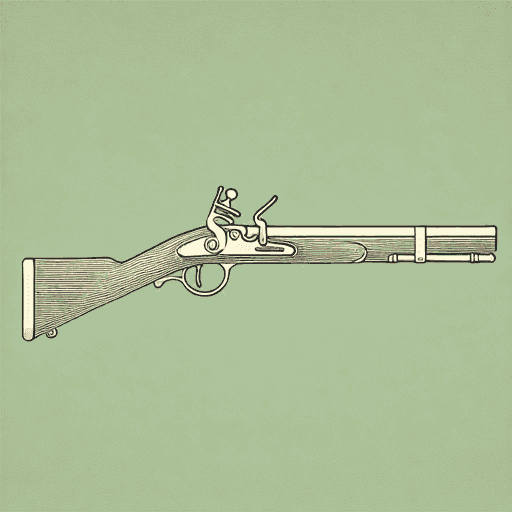
Combat itself was often gruesomely destructive. The black powder weapons of the era were slow to reload and prone to misfire; when they did hit their mark, the injuries were devastating. In describing the aftermath of battle, Atkinson recounts “blood and entrails lying about” (415); “a prodigious effusion of blood” (415); “blood spewing from a bullet in the heart” (481); a “bloodbath” (535); and “dozens of bloody tartans and bonnets” (552). The medical care available was primitive at best, and battlefield surgery often meant amputation without effective anesthesia. Many wounded were simply left to die where they fell. Mass graves and unmarked burials were common. The dead who were not buried were often left in rotting heaps—Atkinson describes a “shoreline cobbled with corpses” (421)—adding to the psychological toll on survivors. Washington himself was not spared the weight of these choices. After being confronted with the brutality of the war, he assumed responsibility for sending men into battle, burdened by the knowledge “that for a new nation to live, young men must die, often alone, usually in pain, and sometimes to no obvious purpose” (668). The scale of violence and the inadequacy of medical response contributed to a war marked as much by suffering as by strategy, a brutality that those involved knew all too well.
Civilian populations, too, endured immense hardship as war disrupted every facet of daily life. Atkinson shows how women, children, and the elderly, though often removed from combat, were not spared the consequences of revolutionary violence. In many areas, British troops engaged in systematic “plundering” (599), stripping homes of food, valuables, and even clothing. Atkinson describes how soldiers pillaged indiscriminately, leaving families destitute. Sexual assault was also so commonplace among the British and Hessian troops that investigations were launched in Britain into the soldiers’ conduct. Stories include claims of sexual violence against children, though these many accounts were denied by the commanding officers. The violence also fractured communities. Atkinson suggests that the war often resembled a civil war, violently tearing apart the social fabric. One person claimed that “neighbor was against neighbor, father against son and the son against the father” as a result of the war (681). Loyalists and Patriots clashed not only in battle but in personal vendettas, confiscations, and acts of retaliation. Atkinson’s narrative undercuts the sanitized memory of the American Revolution, revealing it as a war of deep cruelty, material deprivation, and moral ambiguity, like every other war.

Unlock every key theme and why it matters
Get in-depth breakdowns of the book’s main ideas and how they connect and evolve.
- Explore how themes develop throughout the text
- Connect themes to characters, events, and symbols
- Support essays and discussions with thematic evidence