The Broken Spears: The Aztec Account of the Conquest of Mexico
48 pages • 1-hour read
Miguel León-PortillaThe Broken Spears: The Aztec Account of the Conquest of Mexico
A modern alternative to SparkNotes and CliffsNotes, SuperSummary offers high-quality Study Guides with detailed chapter summaries and analysis of major themes, characters, and more.
Chapters 4-6Chapter Summaries & Analyses
Chapter 4 Summary: “Motecuhzoma’s Terror and Apathy”
This short chapter dives into Motecuhzoma’s mental state at the approach of the Spanish. The narratives continue to be sourced from the Codex Florentino, which preserved the accounts of the Spanish friar Sahagun’s Nahua informants.
Motecuhzoma continues to propitiate the Spanish because he believes the visitors are gods. In “Motecuhzoma Sends out Wizards and Magicians,” he sends captives to be sacrificed for them, but the Spanish respond with disgust: “They refused to eat the food that was sprinkled with blood, because it reeked of it; it sickened them, as if the blood had rotted” (33). Motecuhzoma hopes too that his best wizards might deal magical damage to the Spanish in secret, but they fail (34). In “Motecuhzoma Learns of the Magicians’ Failure,” Motecuhzoma leans harder into doing everything possible to please the Spanish, as they seem completely impervious to the usual methods of attack.
The final sections of the chapter, “The Anxiety of Motecuhzoma and His People” and “Motecuhzoma Thinks of Fleeing,” paint a psychological portrait of the king and his citizens as they face an existential threat to their way of life. Some citizens of Tenochtitlan argue, weep, and gossip, while others “encourage their neighbors” (35). Motecuhzoma’s advisors try to buoy his spirits—the Spaniards’ interpreter is, after all, a woman who speaks the Nahuatl language—but Motecuhzoma is inconsolable, especially when he learns that the Spanish are asking about him. He has the urge to flee—his advisors even provide potential escape routes—but in the end, the king stays put: “He mastered his heart at last and waited for whatever was to happen” (36).
Chapter 5 Summary: “The Spaniards March on Tlaxcala and Cholula”
Chapter 5, like Chapter 1, provides accounts from opposing perspectives: the Aztec-oriented Codex Florentino and Munoz Camargo’s Tlaxcaltecas-oriented Historia de Tlaxcala. These sources present conflicting narratives about the Spanish massacre of the Aztecs’ neighbors, the Cholula people. According to Sahagun’s Aztec informants, the Tlaxcala tribe saw a treacherous opportunity to slaughter their local rivals. Munoz Camargo, on the other hand, claims that the Tlaxcaltecas gave the people of Cholula fair warning as friends, only to see their emissary cruelly mutilated. In this light, the massacre was an act of punitive justice.
The first selections are from the Aztec-oriented Codex Florentino. “The Spanish March Inland” describes the Spanish crushing the warlike Otomi people in battle, striking fear in the hearts of a neighboring group, the Tlaxcaltecas. Realizing they are outmatched, the Tlaxcaltecas wonder if they should ally with the Spanish: “If not, they will destroy us too” (39). When the Spanish arrive at Tlaxcala, the Tlaxcaltecas welcome them and bend over backwards to please them—they “even gave them their daughters” (38-39).
In “Intrigues against Cholula,” the Tlaxcaltecas motivate the Spanish to crush their rivals, the Cholula people, by claiming they are dangerous allies of the Aztecs. “The Massacre at Cholula” (40-41) paints a grim scene: An assembly is arranged, which should guarantee safety for the unarmed Cholultecas, but the Spanish slaughter them to a man. The Aztec author emphasizes that “The cause of the slaughter was treachery. They died blindly, without knowing why, because of the lies of the Tlaxcaltecas” (41). The author describes in vivid, poetic prose the terrifying appearance of the Spanish in battle and their hungry dogs, which race “with saliva dripping from their jaws” (41).
This completes the story as told by Sahagun’s Aztec informants. The Tlaxcalan Diego Munoz Camargo tells a very different version. In the first passage of his account, “Negotiations before the Battle,” the Spanish ally with the Tlaxcaltecas because Cortés is “an astute leader” who “uses his wits always” (43). Together, the Spanish and the Tlaxcaltecas destroy Cholula because of “the great provocations given by [Cholula’s] inhabitants” (43).
Munoz Camargo credits the victory to supernatural forces: The Cholultecas are blasphemously confident in their pagan god, Quetzalcoatl, but St. James and the Christian God prove more powerful (44-45). The account describes the massacre as justified because of a previous betrayal, detailed in “Death of the Envoy from Tlaxcala.” The Tlaxcaltecas sent a good-natured ambassador, Patlahuatzin, to tell the Cholultecas that their quarrel was with the Aztecs alone. Patlahuatzin “begged the Cholultecas as friends to receive [the Spanish] in peace,” as Indigenous arms are ineffective against them (45), but the Cholultecas spurn the peace offer and horrifically mutilate Patlahuatzin. The Spanish then nobly agree to assist the Tlaxcaltecas in taking vengeance against them.
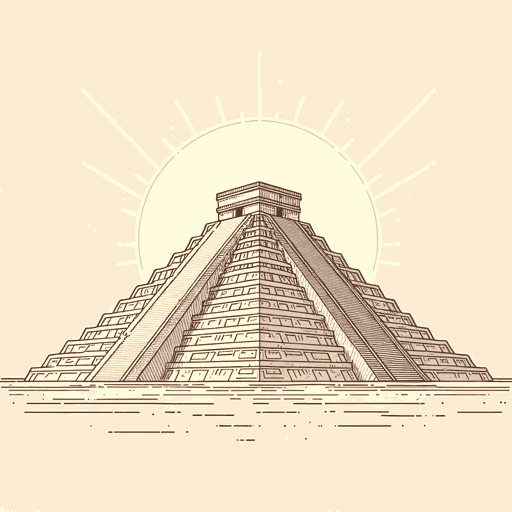
“The Destruction of Cholula” describes the ensuing battle. The Cholultecas commit suicide by jumping from the temple pyramid as the tide turns: “They were as rebellious and contemptuous as any stiff-necked, ungovernable people, and it was their custom to die in a manner contrary to that of other nations—that is, to die headlong” (48). Again, the text emphasizes Cortés’s positive qualities as a leader: He counsels the Tlaxcaltecas to wear plated grass on their heads to distinguish them from the other tribes (48).
Chapter 6 Summary: “The Gifts of Gold: The God Tezcatlipoca Appears”
We now switch back to the Aztec perspective (Sahagun’s Nahua informants). This chapter details the Spanish march towards the Aztec capital of Tenochtitlan.
In “The Spaniards See the Objects of Gold,” the Nahua author disdains the Spaniards’ disgusting and subhuman obsession with the precious metal: “The truth is that they longed and lusted for gold. Their bodies swelled with greed, and their hunger was ravenous; they hungered like pigs for that gold” (51).
More failed attempts are made at waging spiritual warfare against the Spanish in “Tzihuacpopocatzin Pretends to Be Motecuhzoma” and “The Apparition of Tezcatlipoca.” One of Motecuhzoma’s envoys, Tzihuacpopocatzin, pretends to be the king, but “the liars from Tlaxcala” tell the Spaniards the truth (52). In a highly ritualistic and poetic passage, the Spaniards detail the ways in which the Aztecs are powerless to resist them.
Meanwhile, Motecuhzoma’s retinue of magicians sees another dire omen. Feigning drunkenness, a strange man accosts them on the street. Mexico, he claims, will fall: “Turn your eyes towards the city. What was fated to happen has already taken place!” (54). As they watch, the city of Tenochtitlan seems to be on fire. When the man disappears, the magicians realize he was the god of providence, Tezcatlipoca. “Motecuhzoma’s Despair” shows Motecuhzoma at a loss at the news: “What help is there now, my friends? Is there a mountain for us to climb? Should we run away? We are Mexicanos: would this bring any glory to the Mexican nation?” (54-55).
Chapters 4-6 Analysis
In Chapters 4-6, the Spanish draw ever closer to the climatic confrontation at Tenochtitlan. The Aztec narratives underline the feeling of increasing helplessness at the inescapability of this fate. One dramatic scene underlines the absolute existential threat the Spanish represented to the Aztecs—Motecuhzoma frantically arranges escape routes, but realizes there is nowhere to run. He must steel himself to face whatever is coming. Aztec doctrine held that the cosmos is locked in a constant cycle of creation and destruction, with annihilation barely held off at all times by sacrificial offerings to the sun. Motecuhzoma and his citizens believed, in a very real way, that the apocalypse may be approaching.
But Motecuhzoma’s fear does not completely paralyze him. He again attempts to fall back on magical means to attack his magical foe; however, this time, the narrative stakes are raised. Not only do his wizards fail, but the Spanish seem to respond with magic of their own. Back in Chapter 4, Motecuhzoma encouraged his wizards to “repeat some enchanted word, over and over, that would cause them to fall sick, or die, or return to their own land” (34). In Chapter 6, the Spaniards are imagined to respond in a similar way: Their speech repeats the phrase “You cannot,” surely a spell to block Aztec magic (52). The repetitive, ritualistic nature of the Spanish words reflects the awesome power the Aztecs imagined in their invaders.
Chapter 5 explores tensions between Aztec accounts and those of their enemies, the Tlaxcaltecas. The massacre of the Cholula people is the most contradictory narrative moment in Broken Spears. According to the Aztecs, the Tlaxcaltecas are shameless traitors who lie at every turn. Even when they are telling the truth—as they do in informing Spanish about Motecuhzoma’s decoy, Tzihuacpopocatzin—they are “liars” (52). Meanwhile, the Tlaxcala account is keen to justify the slaughter of the Cholultecas: Because they rejected an offer of friendship in the cruelest way imaginable, they deserved to be wiped out.
The deep sense of treachery the Aztecs feel at Tlaxcala’s intrigues against the Cholultecas goes beyond the usual rivalry. Central America had, by this time, established a code of conduct in warfare which was important to all combatants. Many of their conflicts were not intended to be mortal. As mentioned earlier, they were instead often highly ritualized arrangements to capture men for sacrifice, so it was understood that war should abide by certain rules: “A war or battle always commenced with a certain ritual: shields, arrows and cloaks of a special kind were sent to the enemy leaders as a formal declaration that they would soon be attacked” (xliv). Given this, the slaughter of unarmed Cholultecas at a peaceful assembly was not only treacherous; it was a worrying symptom of a new, more dangerous brand of war in the Americas.

Unlock all 48 pages of this Study Guide
Get in-depth, chapter-by-chapter summaries and analysis from our literary experts.
- Grasp challenging concepts with clear, comprehensive explanations
- Revisit key plot points and ideas without rereading the book
- Share impressive insights in classes and book clubs