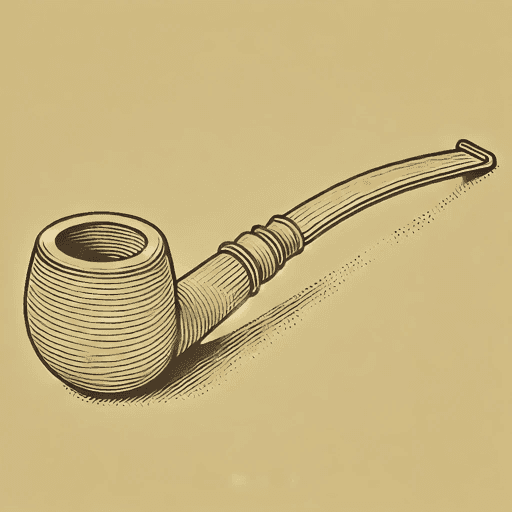
The Buffalo Hunter Hunter
64 pages • 2-hour read
Stephen Graham JonesThe Buffalo Hunter Hunter
A modern alternative to SparkNotes and CliffsNotes, SuperSummary offers high-quality Study Guides with detailed chapter summaries and analysis of major themes, characters, and more.
Part 1, Chapters 16-20Chapter Summaries & Analyses
Part 1: “The Beaucarne Manuscript”
Part 1, Chapter 16 Summary: “April 26, 1912”
Content Warning: This section of the guide includes discussion of graphic violence, death, racism, child death, animal cruelty and death, addiction, and sexual content.
At the saloon, Arthur shares his suspicions with Doyle, citing evidence from Good Stab’s confessions. Arthur suggests that Good Stab may be hiding in a dugout somewhere nearby.
Arthur sees Amos Short Ribs watching him from outside the saloon. Arthur snatches a black feather from the hat of another saloon customer and then presses the feather to his forehead in Amos’s view. Amos visibly reacts, so Arthur bribes Amos with a bottle of alcohol and asks him what the feather means to him.
Amos shares that the feather reminds him of a medicine man named Happy. When Happy was a boy, he went to the mountain and experienced a vision of The Fullblood and his spirit buffalo. The account resembles the story Good Stab had told about the boy he saved from the forest fire. When Arthur asks to confirm if The Fullblood refused to take scalps, Amos tells him that he is talking about different people. Arthur does not correct his error.
Part 1, Chapter 17 Summary: “April 28, 1912”
Arthur smokes cigarettes in the chapel to calm himself down, wondering if he can use them against Good Stab. He is startled when the altar statue of the crucified Christ coughs from the smoke, revealing himself as Good Stab. Good Stab shows Arthur that the parishioners have left food outside the chapel to support him during his isolation. The city’s dogs have eaten all the food.
Good Stab withholds the location of the Jesus statue but insinuates that he has beheaded it. He and Arthur challenge each other over their respective religions, which escalates into a debate over the crimes of the US against Indigenous American communities. Arthur alludes to the murders happening in Miles City, prompting Good Stab to imply that Doyle is already dead.
Arthur offers himself in the place of the other people that Good Stab plans to kill. Good Stab only laughs. They talk about the eradication of buffalo and the buffalo hunters, the fact that buffalo are the only animals that ease up around Good Stab, and the other Pikuni elders whom Good Stab has fed on. Finally, Good Stab reveals that he is there to remind Arthur about a past event he has tried to repress. Arthur invites him to continue his confession.
After Good Stab leaves, Arthur finds Christ’s head on the stoop.
Part 1, Chapter 18 Summary: “The Nachzehrer’s Dark Gospel”
Good Stab takes two years to recover from his reaction to Wolf Calf’s smoking pipe. Napi looks after him, feeding him with his blood and teaching him English through stories of the world’s creation. Good Stab suspects Napi did this so that he could track down Arthur and pursue justice for his actions.
Napi urges Good Stab to hunt again. Though Good Stab tries to feed on Napi again, he is too weak to grapple with him and thus collapses. The next time he wakes up, Napi is already gone. Good Stab resumes his life and forgets about Napi, only recalling the time he spent there whenever he passes by the site of Napi’s lodge.
At a whiskey fort, Good Stab uses a mirror to observe his transformation. His facial stubble has disappeared, and his hair has turned black, signaling that he has become Pikuni again. To acclimate himself to feeding on Indigenous American people, Good Stab feeds on a Rabbit Man with a broken leg. He then spends time with his buffalo herd, helping to raise their calves.
One day, the raven spirit-animal associated with Happy leads Good Stab back to the Fat Melters camp. He finds a boy who is trying to chop down a tree. The boy, who dutifully looks after his band’s horses, asks Good Stab questions about the tree, implying that he is curious about its medicinal properties. Good Stab promises to help him.
Good Stab goes hunting and finds a field full of skinned blackhorns, which he understands is a trap. The hunters start firing on him, though Good Stab soon realizes that the hunters are Pikuni. Good Stab is horrified to learn that the Pikuni are resorting to napikwan hunting methods, but he realizes they are doing it to trade for hunting and cooking tools. He feeds on one hunter and then follows the others as they continue their hunt. He scares off the buffalo so that the hunters can’t exploit them and then proceeds to a camp of wolf hunters that have been buried under the snow. Good Stab takes their hunting and cooking tools and gives them to the Fat Melters’ boy.
The boy recognizes Good Stab as The Fullblood from Happy’s stories. When the boy reveals that he was present at the Marias Massacre, Good Stab asks him to share what happened. US soldiers held the boy hostage and promised not to kill him if he did not alert the camp. US Scout Joe Kipp tried to inform the men that it wasn’t Owl Child’s camp. When Heavy Runner came out with his documents to prove they were protected, the other scout, influenced by a tall soldier with his feet in bags, fired at Heavy Runner.
Good Stab learns where the boy’s lodge is and sneaks into it while the boy tends to the horses. He finds the boy’s sister, who had been severely injured in the head in the past. He hesitates to feed on her but finally does it at sunrise. However, he accidentally alerts the camp to his presence, and the Rabbit Men attack him. After pinning him down, they take his scalp and trample him with their horses. The young girl’s blood quickly heals him.
Happy steps forward, recognizing Good Stab from their previous encounter. He accuses Good Stab of killing the sister of the boy, whose name is revealed as Yellow Kidney. Happy shares that Wolf Calf asked the Rabbit Men to find him. Good Stab suggests that they should tell Wolf Calf that he is dead. He soon leaves and stays away from the Fat Melters for a year.
The blood from Yellow Kidney’s sister sustains Good Stab for a long time. He realizes he enjoyed its taste more than the blood of other people. Some months later, he feeds on the blood of a bear that ate a Pikuni boy, which gives him Pikuni dreams. He continues to hunt through the seasons, sometimes feeding on stray Pikuni. One night, a raven leads him back to the Fat Melters. He brings an antelope for Yellow Kidney’s family. Yellow Kidney is nowhere to be found, so Good Stab goes searching for him. He finds Yellow Kidney dead on Weasel Plume’s skin, both having been killed by another creature like Good Stab. Good Stab flees from the warriors who assume that he killed the boy.
During his confession, Good Stab insinuates that he knows where Arthur hides his journal.
Part 1, Chapter 19 Summary: “The Absolution of Three-Persons”
On May 1, Arthur writes that Good Stab has deduced his identity. He adds that it has been weeks since the proof of that identity—the letter he had hidden for years—was destroyed. He distances himself from the truth that Good Stab is trying to elicit from him. He also admits that he now fully believes Good Stab’s account despite its fantastical elements. He does not believe, however, that Good Stab was framed for the death of Yellow Kidney.
Arthur decides he will abandon his parish. He does not write where he plans to go, fearing that Good Stab will use the journal to track him.
Part 1, Chapter 20 Summary: “May 12, 1912”
Arthur attempts to flee from Miles City. While camping out on the river, the appearance of the headless Christ statue startles him. Good Stab pushes the statue into Arthur’s fire, destroying it. Good Stab tells Arthur that he still must deliver his final confession, which he insists should be done at the chapel. Good Stab bites Arthur but does not drain him.
When Arthur regains consciousness, he is back in the chapel, tied to the cross. Good Stab lights a candle and shows him that he has lined up the corpses of his Miles City victims on the front pews, beginning with Sheriff Doyle, Livinius Clarkson, and the lodging house regulars. Good Stab sets the corpse of Livinius aflame to illuminate the next row. He reveals that he has also exhumed the corpses of Benjamin Flowers and his sons. He asks Arthur questions that allude to his secret relationship with the Flowers family.
Arthur provokes Good Stab with the murder of Weasel Plume, deducing that the Cat Man had killed him. Good Stab confirms that the Cat Man had survived his death after all and had been spending the intervening years regaining his strength. Good Stab asks about the loss of Arthur’s toes, insinuating that Arthur was the one who urged Joe Cobell to shoot Heavy Runner, beginning the Marias Massacre. Though his conscience is guilty before God, Arthur justifies that he was acting under the orders of General Sheridan and that he had never killed any Indigenous American people. They both scream out of guilt and grief for the massacre.
Agitated over his attempts to explain the endeavor to build a new nation, Arthur cries that the people they killed were “just Indians.” Good Stab points out that his thinking would be hypocritical if he explained the Flowers murders away by saying they were “just napikwans.” Good Stab refuses to feed on Arthur because he doesn’t want to absorb Arthur’s qualities. He reveals that Benjamin Flowers is Arthur’s son and that Arthur Flowers was named after him. On the night after the massacre, Arthur had sex with a red-haired woman, who gave birth to Benjamin.
Good Stab tells Arthur the last part of his confession. He later cuts Arthur down when Arthur has fallen asleep. Two weeks later, Arthur is still in Miles City. He seals himself inside the church and refuses to admit his parishioners inside for services. Cordelia abandons Arthur. Arthur justifies his actions as his crusade against the demonic monstrosity of Good Stab.
Part 1, Chapters 16-20 Analysis
This sequence of chapters begins with the identification of the boy whom Good Stab had met in Chapter 13, whose name is revealed to be Happy. Happy is one of several children who play a symbolic role in Good Stab’s character arc. Since the novel has centered around his internal conflict around Identity as a Product of Moral Action and Memory, Good Stab also reflects on the ethics of violence among his people. Chapter 6 first raised this question when Good Stab fed on White Teeth, the same boy whose injury he accidentally caused in the past. Good Stab has since refrained from feeding on other Pikuni, but the loophole he found by feeding on Yellow-on-Top Woman in Chapter 13 made it easier to accept, since she was close to death. He applies this loophole in his engagement with Yellow Kidney, a boy whose presence is meant to evoke that of Happy. Yellow Kidney is dutiful and poised to occupy an important role in his community when he grows older. When Good Stab discovers that the dying member of Yellow Kidney’s family is his younger sister, he hesitates before finally feeding on her; this demonstrates his internal conflict regarding his moral action.
The loophole functions as an ethical mechanism of necessity for Good Stab. It also causes him to suppress other ethical considerations that mark the loss of his Pikuni identity, further showing How Greed Corrupts the Soul. He feeds on Yellow Kidney’s sister to survive but also risks alienating himself from Yellow Kidney and the Fat Melters. In effect, Good Stab has not grown that much from the time he killed the beaver in Chapter 3 because he wanted to trade its pelt for a gun. Despite what he has done to avenge the buffalo and save the Pikuni from the exploitation of the white colonialists, he remains flawed because of his greed. He is driven to act according to his self-interest rather than self-sacrifice, which underscores his soul’s corrupted nature.
Not long after the death of Yellow Kidney’s sister, Yellow Kidney and Weasel Plume also die. The latter is especially painful for Good Stab because of what he represented—the most essential aspects of Good Stab’s Pikuni identity. Though their deaths imply the return of the Cat Man, they also draw a parallel between the Cat Man and Good Stab. Good Stab has only turned away from his Pikuni identity to embrace the way of the Cat Man. With the Cat Man’s return, Good Stab’s confession promises a final confrontation, which will coincide with Good Stab’s examination of conscience.
The idea of guilt and conscience recurs in Good Stab’s conflict with Arthur. Good Stab weaponizes Christian imagery to pressure Arthur into taking responsibility for his actions. Good Stab goes through extraordinary lengths to diminish Arthur’s confidence in his religion, burning the statue of the crucified Christ and letting Arthur take up Christ’s place on the cross. The latter action has the effect of exposing Arthur’s vanity, since he sees himself as the moral center of his community. It also shows how he is powerless to act against Good Stab, who reverses their power dynamic by urging him to confess his sins. When Arthur refuses to own up to his role in the Marias Massacre, even distancing himself from the actions of the soldiers, he proves his moral cowardice and disrespects his station as a moral leader.
In Chapter 20, Jones cements Arthur as a representative for the colonialist endeavor. Arthur continually tries to justify his actions as an attempt to build a new nation, which he frames as inevitable. Underlying these explanations is the false assumption that the Indigenous American nations had no right to live on the lands where they were found. As a pastor who brings his European cosmology to North America, Arthur tries to rewrite the human relationship to the continent, shaping it in his image and likeness. When Good Stab reveals that the Flowers men are Arthur’s descendants, his motives for killing them become clearer. He is merely seeking justice for Arthur’s role in the massacre, even if that justice consists of showing Arthur that any kind of massacre is the act of a morally bankrupt actor. This further develops Seeking Justice for Past Sins. The question that gradually arises as the novel approaches its final chapters is how Good Stab plans to finish his revenge against Arthur, especially since he refuses to feed on his blood and absorb his qualities.

Unlock all 64 pages of this Study Guide
Get in-depth, chapter-by-chapter summaries and analysis from our literary experts.
- Grasp challenging concepts with clear, comprehensive explanations
- Revisit key plot points and ideas without rereading the book
- Share impressive insights in classes and book clubs