The Captain's Daughter
46 pages • 1-hour read
Alexander PushkinThe Captain's Daughter
A modern alternative to SparkNotes and CliffsNotes, SuperSummary offers high-quality Study Guides with detailed chapter summaries and analysis of major themes, characters, and more.
Chapters 8-11Chapter Summaries & Analyses
Chapter 8 Summary: “An Uninvited Guest”
Pyotr goes into Kuzmich’s house. Palasha, the family maid, tells Pyotr that Maria is hiding out at the priest’s house. Pyotr goes to the priest’s house where Pugachov is feasting with his troops. The priest’s wife, Akulina Pamfilovna, tells Pyotr that they had told Pugachov that Maria was their daughter and that she was sick abed.
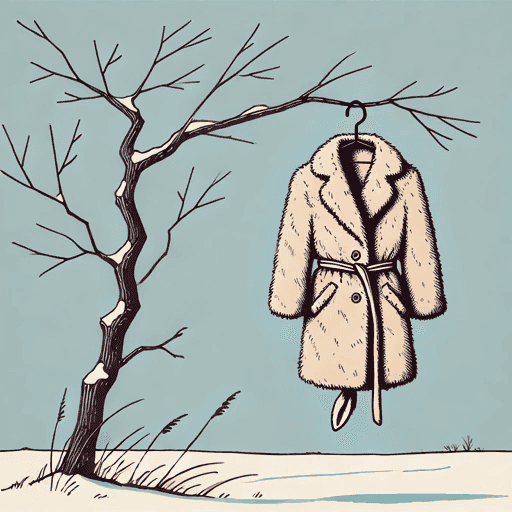
Pyotr returns to his home. Savelich tells him that they have been robbed by the rebels. He asks Pyotr if he recognized Pugachov. When Pyotr says he did not, Savelich tells him that Pugachov was the man who guided them through the blizzard to the inn and to whom Pyotr had given his coat. Pyotr is stunned.
Pyotr is summoned to an audience with Pugachov who is in the midst of a war council with his Cossacks. Pugachov and his troops resolve to leave Belogorsk to attack Orenburg the next day. After the council leaves, Pyotr talks with Pugachov one-on-one. Pugachov asks Pyotr if he thinks Pugachov is Czar Peter III. Pyotr replies, “[W]hoever you may be, you’re playing a dangerous game” (60). Pugachov offers Pyotr a place in his army. Pyotr declines and states that as a “nobleman,” he has to serve Catherine the Great. Pugachov agrees to let Pyotr go to Orenburg.
Chapter 9 Summary: “Parting”
The next day, Pugachov is greeting the crowd in the main square when he sees Pyotr. He tells Pyotr to go to Odenburg and warn the governor there that they will be attacking the town in a week. Pugachov appoints Shvabrin the commandant of the fort. Pyotr worries about leaving Maria behind with Shvabrin. Pugachov is about to ride away when Savelich approaches him with a receipt detailing the prices of everything that the rebels had stolen from Pyotr. Pugachov upbraids Savelich and rides away.
Pyotr goes to the priest’s house to see Maria. She is delirious with a fever. Pyotr resolves to go to Orenburg and “do all [he] could to expedite the liberation of Belogorsk” (65). He bids a tearful farewell to Maria and leaves for Orenburg with Savelich. They are walking down the road when a Cossack rides up after them. He gives them a horse and a sheepskin coat on behalf of Pugachov.
Chapter 10 Summary: “The Siege”
Pyotr arrives at Orenburg. He tells the German general everything that happened at the fort and warns about the imminent attack. The general holds a war council to consult with the town leaders about what to do. They are all civilians aside from the general. Pyotr urges them to preemptively attack the rebels. However, they think Pyotr is just “a rash and hot-headed youth” (67) and instead decide to take a defensive position and prepare for a siege.
A few days later, Pugachov’s army arrives and lays siege to Orenburg. The people are starving. Pyotr occasionally leaves the city to attack the rebels. During one such sortie, Pyotr runs into the Cossack sergeant Maksimich, whom he is about to kill until he recognizes him. Maksimich gives Pyotr a letter from Maria. She writes that Shvabrin is holding her captive and insisting she marry him against her wishes.
Pyotr begs the general to allow him to have a contingent of soldiers so they can retake the fort and rescue Maria. The general refuses.
Chapter 11 Summary: “The Rebel Camp”
Pyotr tells Savelich he intends to return to Fort Belogorsk alone to rescue Maria. Savelich insists on coming with him. They are on their way to the fort when they are attacked by Pugachov’s men. They are captured and taken to Pugachov at a rebel camp. Pyotr talks with Pugachov and his two advisors, the elderly imperial deserter Corporal Beloborodov and the young escaped convict Khlopusha. Pyotr tells Pugachov that Shvabrin is holding Maria captive. Pugachov is eager to hang Shvabrin when he learns this news, but his advisors counsel against this. Pyotr lies to Pugachov and tells him that the people in Orenburg have “plentiful supplies” and are not starving. The advisors argue about whether they should hang Pyotr. Pugachov tells them to stop arguing and asks Pyotr why he cares so much about this girl. Pyotr explains she is his “betrothed.” Pugachov responds enthusiastically and says, “[W]e must see you married” (78).
The next day, Pyotr and Pugachov go to the fort. In the carriage on the way, Pugachov confides to Pyotr of his intention to take Moscow despite his lack of confidence in the loyalty of his troops. When Pyotr urges Pugachov to surrender, he replies, “[I]t’s too late to repent […] I must go on as I have begun. Who knows? Maybe I’ll carry it off” (81). He tells Pyotr a parable about how he prefers to live a short life and “drink living blood” than a long one living off “dead flesh” (81). Pyotr retorts that “to live by murder and robbery is […] the same as to peck carrion” (82).
Chapters 8-11 Analysis
In this section of the novella, the key theme is Romantic Love as a Force of Salvation. Over the course of Chapters 8-11, Pyotr is separated from and then makes his way back to the object of his love, Maria. This theme is closely tied to the structure of chivalric romance. This is well-illustrated in the scene where Pyotr bids farewell to Maria. He writes, “The plight of the poor orphan, alone and defenceless, among angry rebels, filled me with horror; I was no less appalled by my own inability to help” (64). Seeing himself as a chivalric knight, Pyotr feels it is his role to save the object of his love and a true damsel in distress, Maria. He then vows he will do whatever it takes to rescue her. Akulina Pamfilovna reinforces this image of Pyotr by reminding him that “[he’s] the only comfort or protector [Maria] has” (65). Eventually, Pyotr goes out on his own to rescue Maria, motivated by his sincere love for her. Surprisingly, Pugachov immediately takes Pyotr’s side in his dispute with Shvabrin, suggesting that Pugachov likewise sees love as a force of salvation. This view is reflected by Pugachov’s response upon learning that Maria is Pyotr’s betrothed: “We must see you married—yes, we must feast at your wedding!” (78)
This chivalric aspect is lightly caricatured in the scene where Pyotr and Savelich set out alone from Orenburg for the fort to rescue Maria. This action is quixotic, which is emphasized in the way the imagery draws heavily from Don Quixote by Cervantes. In Don Quixote, the bumbling Don Quixote has read too many chivalric romances and believes himself to be a knight errant. He convinces a hapless but loyal and practical peasant, Sancho Panza, to ride out with him to do great deeds of knightly valor, like saving damsels in distress. This dynamic is reflected in the scene where Savelich insists on coming with Pyotr on his fool’s errand, stating “If you’re set on going, then I’m coming too. […] I haven’t taken leave of my senses yet!” (73-74). Don Quixote rides a horse while Sancho rides an elderly donkey; likewise, Pyotr rides a “good horse” while Savelich has “a lame, skinny old nag” (74). And, like the quixotic duo, Pyotr and Savelich are almost immediately set upon by brigands on the road. Don Quixote is a burlesque of chivalric romances and the evocation of its imagery in The Captain’s Daughter suggests that Pushkin was aware of the exaggerated sentimentality of this theme and its function in the work.
The plot in this section further develops the theme of The Struggle Between Duty and Personal Desire. Pyotr vacillates between these two paths. Following the overthrow of the fort, Pyotr initially sticks to his duty as a nobleman and a captain in the imperial army even though it means he must leave his beloved, Maria. Pyotr is explicit on this point. When Pugachov offers him a position in the rebel army and tempts Pyotr with rewards, stating, “Serve me truly—and I’ll make you a prince and a field marshal” (61). Pyotr rejects this offer in the firmest of terms, responding, “I was born a nobleman. I have sworn my allegiance to the Empress; I cannot serve you” (61). He then goes to Orenburg to continue his fight against Pugachov and the rebels. However, after receiving Maria’s letter and request for aid, Pyotr is once again forced to struggle between his duty and his personal desire. The German general articulates this choice and reflects duty over personal desire, telling Pyotr, “You’re in love with Maria Ivanovna. […] My poor boy! But all the same, I still cannot give you a company of soldiers and fifty Cossacks. Such an expedition would be imprudent” (72). This time, Pyotr chooses personal desire over his duty and sets out on his quest—a decision that illustrates that, although Pyotr has matured a bit, he is still driven by his emotion and lacks respect for authority.

Unlock all 46 pages of this Study Guide
Get in-depth, chapter-by-chapter summaries and analysis from our literary experts.
- Grasp challenging concepts with clear, comprehensive explanations
- Revisit key plot points and ideas without rereading the book
- Share impressive insights in classes and book clubs