The Caretaker: A Novel
51 pages • 1-hour read
Ron RashThe Caretaker: A Novel
A modern alternative to SparkNotes and CliffsNotes, SuperSummary offers high-quality Study Guides with detailed chapter summaries and analysis of major themes, characters, and more.
Symbols & Motifs
Flowers
Content Warning: This section of the guide includes discussion of death.
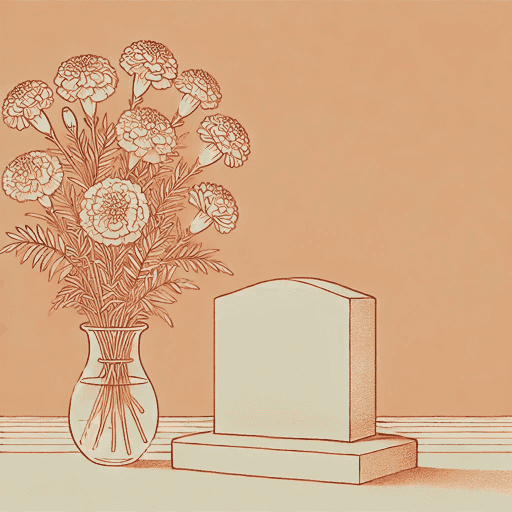
Flowers recur throughout the novel and take on multifaceted symbolism. When Jacob is away at war, Naomi makes plans to plant a marigold garden. Marigolds are a simple and hardy flower, representing Naomi’s straightforward and resilient character. That she makes plans for the future indicates her positive outlook and her optimism that Jacob will return from war and that they will continue in a life full of love together. Blackburn understands the significance of these flowers to Naomi, recognizing that they signify her commitment to Jacob. Because he, in turn, has made a commitment to care for Naomi in Jacob’s absence, Blackburn sets about planting the flowers in her absence. Further, Naomi intentionally chooses marigolds as the flowers to be placed on Jacob’s grave. Because Blackburn knows these flowers’ significance to Naomi, they prompt him to seek out the truth about the existence of Naomi’s child.
The marigolds both parallel and contrast the red roses that Jacob places on what he believes to be Naomi’s grave. Placing flowers on a grave is a traditional act of mourning and an expression of the love that the living person has for their deceased beloved. Roses carry an association with romantic love and are regarded as supreme among all cut flowers. In this way, they convey Jacob’s desire for the best of all things for Naomi and remind readers of the financial means he has, which contrasts with the poverty of the Clarkes’ farm. Yet Jacob’s elegant roses carry with them the same amount of love as Naomi’s marigolds do.
Jacob’s Prom Photo
The Hamptons adorn their home with framed photos depicting family members, as well as one depicting Jacob and Veronica Weaver at their high school prom. Veronica is, like Jacob, the child of a prominent family in Blowing Rock and therefore deemed an acceptable person for Jacob to date and marry. Though Jacob and Veronica dated briefly, Jacob has no romantic interest in her. However, the Hamptons hold out hope that Jacob will one day develop feelings for Veronica; by displaying the photograph despite Jacob’s marriage to Naomi, they indicate their disapproval of Naomi and their wish for Jacob to live a different kind of life. Jacob has grown frustrated, especially after returning from war, with what he regards as his parents’ need to control all aspects of his life. He speaks of their insistence that he attend college, work in a specific field of their choosing, and live on the property that they have purchased. In all these respects, Jacob feels that his parents completely disregard his hopes and dreams for himself. Their displaying of the photograph is yet another attempt to pressure Jacob to carry out their wishes. At the same time, their refusal to display photographs of Naomi demonstrates their disapproval of her. Importantly, it is because Naomi is poor and uneducated—unlike Veronica—that the Hamptons deem her unsuitable for Jacob.
Fylfot Engraving
Blackburn has taught Naomi about the various symbols engraved on the headstones throughout the cemetery. Each carries with it a different history and significance. Naomi was drawn to the fylfot specifically—a cross with each of the four arms arranged at right angles—and asked Blackburn to see to it, should she pass away before he does one day, that this design is engraved on her own headstone. Blackburn holds high respect for the wishes of the living after their deaths and is therefore angered when he discovers that the Hamptons, despite their wealth and means, have purchased a plain and unadorned headstone for Naomi that does not even bear her first name. When Blackburn attempts to pay for a fylfot to be added to Naomi’s headstone, he is prevented from doing so because it would violate the Hamptons’ orders. In purchasing a headstone for Naomi, the Hamptons demonstrate just how far they are willing to go to make their lie convincing. However, even in Naomi’s “death,” they maintain their disdain for her, showing her little respect by refusing any adornment to the stone. Their actions speak volumes of their arrogance and belief that Naomi, as an uneducated daughter of a farmer, is beneath their son. In his effort to add the fylfot, Blackburn seeks to restore dignity to Naomi by honoring her wish.
The fylfot is an ancient Anglo-Saxon design that symbolizes power and fortune. In this way, the design becomes ironic since Naomi has neither of these. The Hamptons’ unwillingness to adorn her headstone accordingly shows where the power and fortune truly lies. It also is said to be the symbol from which the Nazi Party’s swastika was derived.

Unlock the meaning behind every key symbol & motif
See how recurring imagery, objects, and ideas shape the narrative.
- Explore how the author builds meaning through symbolism
- Understand what symbols & motifs represent in the text
- Connect recurring ideas to themes, characters, and events