The Carriage
The Carriage
A modern alternative to SparkNotes and CliffsNotes, SuperSummary offers high-quality Study Guides with detailed chapter summaries and analysis of major themes, characters, and more.
Literary Devices
Irony
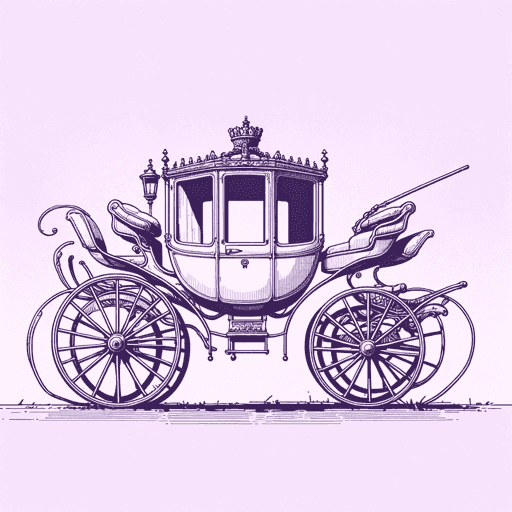
The story uses verbal and situational irony—gaps or contradictions between expectations and reality—to explore the failures of the aristocracy and the military. After inviting the general and the officers to his home, Chertokutsky repeatedly says that he is leaving to go home and prepare for the next day’s party, but he does not actually leave for many hours. As a result, there is no dinner waiting for the visitors the following day, and Chertokutsky’s plans to increase his social capital collapse. Additionally, in an ironic subversion of readerly expectation, it is revealed at the end of the story that Chertokutsky’s carriage, which he describes as “extraordinary” and “amazing,” is actually just an average carriage. Gogol thus employs irony to suggest that there is nothing meaningful or authentic about promises or declarations made by people like Chertokutsky and to highlight The Performance of Class.
Satire
In addition to mocking the shortcomings of the gentry, Gogol satirizes (or comically exposes) a number of customs, beliefs, and institutions throughout the story, including those associated with rural, unsophisticated village life. Describing a “fashionable board fence [standing] all by itself” in the town of B—, for example, the narrator claims:
[The fence had been] erected as a model for other structures by the mayor in the time of his youth, when he had not yet acquired the habit of sleeping immediately after the midday meal and drinking a decoction flavored with dried gooseberries before going to bed (182).
This is the same tendency toward drunken forgetfulness that the description of the general’s boozy dinner party will later critique. The story holds all authority figures—even small-town mayors—up for the same type of satirical appraisal.
Hyperbole
Chertokutsky’s exaggeration of the quality of his carriage is the major catalyst for the story’s disastrous ending. He tells the general that “there is no better carriage than a Viennese one” and that he has “never seen such a roomy carriage before” (187). Even more ridiculously, bragging about its size, he says that “you could fit a whole bull into the side pockets” (187). The latter in particular is an example of hyperbole: extreme or even absurd exaggeration. While Chertokutsky obviously does not mean it in a literal sense, his habit of overstatement builds up expectation among the general and the officers and is ultimately responsible for their shock and disappointment when they see the actual carriage. The narrative itself often engages in the same kind of hyperbole, emphasizing the unusual, unexpected, or unrealistic size, quality, or intensity of the setting. For example, as Chertokutsky’s wife sits outside admiring the beauty of the landscape, the narrator says that “the sun burned with all the power of its rays” and “the flowers warmed by the sun tripled their scent” (191). It is not enough that the weather is pleasant: Rather, it must be the most pleasant day imaginable. By associating Chertokutsky and the narrator through their shared tendency toward hyperbole, the story collapses the boundaries between the two and highlights the narrator’s inherent unreliability.
Figurative Language
The narrator uses a number of metaphors and similes throughout the story, most of which contribute to its mockery of the main characters’ vanity and self-importance. When introducing the village of B—, for example, the narrator says, “You’d feel the kind of anguish you’d feel if you had lost at cards, or said a really stupid thing at the wrong moment—in a word: not good” (181). Losing at cards or misspeaking in public are both social humiliations of the type that would horrify the story’s aristocratic characters, all of whom are deeply invested in improving their station and making themselves feel good. Moreover, the use of “you” throughout this extended metaphor demands that the reader imagine themself having this experience. This simultaneously emphasizes the literary nature of the story—by foregrounding the way language is being used—and blurs the boundaries between reader and character.

Get in-depth, chapter-by-chapter summaries and analysis from our literary experts.
- Grasp challenging concepts with clear, comprehensive explanations
- Revisit key plot points and ideas without rereading the book
- Share impressive insights in classes and book clubs