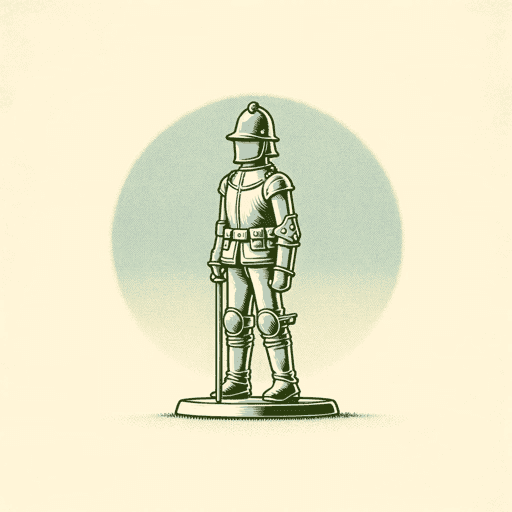
The Castle in the Attic
54 pages • 1-hour read
Elizabeth WinthropThe Castle in the Attic
A modern alternative to SparkNotes and CliffsNotes, SuperSummary offers high-quality Study Guides with detailed chapter summaries and analysis of major themes, characters, and more.
Important Quotes
“He cried a little. She pushed the dark hair off his forehead, swaying back and forth as she hugged him. William held back his tears with his parents, with the boys at school, even with Jason, his best friend, but never with her. ‘You have a gentle heart,’ she once told him, as if that were a good enough reason for a ten-year-old boy to cry.”
(Chapter 1, Page 7)
Mrs. Phillips lets William cry on her shoulder. Theirs is the close, mother-child relationship of the nanny to her charge, and it’s hard on both of them when they part. William learns, during his adventures with the toy castle, what Mrs. Phillips means by his gentle heart. It’s that gentleness that qualifies him to own the castle.
“The question of her leaving hung between them. It took up as much room at the table as he did. ‘Afterward,’ he started, his voice almost choking on the word, ‘will I have dinner alone on a night like this?’ ‘Oh, William,’ she said quietly. When he looked up, he saw tears in her eyes. ‘Of course not. Don’t you see, if I go now, your mother and father will spend more time with you. You and I, we’re almost too close. It leaves other people out.’”
(Chapter 2, Pages 15-16)
In some ways, William is losing the most important adult in his life, and it’s no wonder he wants desperately for her to stay. Mrs. Phillips, though, understands that, as William gets older, he needs less of her and more of his mother and father. That may be true, but it doesn’t make things any easier for either of them.
“William listened to the sounds his mother made as she moved through the house. ‘Let’s pretend we’re asleep,’ he whispered to Bear. He lay still as she pulled the blankets up to his shoulder and tucked them under his chin. She leaned over and kissed him on the right temple. The smell of her perfume hung in the air after she’d left. The headlights of the second car swept across the ceiling as Dad pulled into the driveway. ‘Number two,’ William mumbled into the pillow. More doors and running water and some whispering in the hall, and then the big house was quiet.”
(Chapter 3, Page 18)
Though his plan is to sneak past his mom and dad and spent late-night hours playing with his toy castle, William also knows that his parents aren’t very involved in his life and are fairly easy to evade. His interest in the castle replaces, to some degree, his dependency on Mrs. Phillips, but it also shows that his relationship to his parents is distant, and that he’d rather play with the toy than say goodnight to them. It’s almost the only time during weekdays when he sees them, but he’s willing to miss that quality time because Mrs. Phillips means much more to him.
“‘My parents were asking me the usual questions. How’s school? How’s science? How’s history? How’s life?’ ‘You’re lucky,’ Jason said. ‘My parents never ask me anything.’ ‘That’s because your mother is home when you get there in the afternoon. She doesn’t think she has to concentrate on you the way my mother does.’ ‘Yes, she does. She just concentrates on the wrong things. Like, have I practiced the piano and did I put out the garbage? That’s why I spend half my life over at your house.’”
(Chapter 4, Pages 28-29)
Where William’s parents care about him but are rarely there, Jason’s folks ask him about his chores instead of his projects and dreams. Both boys struggle with feelings of alienation from their parents, but William has Mrs. Phillips to fill the need for family closeness, and Jason spends time there simply to be in the company of people who treat him more like the family he needs.
“‘I bet she’s sad she’s leaving,’ Jason said as they went up the back stairs. ‘She’s not that sad or she wouldn’t go,’ William said. ‘I bet—’ ‘I don’t want to talk about her, Jason.’ ‘Okay, okay, sorry.’”
(Chapter 5, Page 44)
Mrs. Phillips’s departure is a sore spot for William, who can’t think about it but simply pushes the topic away. He’s mad at her for leaving and has no sympathy for her own needs.
“‘You realize this castle is missing a very important part of its defenses?’ ‘It is?’ William asked. ‘The moat. It needs a moat. I’ll make one out of wood in the workshop. I’ll come up next week and measure for it.’ ‘Great, Dad,’ William said. He wasn’t going to get his hopes up. His father had lots of enthusiasm at the beginning of projects, but somehow they never got finished.”
(Chapter 6, Page 56)
Unwilling to tell anyone about the living toy soldier, William finds himself distanced from the adults in his life. He wants to share the joys of working with a live miniature knight but revealing the truth might risk Sir Simon’s life. He doesn’t trust his father to be reliable, and he can’t bring himself to tell Mrs. Phillips, the person he trusts the most. William is on his own.
“I’m not your good-luck charm. I don’t think you’ll believe that until I leave.”
(Chapter 7, Page 61)
Mrs. Phillips understands that William relies on her too much. She can see that he’s quite capable without her, but he can’t yet imagine that. She knows he’ll come around to her way of thinking after she’s gone, but he has no intention of going through that. His plan is to avoid all that by having her stay forever.
“And what would Mrs. Phillips think of sharing the castle with Sir Simon? William wondered for a moment. He put the thought quickly out of his mind. He would worry about that later.”
(Chapter 7, Page 63)
William isn’t entirely ignorant of Mrs. Phillips’s likely response to being abducted. In the back of his mind, he knows she won’t like being miniaturized and kept from her own life plans, but he pushes that out of awareness. His need for her company and attention overwhelms him, and he suppresses his conscience in favor of his own desires.
“‘No, I haven’t changed my mind and I’m not going to. Don’t you see I can’t turn back now?’ she pleaded. ‘Then don’t blame me for what happens,’ he said as he left.”
(Chapter 7, Page 66)
Pursuing his plot to abduct Mrs. Phillips, William tries to put the onus on her for refusing to stay. He makes it her fault that he’s unhappy she’s leaving, and this excuses what he’s about to do.
“‘This school of yours takes up entirely too much of your time,’ the knight exploded as soon as William was in earshot. ‘When I was a youth, I went to school two mornings a week for some few hours only. There were, after all, more important matters to attend to,’ he added, glaring at William.”
(Chapter 7, Pages 66-67)
Sir Simon’s impatience with William’s schooling highlights the differences in their lived experiences. While William initially thinks he has a fascinating toy soldier, Sir Simon quickly informs William of his life and the challenge they face in restoring the knight to his kingdom.
“William tried everything. In the early morning, he brought her breakfast, small bits of toast sprinkled with butter and Marmite. In the afternoon, when he got home from school, he brought her hot tea. He allowed Sir Simon to light a fire in the fireplace in her bedroom, even though he was worried that the whole castle might go up in flames. He cut curtains for her narrow windows out of some red velvet material from his mother’s sewing closet and gave the knight some English postage stamps to paste on her wall. But nothing seemed to work. He had not even seen her since the first day he brought her to the attic.”
(Chapter 9, Pages 78-79)
William doesn’t understand that the people he loves have lives apart from him. Trapping Mrs. Phillips in the toy castle might seem like the solution to his problem, but it ruins her life. Thinking she’ll be happy again if he simply gives her enough comforts, William overlooks the one thing she really wants—to choose her own path through life.
“She wants me to be small too?’ ‘She wants you to see how it feels.’ ‘But how would I ever get big again? I’d be trapped in there.’ Even as he said the words, he knew what the knight was thinking. That was exactly what he had done to Mrs. Phillips.”
(Chapter 9, Page 80)
Merely hearing about her distress is enough to alert William to the terrible thing he’s done. He didn’t bring her happily back into his life; instead, he made her miserable. The last thing he wants to do is hurt her, and now he understands how thoughtless he’s been. He’s beginning to see that, to make things right again, he must join Mrs. Phillips and Sir Simon in the castle, where perhaps together they can find a way out.
“His mother shifted position to look at him. ‘I know this week must have been hard for you, adjusting to Mrs. Phillips’s being gone.’ William looked at his hands. How much easier it would be if that was all he had to adjust to. ‘I’m tired, Mom. Big day tomorrow.’ ‘All right,’ she said. ‘Good night.’ When she hugged him, he held on to her a moment longer than usual. ‘You’re a great hugger, William,’ she said as she let him go.”
(Chapter 9, Page 89)
William and his mother begin to build up their relationship. She understands that, despite her busy schedule, she needs to be more present in her son’s life. She’s also surprised to be hugged so fondly by her son. William knows he may not return, so his hug may also be a goodbye. He is beginning to realize that the people he loves are precious and not to be taken for granted, much less manipulated for his own benefit.
“‘One day last week, he took me aside at the end of practice. His face was all serious and he said, “William, when you do gymnastics, you have to be honest about everything you do in the other parts of your life too. Otherwise, your body will deceive you and you won’t be able to turn the tricks.”’ ‘What do you think he meant?’ she asked with a smile. ‘The thing I had done to you must have been showing through in the floor routine. It’s kind of creepy that my own body would give me away like that.’”
(Chapter 10, Pages 99-100)
One of the biggest lessons for William is that his abduction of Mrs. Phillips echoes in his head loudly enough to distort his life elsewhere. William quickly realizes the wrongness of his action and how it makes things worse, not better. His willingness to risk his life by joining Mrs. Phillips in the toy castle reveals his essential goodness, and it speaks to Mrs. Phillips’s effectiveness as William’s lifelong tutor in ethics.
“You will never be able to defeat the wizard with brute strength,’ she said. ‘Let Sir Simon challenge him openly if he wants to. You will have to depend on your brain, your footwork, and the sense of space you have developed as a gymnast. I don’t know which of those weapons you will need to use, but all of them must be sharpened just as Sir Simon sharpens his dagger.”
(Chapter 10, Page 101)
Mrs. Phillips shows William how to adapt his physical talents to make them effective in the battle he must face. It’s a deep lesson: The things people learn in one activity often can help them in another. Embedded in it is a second lesson: Victory isn’t always a matter of strength, but of intelligence. William must use his best strengths, and not merely the expected ones, when he fights the wizard.
“You must find your own way through the forest, William. That’s what I’ve been trying to tell you all along. In this world and our old one.”
(Chapter 10, Pages 102-103)
The biggest lesson Mrs. Phillips must teach William is that he must be able to take care of himself even when those he depends on aren’t there to support him. She can spot him during practice, but the real contest requires that he perform alone. Mrs. Phillips’s use of the term “forest” foreshadows William’s upcoming lonely walk through the dangerous barrier that guards the wizard’s realm.
“He stopped once or twice to make sure he was still on the path. What if he stumbled off? There would be nobody to pull him back, nobody to come looking for him. He would wander around in this forest forever, until he died of starvation or went completely crazy from the noise. The noise. The cacklings mingled with roars, grunts, groans, moans, the scream of a hyena, the far-off whistle of a bird. All around him, he heard the beating of animals in the underbrush, and he imagined their claws reaching out to scrape his unprotected legs, their sharp fangs. […] ‘Be quiet,’ he screamed, but there was no relief.”
(Chapter 11, Pages 114-115)
To help free Mrs. Phillips, William must travel through a dark forest and brave its unnatural dangers. His is a hero’s journey: Such quests require passage through forbidding places that test his mettle. Alone, William faces the terrors and false temptations of the deep woods, through which he must pass or be lost forever.
“The knight acted as if he could march right up to the castle door in a full suit of armor and run the wizard through with his sword. But all Sir Simon’s sharp weapons and long hours of training had done him no good the first time, so why would they work now? And if a well-trained knight with a sword and a helmet could be turned to lead, what would happen to a mere squire with a puny dagger and a quaking heart?”
(Chapter 12, Page 121)
William now understands that not all battles are won with brute force. A boy like himself has no chance going up against a powerful wizard on strength alone. If he’s to win, he must dip into other resources—planning, guile, and even compassion. Evil may try to distract him with its illusions, and he must remain steadfastly focused on his worthy cause. Already, while crossing the dark forest, he has proven to himself the power of focus. It’s an ability the wizard won’t see coming.
“He talked to Mrs. Phillips even though she wasn’t there. ‘Are you weaving the story? Have you seen the forest and the apple-tree man? I guess the dragon is just beginning to appear on the tapestry. If I don’t succeed, does it mean you won’t know where to put the needle next?’ The thought silenced him for a moment. ‘Oh, please, help me,’ he whispered to the night. There was no answer.”
(Chapter 13, Page 134)
William doesn’t know whether Mrs. Phillips’s needlework helps to advance his quest or simply record it. Either way, he wishes that its magic somehow will help him. Without Sir Simon to protect him, William feels alone and vulnerable. His effort to undo the damage to Mrs. Phillips has become a rite of passage, a challenge to his courage and determination.
“‘Here’s to young William, who found his own way through the dark forest. He alone has defeated the curse of a man who held our kingdom prisoner for far too long. Let each of us remember the lesson William has taught us. The weapons that you need to fight the battle are inside your own heart. To William,’ he shouted. ‘To William,’ answered a hundred happy voices.”
(Chapter 16, Pages 166-167)
Sir Simon states clearly the essence of William’s achievement, that he fought with a pure and dedicated spirit. William’s knightly heart has saved the kingdom, but he learned how from Mrs. Phillips, whose own pure heart transformed his darkest impulses and showed him the way to his best intentions.
“William held on to his old friend for an extra moment. ‘I can’t believe you won’t be waiting for me in the attic after school,’ he whispered. For the second time in as many days, William began to cry, but he didn’t try to hold back his tears. It was right to feel sad. It was right to show it. ‘Goodbye, Sir Simon,’ he said. ‘I’ll never forget you.’”
(Chapter 16, Page 169)
Part of what got William into so much trouble was his inability to express truthfully his emotions, especially the more vulnerable ones. In accepting all of his feelings, William accepts himself, and this gives him the confidence to share his warm regard for another without fear of shame. In parting with Sir Simon, he also shows his newfound ability to let loved ones leave him as they continue their own journeys through life. It’s the wisdom Mrs. Phillips wanted him to have all along.
“‘My warrior has returned,’ Mrs. Phillips said, holding him at arm’s length. ‘Do I look any different?’ asked William. ‘Perhaps a little wiser,’ she said, cocking her head to one side. ‘But otherwise no different.’ ‘But don’t I look taller and stronger now that I have defeated the wizard?’ He flexed the muscles in his right arm. ‘Nonsense. You were always strong enough. You just didn’t believe it.’”
(Chapter 17, Page 172)
William’s journey teaches him that only self-doubt can prevent him from accomplishing his dreams. He has overcome the dangers of an enchanted forest, a dangerously placed apple, a fire-breathing dragon, and a lethally sadistic wizard before he can acquire the means to save his own caretaker. Clearly, he has more than enough strength of mind and character to achieve anything, and his essential goodwill means the things he does will be for the good of people.
“[Sir Simon is] a good man with a big heart, but he lacks imagination. My dear husband, Alfred, was the same way. He would attack one problem over and over again like a baby butting its head against the side of its crib.”
(Chapter 17, Pages 172-173)
Though she loves dearly her late husband and feels warmly toward Sir Simon, Mrs. Phillips understands that they’re the type of men who try to force things to change. Her comment also is a subtle reminder to William that, next time he feels overwhelmed by upsetting emotions, he should take a step back and think through his response with care.
“He ran to her, and she put her arms around him one last time. ‘Goodbye,’ he said into her rumpled dress. They both could hear the roar of the bus’s engines as it started up the last hill toward them. He hung on until the last minute, but in the end he was the first to take his arms away.”
(Chapter 17, Page 180)
He’s learned a big lesson: William may be sad to lose Mrs. Phillips, but now he’s quite able to live without her. He’s learned he can depend on himself and has the courage to face anything.
“When he went back into the kitchen to pour himself a bowl of cereal, he noticed the note taped under the telephone. ‘William, Chicken with cashew nuts tonight. I’ll do the shopping. Love, Dad.’”
(Chapter 17, Page 180)
It’s not just William who has learned lessons. His father appreciates his son more, and he takes extra care to participate fully in the boy’s life. His dad will bring home the ingredients, a task he’ll be sure to complete. After all, he’ll be hungry, too, and they’ll be eating together.

Unlock every key quote and its meaning
Get 25 quotes with page numbers and clear analysis to help you reference, write, and discuss with confidence.
- Cite quotes accurately with exact page numbers
- Understand what each quote really means
- Strengthen your analysis in essays or discussions