The Children Act
49 pages • 1-hour read
Ian McEwanThe Children Act
A modern alternative to SparkNotes and CliffsNotes, SuperSummary offers high-quality Study Guides with detailed chapter summaries and analysis of major themes, characters, and more.
Chapter 3Chapter Summaries & Analyses
Chapter 3 Summary
Content Warning: This section of the guide includes discussion of illness, religious discrimination, and death.
Fiona drives to the hospital with Adam’s social worker, Marina Greene. On the way, she wonders if she’s making the right decision by going to see Adam. She composes a text to Jack insisting that he can’t have an affair but doesn’t send it and shuts off her phone. She keeps replaying the situation in her mind without finding a solution.
As they approach the hospital, Fiona remembers the one time she was admitted for a stomach virus as a child. She enjoyed the experience because she was taken care of, and nothing was seriously wrong with her. She later visited hospitals several times to see loved ones. She now gets a sense of hope and possibility as she sees Edith Cavell Hospital coming into view.
Marina breaks the silence to tell Fiona about her cat. Fiona remarks about Marina’s self-possessed pet, insisting that she tell Adam the story.
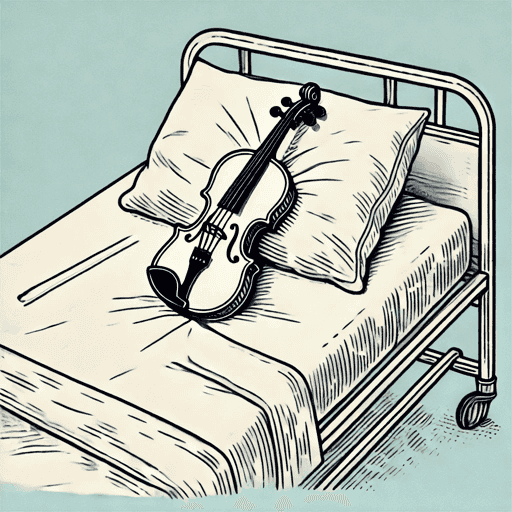
Inside, the women take the escalator to pediatric oncology, where they find Adam’s room. The nurses urge Fiona to change Adam’s mind about his condition and treatment. Fiona is immediately taken by Adam when she sees him. He’s on his bed surrounded by books, headphones, a computer, food wrappers, tissues, a notebook, and pens. He looks thin and pale but is attractive and has a strong voice. He immediately launches into his story when he sees Fiona.
Adam explains that he is of sound mind and abides by the Jehovah’s Witness tradition. He believes the biblical teachings against blood transfusion, taking them as God’s commandments. Fiona argues against these points while trying not to insult him. She provides oppositional examples, suggesting that his congregation and elders might believe something that is, in fact, foolish. She then explains the specifics of what will happen to Adam if he doesn’t get the transfusion, information she isn’t sure he’s been given. His confidence momentarily falters when he hears that he could go blind or suffer brain damage without the transfusion and treatment. However, he holds that if it’s God’s will, he must have faith.
A nurse interrupts them to offer Adam his dinner. Adam decides to wait to eat until he and Fiona are done. Then Fiona asks about Adam’s poetry; she learned in court that he enjoys writing. Adam reads a short poem about sacrificing himself to strengthen other people’s faith. Fiona compliments the writing but suggests that Adam doesn’t have to die. However, she silently realizes that it doesn’t matter if he lives or dies; life will go on. She dismisses the thought and asks to hear Adam’s opinions on blood transfusion. His response sounds “faithfully and passionately reproduced” (117). Fiona asks how he’ll respond if she rules in the hospital’s favor, and his response makes them both laugh.
Fiona says she has to return to court, but Adam begs her to stay. She agrees to hear him play a song on his violin (which he’s recently started learning) before leaving. After he plays the piece, “Down by the Salley Gardens” (based on a Yeats poem), she offers some musical pointers and suggests singing along. Adam is moved by the lyrics, and they play it one more time before Fiona leaves. She doesn’t turn back when Adam asks if she’ll return for another visit.
Fiona and Marina don’t talk on the ride home. Fiona had the sense at the hospital that Marina didn’t agree with her methods and wanted to intervene; however, she didn’t interrupt during the exchange.
Back at the courthouse, Fiona prepares and gives her ruling. She explains her assessment of Adam’s condition. She believes he’s of sound mind and is intelligent enough to make his own decisions. She understands his faith and that his beliefs align with his parents’. At the same time, she holds that it’s her responsibility to rule according to Adam’s welfare, particularly as he’s still a child. She doesn’t think that it’s in Adam’s best interest to rule in his favor because his faith is ultimately endangering him. She rules in the hospital’s favor, meaning he’ll receive an immediate blood transfusion and subsequent treatment. Her ruling is in accordance with the Children Act of 1989, which means the “welfare of the child […] dominates [her] decision” (125).
Fiona heads home in a good mood. It’s late, but she stops to buy dinner for herself. She hums “Down by the Salley Gardens” and replays her conversation with Adam. When she gets home, it’s after 11 pm, and Jack is sitting on the step on his briefcase. She remembers that he doesn’t have a key for the new locks. She lets him in, but her mood has soured.
Jack pours a drink and explains that he made a mistake. He realized he’d done the wrong thing as soon as he arrived at Melanie’s the day before, but felt he’d gone too far to turn back. She says she’s too tired to have this conversation and retreats to the kitchen alone. Her earlier feelings of ease are gone. She realizes that what she’s feeling is disappointment.
Chapter 3 Analysis
Fiona’s visit with Adam at the hospital furthers the novel’s theme of The Tension Between Different Moral Codes. The majority of the chapter is located within the confines of Adam’s hospital room, an insular setting that illustrates the emotional and psychological pressures both Fiona and Adam are facing as the result of his case. Adam is trapped by the requirements and expectations of his faith; although he is 17 years old, he feels obligated to continue to abide by his parents’ rigid moral code, defined by the Jehovah’s Witness belief system. He is also confined to his hospital bed; despite his active mind and spirit, he can’t leave his hospital room, a physical space that symbolizes his spiritual and circumstantial confinement. Fiona becomes a victim of this same space when she joins Adam at Edith Cavell Hospital. Unlike Adam, she is free to leave the hospital, but she feels compelled to prolong her visit because she forms an immediate attachment to him. Furthermore, she’s reluctant to leave the hospital because as soon as she returns to the court, she’ll have to rule on his case. The setting of the chapter thus enacts the characters’ entrapment between their legal and moral principles and conveys the conflict between their competing points of view.
The time that Fiona spends with Adam also conveys the theme of Resolving the Intersection of Personal and Professional Life. Fiona comes to see Adam as a representative of the High Court. However, she engages with Adam on a personal level, as an individual rather than as just a judge. In particular, the images of Fiona listening to and commenting on Adam’s poems and singing along to his rendition of “Down by the Salley Gardens” reveal Fiona’s distinct personhood and marked capacity for empathy. She exposes this part of herself to Adam because she identifies with his humanity. Her internal monologue during the visit validates this notion and also relates to how the hospital setting is affecting her professional presentation:
The situation, and the room itself, sealed off from the world, in perpetual dusk, may have encouraged a mood of abandon, but above all, it was Adam’s performance, his look of draining dedication, the scratchy inexpert sounds he made, so expresses of guileless longing, that moved her profoundly and prompted her impulsive suggestion. ‘So play it again, and this time I’ll sing along with you’ (120).
Fiona is aware that she’s behaving outside the parameters of her judicial duties. She is engaging with Adam as if he were a relative or friend rather than a legal subject. At the same time, the narrator’s elliptical syntax and descriptive detail convey her deep and immediate emotional investment in Adam as an individual. She listens to Adam’s poems and sings with his violin playing as a way of connecting with him on a human level. She sees him as an innocent child in need of protection and care—an understanding that originates from her personal viewpoints and inspires her to cross the boundaries of her professional role.
Through these images of Fiona and Adam at the hospital, the novel also underscores The Psychological Impact of Judicial Responsibility on the individual. The hospital scene suggests that Fiona’s judicial duties are at odds with how she sees the world. Her work asks her to be clinical and logical, while her heart wants to engage with Adam on a spiritual level. At the same time, Fiona’s ruling, which appears at the chapter’s end, originates from a place of empathy; ruling in the hospital’s favor shows her profound desire to make her life and work have meaning. She rules against Adam to save his life. This is why she’s in a good mood after she leaves the courthouse—she believes she has done something good with the power she’s been given.

Unlock all 49 pages of this Study Guide
Get in-depth, chapter-by-chapter summaries and analysis from our literary experts.
- Grasp challenging concepts with clear, comprehensive explanations
- Revisit key plot points and ideas without rereading the book
- Share impressive insights in classes and book clubs