The Conundrum of the Workshops
The Conundrum of the Workshops
A modern alternative to SparkNotes and CliffsNotes, SuperSummary offers high-quality Study Guides with detailed chapter summaries and analysis of major themes, characters, and more.
Summaries & Analyses
Quizzes
NEWReading Tools
Symbols & Motifs
The Tree of the Knowledge of Good and Evil
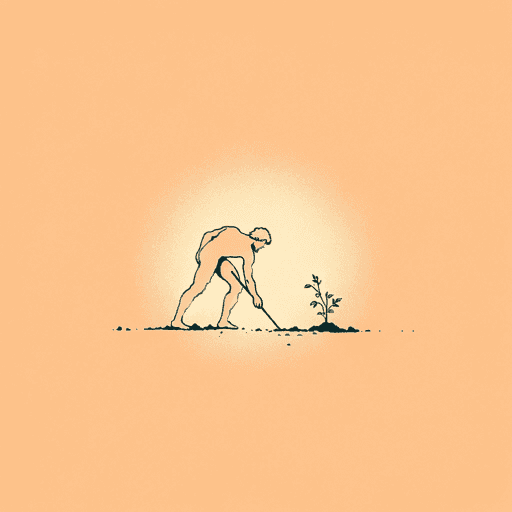
The Biblical Tree of the Knowledge of Good and Evil plays a prominent role in the poem. It is right under it that Adam engages in the first human act of creation (Line 2) and it is from behind its leaves that the Devil whispers his debilitating question for the first time (Line 4). Even later in the poem, when Kipling refers to Eden, he repeatedly used the phrase “Eden Tree” (Lines 17, 21, and 29). In Genesis 2, God forbids Adam and Eve to eat from the Tree of the Knowledge of Good and Evil, but, seduced by the words of the Devil in the shape of a serpent, they do so, and God expels them from the Garden of Eden as punishment. Adam and Eve thus lose their original blissful innocence and must endure a life of hardship. This resembles the way in which the Devil destroys Adam’s innocent joy in the act of creation by forcing doubt into his mind. The loss of otherworldly innocence is comparable to the loss of artistic innocence. Adam, and his descendants, must now for ever wonder if they will regain God’s grace just like he, and they, must always doubt the value and purpose of what they create. The price of new experiences, in life as in art, is profound existential uncertainty.
Red Clay
In the fourth stanza, Kipling uses the phrase “the poor Red Clay” (Line 14) for the land about to be engulfed by the rising waters of the Deluge. However, the phrase also refers to Adam. In Biblical Hebrew, Adam means “red” and the word for “earth” is Adamah, literally Red Clay. The phrase underlines the fact that the flood threatens to destroy both the earth and its inhabitants. This symbolism deepens with the mention of “the wreath of Eve,” also red, which Eve abandoned in the Garden before the expulsion (Line 30). This might be a reference to a passage in Book IX of John Milton’s Paradise Lost (1667), which depicts Adam giving Eve a wreath of flowers as a symbol of his love for her. After she eats from the Tree of Knowledge, Adam drops the wreath to the ground, suggesting Eve’s fallen state. Thus, the original fall is linked with the Deluge as two moments that imperil humanity, first its innocence and then its existence. By including the image of “the wreath of Eve” in the last stanza, which imagines humans returning to the Garden of Eden, Kipling reminds the reader of the original fall and suggests that a return to a prelapsarian (before the fall) state is not really possible. The innocence once lost, including artistic innocence, can never be regained.

Unlock the meaning behind every key symbol & motif
See how recurring imagery, objects, and ideas shape the narrative.
- Explore how the author builds meaning through symbolism
- Understand what symbols & motifs represent in the text
- Connect recurring ideas to themes, characters, and events