The Dungeon Anarchist's Cookbook
72 pages • 2-hour read
Matt DinnimanThe Dungeon Anarchist's Cookbook
A modern alternative to SparkNotes and CliffsNotes, SuperSummary offers high-quality Study Guides with detailed chapter summaries and analysis of major themes, characters, and more.
Chapter 21-InterludeChapter Summaries & Analyses
Content Warning: This section of the guide includes discussion of emotional abuse, addiction, graphic violence, and death.
Chapter 21 Summary
With four days and nine hours until the fourth level collapses, Carl and Donut enter their personal space to find Hekla and her party, Brynhild’s Daughters, waiting. Katia reveals she has whitelisted the group, allowing them access. Hekla thanks Carl for helping Katia, formerly a member of their group, level up. She explains that her team used the employee portal to reach station 60, where they discovered a switch providing access to any of the 12 Homeward Bound platforms. Carl shares this information with other crawlers via mass message.
Carl examines Eva Sigrid, a four-armed, cobra-headed crawler with 13 kill-skulls (indicating that she has killed 13 crawlers), concluding that she handles Hekla’s dirty work. When Donut suggests combining safe rooms with the other party, Carl privately confronts his failure to warn her about Hekla, realizing that he thought Donut might be better off with the larger team. After seeing Eva’s skulls, he reconsiders.
Hekla reveals that over 1,000 crawlers, including Li Jun and his group, are trapped at station 101, besieged by mobs. She asks for help rescuing them and proposes using Katia’s ability to shape her into a living cowcatcher at the front of the train, to clear the tracks of ghouls. Despite initial objections, Katia reveals this was her idea and agrees to the plan. Carl consents, on the condition that Katia remains on their team. The group boards the Nightmare Express to station 60.
Chapter 22 Summary
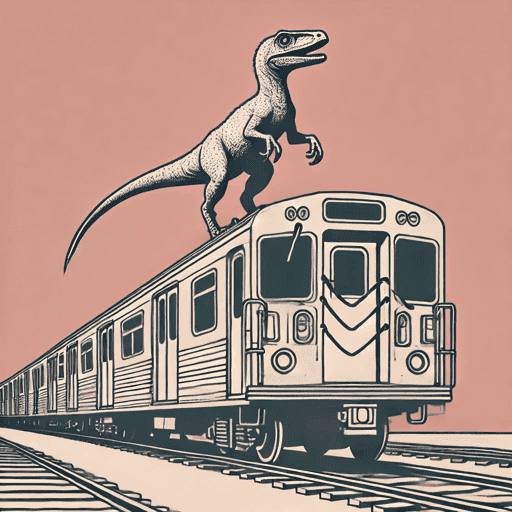
Katia transforms into a metal plow with spikes, anchoring herself to the subway car’s front by reaching through the broken windows. The party boards with Eva piloting and Silfa, a healer, riding along. The train accelerates, liquefying the first ghouls on impact. Katia discovers she can pull liquids into a new inventory tab and receives a fan box for gaining followers.
They plow through a massive ghoul horde from station 72. Gore floods the cab, and Katia is knocked unconscious by electric shock, likely from a body connecting her to the third rail. Carl orders Silfa to heal Katia, who hesitates until Hekla nods approval.
After passing the overrun station 75, Carl receives word from Elle and Imani that Festering Ghouls are merging into a province boss at station 48, and Wrath Ghouls are gathering at station 36, both of which have stairwells to the next level. They plan to make a stand there.
Approaching station 101, they hit the main horde. The cab is overwhelmed with gore and living body parts. Silfa hides instead of healing, and Katia’s health plummets mysteriously. With her special sunglasses, Donut sees that Hekla is shooting Katia with invisible bolts. Carl pulls the bolts out just as Hekla registers surprise that Katia survived. Despite Carl’s attempt to de-escalate the situation, Donut screams at Hekla and blasts her with a magic missile.
Chapter 23 Summary
As the train arrives at station 101 and the rescued crawlers swarm aboard, a fight erupts in the cab. Silfa emerges from the apartment and heals Hekla, who calls for a cease-fire. She admits that they had hoped to make Carl mad with her actions, so that they would have an excuse to kill him and could bring Donut into their party. She apologizes and proposes that they continue to work together. Donut refuses, calling Hekla a traitor. Katia awakens confused, due to the bolt’s amnesia effect.
Hekla offers Carl’s group the engine car, saying no harm done. Eva taunts Katia, telling her that they were using her to provoke Carl’s temper and that Eva intentionally abandoned her earlier, on the third floor. Enraged, Katia activates her Rush ability, a powerful battering ram attack, aiming for Eva. The attack goes slightly off-target, and instead of hitting Eva, Katia slams into Hekla, killing her instantly. A system message announces that one of the top 10 crawlers has died. Katia receives a 500,000 gold bounty. Her level jumps from 24 to 37, and a special golden skull appears over her head.
Chapter 24 Summary
Brynhild’s Daughters burst in as Hekla’s body collapses. Donut uses Second Chance to reanimate Hekla’s corpse, then Clockwork Triplicate to create two copies. One minion throws Eva out the window onto the tracks. The minions push the Daughters from the engine cab while stage-three tentacled monsters appear on the platform.
Brynhild’s Daughters quickly destroy the minions. Carl pulls Hekla’s corpse back, but it tears in half, leaving the bottom half of her torso outside. Katia locks the door as Carl drives the train backward from the station. Katia confirms that Eva seems to have survived, and she reveals that she successfully looted Hekla’s train line key and crossbow despite the chaos.
Donut is upset, but Carl calms her and explains Hekla’s plan: kill Katia, provoke Carl into attacking her, and then kill Carl in self-defense, forcing Donut and Mordecai to join her party. Silfa, who is still hiding in the cab, confirms that Hekla’s party was ordered to kill Carl if anything went wrong. She laments that Brynhild’s Daughters is finished. Carl releases her.
Katia explores Hekla’s unique repeating crossbow—a female-only weapon whose power increases with each woman in the party, explaining Hekla’s team composition.
Li Jun visits the cab. Carl instructs him to drive the main train to station 36 for the last stand, while his group takes the detached engine to save Bautista’s crawlers, who are still trapped at the end of the line.
Chapter 25 Summary
Three days and three hours remain until level collapse. Carl learns the Abyss walkways are collapsing, eliminating his plan to use the Nightmare train. At station 75, they separate their engine. Carl publicly requests portal-activating hats and keys from all the rescued crawlers, planning to give them to Bautista’s group so that they can reach the stairwells. The survivors cooperate, providing over 700 hats and 15 keys. Donut calculates their value at over 3 million gold, but Carl dismisses selling them.
The party explores station 75, finding a large overrun cavern littered with looted corpses. They discover the Downward Dog bar with an entrance to their personal space, though it lacks full safe room protections. The only occupant is a sleeping gnoll bartender. Inside their space, Katia is now officially accepted as a permanent team member.
Because of all the ghouls she killed as the train’s cowcatcher and killing Hekla, Katia gains 10 loot boxes, gains entry to Club Vanquisher, acquires a Find Crawler skill, collects her 500,000 gold bounty, and obtains the Enchanted Wrestling Belt of the Great Gorge, which provides stat boosts, and the Avalanche benefit, which doubles her body’s impact mass.
They watch the recap show, which portrays Hekla’s rise and death and broadcasts footage of Eva abandoning Katia on the third floor. The show frames Hekla’s killing as an act of intentional rage. The updated leaderboard shows Carl at number three, Donut at four, and Katia at eight. Another crawler, Quan Ch, is revealed to be level 38, making him the highest-level crawler in the dungeon.
Zev teleports in, explaining that she must wear protective gear because a system-wide safety upgrade has failed, leaving admins vulnerable. She adds Katia to Odette’s interview contract with the party, but she warns them that Zev may lose their account to Loita, Hekla’s former PR representative and a member of the ruling political party. Zev announces that their private chats will become public for paying viewers, then departs.
Interlude Summary: “Iron Tangle Endgame Train Map”
A map displays key railway locations, and station 36 is marked as the last location with stairwells. Other stairwell stations include 12, 24, 48, and 72, although they each have their unique monster challenges.
Chapter 21-Interlude Analysis
Hekla’s betrayal of Katia is a direct consequence of the dungeon’s architecture, which systematically incentivizes ruthless pragmatism and transforms human relationships into strategic assets. This dynamic illustrates the theme of The Dehumanizing Nature of Corporate Entertainment. Hekla’s plan hinges on assassin weapons specifically designed to kill without assigning credit, prioritizing the circumvention of game mechanics over the moral weight of murder. As Carl deduces and Silfa later confirms, Hekla intended to sacrifice Katia to provoke Carl into a punishable rage, thereby eliminating him and absorbing Donut and Mordecai into her party. Eva’s taunt makes this transactional logic explicit when she tells Katia, “You were being useful. We weren’t really going to kill you. We just wanted Carl’s famous temper to flare” (335). Katia becomes a disposable tool. Hekla’s identity as a former psychiatrist is a cynical inversion; within the dungeon’s entertainment economy, she weaponizes her understanding of the human psyche to manipulate and sacrifice others for strategic gain, embodying the perversion of trust into a mechanism for advancement. This plotline serves as a critique of competitive systems that reward sensationalism and backstabbing, ultimately eroding empathy by reducing individuals to their utility.
The accidental killing of Hekla serves as the climax of Katia’s character arc, transforming her from a dependent figure into a powerful and autonomous crawler while exploring the psychological cost of survival. Prior to the confrontation, Katia’s identity is defined by her reliance on others, particularly Hekla, whom she defends by stating, “[She] brought the entire team to pick me up. That is more than anyone has ever done for me” (311). This need for validation makes Eva’s subsequent psychological abuse—mocking Katia’s history of abandonment—the catalyst for her violent outburst. Her use of the Rush ability is an instinctive, rage-fueled reaction to betrayal, not a calculated act. The game’s mechanics immediately reward this impulsive violence with a significant surge in power: Katia rockets from level 24 to 37, claims a massive bounty, and loots a unique weapon. This sudden empowerment is juxtaposed with the psychological trauma of the act. Her growth is superficially about gaining power, but it is also about confronting the moral and emotional consequences of wielding it, subverting a common wish-fulfillment trope by grounding her empowerment in the consequences of the act.
The brief encounter with the grieving NPC conductor, Tizquick, extends the recurring motif of NPCs with false memories to explore the theme of The Fragility of Identity and Fabricated Memory. This interaction suggests that the emotional pain caused by manufactured realities can be as valid and devastating as that stemming from genuine experience. Tizquick is found weeping over a daughter who never existed, his anguish palpable. Carl’s engagement with him is empathetic, acknowledging the conductor’s pain as legitimate, which contrasts with Hekla’s detached advice to focus only on what is controllable—a pragmatic survival strategy that dismisses the NPC’s emotional reality. Tizquick’s suffering, though rooted in a falsehood, is subjectively real. The scene complicates the moral landscape of the dungeon, where killing NPCs is a necessity, by revealing a layer of systemic cruelty that extends beyond physical violence into the fabric of consciousness and memory. This motif resonates with broader philosophical questions about artificial intelligence and virtual realities, questioning what constitutes a “real” experience and highlighting the ethical implications of creating sentient beings with fabricated histories for entertainment.
Carl’s initiative to collect portal hats and keys exemplifies the theme of Subversion and Anarchy as Tools for Survival, marking his evolution from a cynical individualist to a community-oriented leader who weaponizes cooperation against the dungeon’s divisive systems. After separating from the main group of rescued crawlers, Carl makes a public plea for the items needed to save those trapped at the abyss. He anticipates selfishness but is instead met with widespread cooperation, collecting over 700 hats and 15 keys. While Donut immediately calculates their immense monetary value, Carl dismisses this economic thinking, framing the act as a moral imperative. This grassroots rescue mission is a direct subversion of the dungeon’s design, which aims to isolate crawlers and pit them against each other. By organizing a system of mutual aid, Carl fosters a form of solidarity that prioritizes human life over game-defined success, suggesting that survival lies in building communities of trust. Carl’s emerging leadership model stands in opposition to Hekla’s top-down, authoritarian style, which collapsed under its own ruthless logic.
Narrative structure and pacing across these chapters juxtapose high-octane action with moments of quiet reflection to heighten dramatic tension and deepen thematic development. The train plow sequence is a period of intense, rapid action, building to the explosive confrontation and Hekla’s unexpected death. Immediately following this climax, the pacing decelerates. The narrative focus shifts from physical combat to the emotional and strategic fallout: the tense negotiation with Silfa, the quiet confirmation of the trio’s team identity, the methodical exploration of station 75, and long-term planning. The Iron Tangle Endgame Train Map interlude provides a structural pause, offering a diegetic, top-down perspective that reinforces the strategic complexity of the floor. This structural rhythm allows the intense action to amplify the impact of the betrayals, while the subsequent slower sections provide space for character development and thematic exploration. Throughout the narrative, the game mechanics facilitate an examination of human behavior under extreme pressure.

Unlock all 72 pages of this Study Guide
Get in-depth, chapter-by-chapter summaries and analysis from our literary experts.
- Grasp challenging concepts with clear, comprehensive explanations
- Revisit key plot points and ideas without rereading the book
- Share impressive insights in classes and book clubs