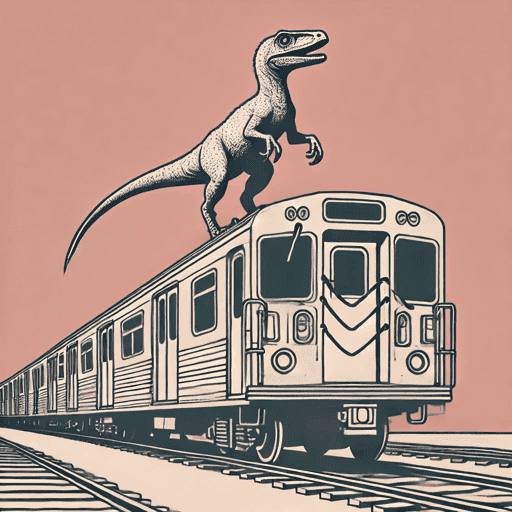
The Dungeon Anarchist's Cookbook
72 pages • 2-hour read
Matt DinnimanThe Dungeon Anarchist's Cookbook
A modern alternative to SparkNotes and CliffsNotes, SuperSummary offers high-quality Study Guides with detailed chapter summaries and analysis of major themes, characters, and more.
Important Quotes
Content Warning: This section of the guide includes discussion of graphic violence, cursing, and death.
“And more importantly, the spell remained static in the spot where it was cast. The magical shell disappeared the moment I cast it, rocketing away toward car 16, then 17, then 18, then 19, then 20, and then away, stuck in that same place along the tracks it’d been when I cast, pushing all the mobs along with it like a bulldozer, squishing them into paste against the first surface they met.”
(Chapter 1, Page 18)
This passage establishes Carl’s primary method of survival by showcasing his ability to weaponize game mechanics in unintended ways, supporting the theme of Subversion and Anarchy as Tools for Survival. The author uses the simile “like a bulldozer” and the visceral verb “squishing” to illustrate the brutally effective outcome of Carl’s creative problem-solving. By turning a defensive spell into an offensive tool, he demonstrates that success in the dungeon relies on exploiting the system’s logic rather than simply playing by its rules.
“Reward: You’ve received a Platinum ‘It’s Not My Fault You Fish-Headed Assholes Don’t Properly Program Your Quests’ Box.”
(Chapter 2, Page 26)
The name of this reward box serves as a moment of direct authorial voice from the game’s AI, personifying it as a sarcastic and rebellious entity that actively works against its corporate creators. This narrative choice satirizes corporate blame-shifting and establishes the AI as an unpredictable force within the story, one capable of both enforcing and subverting the dungeon’s oppressive structure. The colloquial, accusatory language highlights a meta-conflict between the game’s administration and its own operating system, which directly benefits the crawlers.
“The moment the message had ended, the directory with Brandon’s message unfroze, and I finally noticed the name of the folder in the top corner of my interface.
## Messages from deceased crawlers.”
(Chapter 3, Page 53)
This quote exemplifies the motif of game mechanics as metaphors by juxtaposing a moment of profound emotional loss with the cold, detached language of a user interface. The clinical folder name reduces a friend’s death to a piece of sorted data, underscoring the theme of The Dehumanizing Nature of Corporate Entertainment. By filtering a personal tragedy through an impersonal system notification, the text creates a contrast that highlights how the dungeon sanitizes and compartmentalizes human suffering.
“I can only hold so many. But each time, I stick the drawing in my jacket, and when we start over, I still have the drawing, but the original is still in my cabin. It only works with stuff that was on the train on my first day. Including this.”
(Chapter 5, Page 76)
Speaking about a drawing of his wife, the NPC Vernon reveals the paradoxical rules governing his existence. While the train car resets in a time loop, Vernon’s personal items duplicate, and his body retains injuries, indicating that his consciousness is not part of the reset. This detail illustrates The Fragility of Identity and Fabricated Memory, portraying a being trapped by manufactured mechanics who nonetheless experiences a linear progression of time and memory.
“‘No,’ I said. ‘He believes or, I guess, believed he had a wife. […] It’s really fucked-up because these aren’t computer programs. These are actual living creatures who believe this is the real world.’”
(Chapter 6, Page 87)
This dialogue illustrates the dungeon’s profound cruelty. Carl’s distinction between “computer programs” and “actual living creatures” elevates the NPCs’ suffering from a simple game mechanic to an ethical horror, reinforcing The Fragility of Identity and Fabricated Memory. This piece of world-building exposition condemns a system that creates and discards sentient lives purely for narrative effect.
“Warning: This isn’t Dr. Phil. Pick your prize. You have ten minutes to choose, or you will forfeit your choice.”
(Chapter 7, Page 115)
This system message is a moment of direct, satirical meta-commentary, bluntly prioritizing programmatic progression over emotional resolution. The juxtaposition of a therapy talk show with the dungeon’s brutal reality highlights the system’s intentional shallowness, a key aspect of The Dehumanizing Nature of Corporate Entertainment. By framing genuine conflict as an inconvenient deviation from the game, the author critiques media that values shallow spectacle above human substance.
“Hello, Crawler. As you’re about to find, this is a very special book. […] Together, we will burn it all to the ground.”
(Chapter 7, Page 120)
This passage introduces Carl’s in-game copy of The Dungeon Anarchist’s Cookbook as a key symbol of rebellion and forbidden knowledge. The direct address, “Hello, Crawler,” and the final promise to “burn it all to the ground” create a conspiratorial tone, inviting Carl into a secret history of resistance that exists within the game’s code. This moment crystallizes the theme of Subversion and Anarchy as Tools for Survival, framing defiance as a purposeful, shared strategy passed between generations of crawlers.
“Carl, I never wanted to get a skull. I’m sorry. Nobody is going to like me now.”
(Chapter 9, Page 135)
Following an act of self-defense, Donut’s distress reveals the psychological weight of the dungeon’s gamified morality, distinguishing between the sanctioned killing of monsters and the taboo killing of other contestants. Her immediate concern that “[n]obody is going to like me now” shows how deeply the logic of the spectator-driven game has been internalized, reducing a traumatic event to a problem of public relations. This moment illustrates how the system manipulates the crawlers’ values, making them complicit in their own commodification.
“Unfortunately, the act of making these magnificent, large-footed beasts oftentimes results in creatures with double amounts of testosterone and whatever else makes humans so prone to overt masculinity and hyper, overenthusiastic piety toward their god of choice.”
(Chapter 11, Page 156)
This description of the ManTauR enemy uses a detached, encyclopedic tone to satirize toxic masculinity. The text blends game mechanic jargon with critiques of behavioral traits, framing “overt masculinity” and “hyper, overenthusiastic piety” as monstrous, manufactured flaws. This passage exemplifies the narrative’s use of in-game monster lore as a vehicle for social commentary.
“He chopped my fingers off. When I healed, they didn’t come back. […] But part of me is gone. I’m losing myself.”
(Chapter 12, Page 170)
Katia’s distress over losing a part of her physical form, even one she can regenerate, illustrates The Fragility of Identity and Fabricated Memory. The physical loss becomes a metaphor for her existential crisis as a Doppelganger, highlighting her fear that she is losing her original self with each transformation. The dialogue reveals that for Katia, identity is tied not just to memory but to the integrity of her original physical body, which is now compromised.
“This train is running on dead babies. Holy crap, that’s fucked-up.”
(Chapter 14, Page 213)
Following the detached, clinical description of how Fire Brandy’s nonviable offspring are used as fuel, Carl’s blunt internal reaction creates a moment of tonal dissonance that underscores the dungeon’s casual horror. The system’s logic is presented as an efficient, self-sustaining process, a grotesque parody of industrial production that functions by normalizing atrocity. This exemplifies The Dehumanizing Nature of Corporate Entertainment by showing how the very infrastructure of the game is built upon immense, institutionalized suffering.
“Reading the words of those who have come before me, I know them. You, reading this. I know you, too. You are me. That is whom this book finds.”
(Chapter 15, Page 231)
This passage from Carl’s in-game copy of The Dungeon Anarchist’s Cookbook, written by a past crawler, reinforces the book’s symbolic weight as a vessel of collective resistance and shared identity. The direct address, “I know you, too. You are me,” transcends time and individual experience to forge a bond between all who seek to subvert the system. By reflecting on these words, Carl begins to shift from a purely individualistic survival mindset toward recognizing a broader community of crawlers, foreshadowing a growing sense of responsibility.
“Madison—Human. Level 10. […] Madison’s real name was probably something like Jennifer or Ruth, but she had it legally changed to something more trendy right around the same time as her divorce. After multiple rounds of breast augmentation, Pilates, and labiaplasty, Madison has emerged as a new woman. […] [S]he relishes the power she has over the other Iron Tangle employees. She feels an almost-sexual surge of gratification when she tells those dwarves that overtime is mandatory.”
(Chapter 17, Pages 255-256)
This system-generated description uses satire to critique corporate culture through the characterization of Madison, an NPC. The detailed, invasive backstory functions as a literary device, exposing the game’s creators as callously voyeuristic while simultaneously exploring The Fragility of Identity and Fabricated Memory. By framing her cruelty as a result of personal insecurities and a lust for minor power, the text presents a grimly comedic portrait of middle-management.
“‘Not “let,”’” he said. ‘Made. I made my daughter use it. She refused to fight. She wasn’t going up levels. This was the compromise. She wore the ring. Mags told her which mark to choose. We’d picked you. […] She marked you, we waited thirty seconds for the mark to settle, and we attacked. Would’ve had you, too, if you hadn’t been saved by the safe room.’”
(Chapter 19, Page 286)
In this dialogue, Frank Q reveals the truth behind his daughter’s murder, re-contextualizing it not as a calculated, desperate act. His admission demonstrates the extreme psychological manipulation built into the dungeon’s mechanics, where the inability to heal from the Ring of Divine Suffering forced Maggie to kill her own child to end her pain. This revelation exemplifies the system’s cruelty, showing how its rules can pervert familial bonds and compel participants into monstrous choices, a stark illustration of The Dehumanizing Nature of Corporate Entertainment.
“I apologize, Carl. Let me translate it to Earth monkey speak. The mudskippers are cheap bastards who have built this entire crawl with spit and duct tape and items they have purchased at the equivalent of an interstellar swap meet. Everything is built with very little regard for system security and is done as cheaply as possible.”
(Chapter 20, Page 290)
The AI’s shift from technical jargon to colloquial insults provides a moment of meta-commentary on the dungeon’s flawed construction. This direct statement characterizes the corporate entity behind the crawl as incompetent and negligent, satirizing corporate cost-cutting measures. By explicitly stating that the system is built with “very little regard for system security,” the dialogue validates Carl’s approach to survival and directly supports the theme of Subversion and Anarchy as Tools for Survival, framing the world’s flaws as exploitable opportunities.
“‘She was never real, was she?’ the dwarf asked, tears streaming down his dirt-colored face. They left rivulets of clean skin through the grime. ‘My little girl was never real. I just don’t understand.’”
(Chapter 21, Page 314)
The dwarf conductor’s existential crisis upon realizing his foundational memories are artificial serves as a moment of genuine pathos within the artificial world. The physical detail of tears cleaning grime from his face provides a visual metaphor for a painful truth cutting through a constructed reality, highlighting the casual cruelty of a system that programs suffering for narrative effect.
“Instead, she inadvertently became the first crawler on this season of Dungeon Crawler World to kill one of the top ten and claim a bounty. […] And in that moment, just before all hell broke loose all over again, I finally noticed Katia’s level. She’d been level 24 when she’d formed herself into a cowcatcher at the front of the train. When she fell back from the wall […] I saw that she was now level 37.”
(Chapter 23, Page 336)
This passage frames a traumatic, accidental killing in the detached language of a sporting achievement, an example of the game mechanics as metaphors motif. The narrative voice adopts a clinical, observational tone, immediately quantifying the event’s outcome—a bounty and a massive experience point gain—rather than its emotional impact. This stylistic choice underscores the dungeon’s logic, where personal tragedy is instantly converted into measurable, gamified progress, reinforcing the system’s dehumanizing effect on its participants.
“And then, finally, it showed Katia killing Hekla. They did not show it to be an accident, but an act of rage on Katia’s part once she discovered she was being used.
‘That’s not how it happened,’ Katia groused. ‘They’re making me look like a bloodthirsty crazy woman.’”
(Chapter 25, Page 361)
This quote directly engages with the theme of The Dehumanizing Nature of Corporate Entertainment by showing the deliberate manipulation of reality for broadcast. The recap show re-edits a moment of panicked self-defense into a calculated, dramatic narrative of betrayal and revenge. Katia’s reaction highlights the dissonance between the crawlers’ lived experiences and their on-screen personas, demonstrating how individual agency and truth are sacrificed to construct a more marketable spectacle for the audience.
“He put the spear down and walked back to the bar. He cracked his neck. He looked over at Mongo and said, ‘Do your best to make sure it doesn’t hurt.’”
(Chapter 26, Page 387)
In this scene, the NPC Growler Gary resigns himself to being repeatedly killed and dismembered for the rescue mission. The passage highlights the theme of The Dehumanizing Nature of Corporate Entertainment by reducing a sentient being’s existence to a mere game mechanic—a source for key items. Gary’s shift from referring to himself in the third person to using “I” just before this moment indicates a flicker of self-awareness, making his quiet acceptance of his fate more profound.
“You know, it’s no wonder you were always so poor. There’s a fine line between being helpful and being a dumbass, Carl.”
(Chapter 28, Page 415)
Donut delivers this line after Carl leaves behind valuable items for potential stragglers, an act she views as foolishly altruistic. Her dialogue serves as characterization, positioning her as a pragmatic foil to Carl, her perspective shaped by the dungeon’s brutal, capitalistic logic. The statement concisely articulates a central conflict in the narrative: the tension between selfless cooperation and the self-serving survival instincts the game is designed to incentivize.
“This whole floor is a racist political cartoon telling the universe how shifty the Krakaren and the Plenty are. Borant has been very vocal about this for a while now. They say the Plenty are selling everybody this technology just so everybody will become addicted to it.”
(Chapter 30, Page 439)
Mordecai’s explanation reframes the entire setting of the fourth floor, revealing it as a piece of corporate propaganda. This moment of exposition functions as satire, using the violent dungeon as a metaphor for how powerful entities can weaponize media to vilify their rivals. The reveal adds a layer of political commentary, suggesting the crawlers are not just pawns in a game show but also unwitting actors in a broader ideological conflict.
“Madison hadn’t deserved that. Well, her character deserved it. That was the thing, wasn’t it? All these NPCs were playing characters, and only a handful were starting to realize it. And that, I realized, was the problem with Brandy. She’d finally realized that this was all a construction.”
(Chapter 31, Page 456)
This internal monologue from Carl directly Confronts The Fragility of Identity and Fabricated Memory. The distinction between a person and their role, emphasized by the italicization of “character,” highlights the system’s dehumanizing logic. The passage reveals Carl’s evolving empathy for the non-player characters, framing their awakening to the artificiality of their existence as a tragedy rather than a simple game mechanic.
“A framed graphic of my face splattered into the air. The words Death Challenge! stamped onto my face, with blood running from the words.
Ladies and gentlemen, we have ourselves a treat for you today. It’s the death of a celebrated crawler, Crawler Carl, brought to you live! Who will be the lucky monster to kill him? Who will it be?”
(Chapter 33, Page 482)
The narrative voice abruptly shifts from Carl’s first-person perspective to the italicized, bombastic tone of a game show announcer, a stylistic choice that critiques The Dehumanizing Nature of Corporate Entertainment. This metafictional intrusion transforms Carl’s life-or-death struggle into a monetized, interactive spectacle for a viewing audience. The juxtaposition of violent imagery with a celebratory tone underscores the grotesque commodification of genuine suffering.
“Here’s the thing. These poor bastards are just as much victims as we are. […] If we’re really going to burn this place to the ground, we need to actually do it and not just talk about it. We need to start killing them, too. […] But I will break them. This is my promise to myself, to my friends, and to you, anyone who reads these words. I will break them all.”
(Chapter 34, Page 500)
Framed as an entry into Carl’s in-game copy of The Dungeon Anarchist’s Cookbook, this passage marks an evolution in Carl’s motivation from mere survival to overt rebellion. The repetition in the final lines (“I will break them”) creates a resolute, forceful tone, cementing his declaration of war against the system’s creators. By addressing “anyone who reads these words,” Carl connects his personal mission to the cookbook’s symbolic function as a tool for collective resistance, fully embracing the theme of Subversion and Anarchy as Tools for Survival.
“Odette suddenly went mute.
LOITA (ADMIN): Hang on, guys. We’re informing Odette’s people to end this topic.
A moment passed. Now I could tell Odette was pissed. “Anyway,” she continued once her voice finally got unmuted, “let’s talk a bit about what we know regarding the next floor.”
(Epilogue, Page 507)
This sequence demonstrates the oppressive control wielded by the dungeon’s administration. The intrusion of the admin’s chat message—formatted differently from the main text—functions as a diegetic representation of corporate power silencing a line of questioning that threatens their narrative. Odette’s immediate, forced pivot to a new subject upon being “unmuted” illustrates that even powerful figures within the system are subject to its rigid information control, reinforcing the goal of maintaining a carefully managed spectacle.

Unlock every key quote and its meaning
Get 25 quotes with page numbers and clear analysis to help you reference, write, and discuss with confidence.
- Cite quotes accurately with exact page numbers
- Understand what each quote really means
- Strengthen your analysis in essays or discussions