The Dungeon Anarchist's Cookbook
72 pages • 2-hour read
Matt DinnimanThe Dungeon Anarchist's Cookbook
A modern alternative to SparkNotes and CliffsNotes, SuperSummary offers high-quality Study Guides with detailed chapter summaries and analysis of major themes, characters, and more.
Symbols & Motifs
Content Warning: This section of the guide includes discussion of death.
The Dungeon Anarchist’s Cookbook
As an in-game book, The Dungeon Anarchist’s Cookbook is a symbol of forbidden knowledge and connects to the theme of Subversion and Anarchy as Tools for Survival. With the introduction of the book, Dinniman connects explicitly to The Anarchist Cookbook (1971), written by William Powell. This book is an underground bestseller and cult classic that features information on topics including explosives, weapons, and even the manufacture of LSD. The book was published as a part of the US resistance against the Vietnam War, and by referencing this counterculture classic, Dinniman layers further meaning into the beginnings of Carl’s own revolution.
As the novel’s titular object, the book represents a philosophy of resistance against an oppressive system, transforming Carl’s defiant impulses into a studied methodology that spans generations of dungeon crawlers. The cookbook is not merely a collection of recipes for explosives and traps; it is a legacy of rebellion, passed down from one crawl to the next, validating the idea that the dungeon’s rules are meant to be broken.
The cookbook’s introduction, revealed through Carl’s Escape Plan skill, explicitly states its purpose. The anonymous author writes, “If you’re reading these words, it means this book has found its way into your hands for one purpose and one purpose only. Together, we will burn it all to the ground” (120). This declaration frames the cookbook as an active co-conspirator, shifting Carl’s role from a lone survivor to the newest recruit in a long-standing war against the system. By providing him with the hidden knowledge to exploit the dungeon’s mechanics, the cookbook symbolizes the power of shared, secret intelligence as the ultimate weapon against a totalitarian regime that thrives on control and predictability, directly embodying the theme of anarchy as a form of liberation.
Game Mechanics as Metaphors
The constant intrusion into the narrative of game mechanics—such as stats, pop-up notifications, and achievements—functions as a satirical motif critiquing The Dehumanizing Nature of Corporate Entertainment and the gamification of life. By quantifying every aspect of existence, from Carl’s follower count to the gruesome details of a monster’s death, the narrative framework reduces genuine suffering to a series of data points to be consumed by a mass audience.
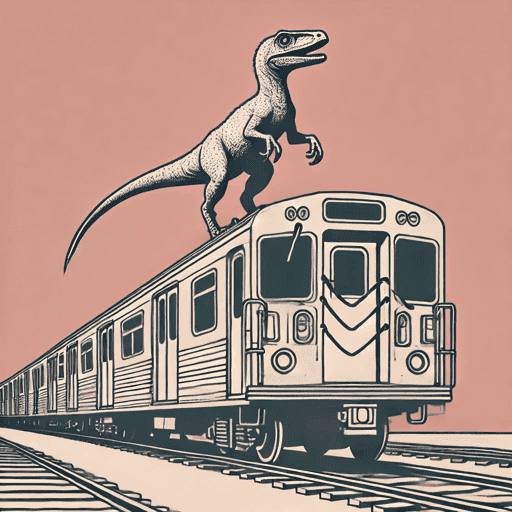
This system reframes brutal acts of survival as shareable content, rewarding violence and chaos with glib, darkly humorous achievements. For instance, after Carl orchestrates a train derailment, he receives an achievement that cheerfully warns, “Let’s hope this doesn’t set off some sort of unforeseen domino effect that will ripple throughout the rest of the floor, leading to mass confusion and death” (153). The chipper tone of this message, contrasted with the lethal reality of the act, highlights how the game mechanics strip violence of its moral weight. This motif serves as a metaphor for real-world systems, from social media metrics to corporate performance reviews, where individuals are flattened into statistics and their intrinsic worth is eclipsed by their engagement numbers, turning life itself into a grim performance.
Media Appearances
Throughout the novel, Carl and Donut are contracted to appear on talk shows and perform interviews and even narration. They are assigned a public relations officer, Zev, who schedules these without their knowledge or approval. This motive illustrates the dehumanizing nature of corporate entertainment, as these appearances often pull them straight from battle to appease their fan base. In addition, this motif illustrates how Carl and Donut’s personas and viewers’ perception of the Earth itself are being shaped and manipulated for viewer consumption. When they are contracted to narrate what are supposedly documentary segments on Earth, intended to inform galactic viewers, Carl quickly realizes that the information he is contracted to deliver has been cobbled together by the Syndicate’s AI from online forums and sources, resulting in a wildly inaccurate picture of the planet. In addition, he suspects that the segments are designed to validate the Syndicate’s destruction of Earth by portraying it as a hellish landscape from which the crawlers are lucky to have been delivered.
The recap shows are another example of how the crawlers’ personas are shaped for viewer consumption, connecting to the theme of The Fragility of Identity and Fabricated Memory. When Carl is forced to repeatedly cut off Growler Gary’s hands, he is devastated by the necessity of it, but when the scene is shown on the recap show, it is shaped to portray him as gleeful and unrepentant. Katia also experiences this phenomenon when she accidentally kills Hekla, an event that is presented as if she did so purposely and maliciously. These examples show how the corporation in charge is shaping the narrative around the crawlers, echoing real-life reality shows in which participants are cast as heroes or villains by the show’s producers, who shape the narrative to drive viewership.

Unlock the meaning behind every key symbol & motif
See how recurring imagery, objects, and ideas shape the narrative.
- Explore how the author builds meaning through symbolism
- Understand what symbols & motifs represent in the text
- Connect recurring ideas to themes, characters, and events