The Dungeon Anarchist's Cookbook
72 pages • 2-hour read
Matt DinnimanThe Dungeon Anarchist's Cookbook
A modern alternative to SparkNotes and CliffsNotes, SuperSummary offers high-quality Study Guides with detailed chapter summaries and analysis of major themes, characters, and more.
Themes
Content Warning: This section of the guide includes discussion of death.
The Dehumanizing Nature of Corporate Entertainment
In The Dungeon Anarchist’s Cookbook, corporate-run entertainment systems are critiqued for their dehumanizing effects, which reduce genuine suffering to a monetized spectacle. The novel satirizes modern media consumption by presenting a game show in which individuals are treated as disposable assets, their life-or-death struggles framed as consumable content for a detached audience.
This commodification is evident in the system’s core mechanics, which tie survival directly to popularity. The constant tracking of viewer and follower counts forces crawlers to perform for an audience, turning their fight for life into a competition for ratings. The system’s cruelty peaks during events like the Death Challenge, where Carl’s potential demise is presented as a live betting game. This mechanic strips away his humanity, reframing him as a variable in a high-stakes gamble, all for the audience’s amusement and the corporation’s profit. In addition, he, Donut, and Katia are encouraged to shape their game personas according to viewers’ opinions, even when it affects their ability to defend themselves. They receive gifts, from AI and from the viewers, that increase their watchability but don’t help them, as when Carl, instead of receiving pants, receives a pair of heart boxers with powers that only work if they aren’t covered by pants, ensuring that the viewers can enjoy the spectacle of Carl crawling the dungeon in his underwear.
The novel extends this critique beyond the crawlers to the non-player characters who populate the dungeon, revealing a world where employees and even artificial lives are exploited for narrative purposes. NPCs like Vernon the conductor are given fabricated memories and backstories, believing they have families and histories that do not exist. Vernon is trapped in a memory loop, conscious that something is wrong but unable to grasp the full artifice of his reality. He explains to Carl, “I don’t actually remember” what happens at the end of the line (75), highlighting his status as a disposable character whose identity is reset for each new run. Similarly, Madison, the human resources associate, is programmed with a complete persona to fulfill a specific role. These characters lack true agency, serving as little more than props in the sprawling entertainment machine, and are given memories and personas to pacify them and ensure they will comply. Through these examples, the narrative questions the morality of corporate media and a society that finds entertainment in the degradation of others, whether their struggles are real or manufactured for the show.
Subversion and Anarchy as Tools for Survival
The Dungeon Anarchist’s Cookbook presents subversion and anarchy as essential strategies for survival within an oppressive and illogical system. The narrative argues that true agency is found by breaking the established rules, consistently rewarding Carl for exploiting game mechanics and defying the showrunners’ expectations.
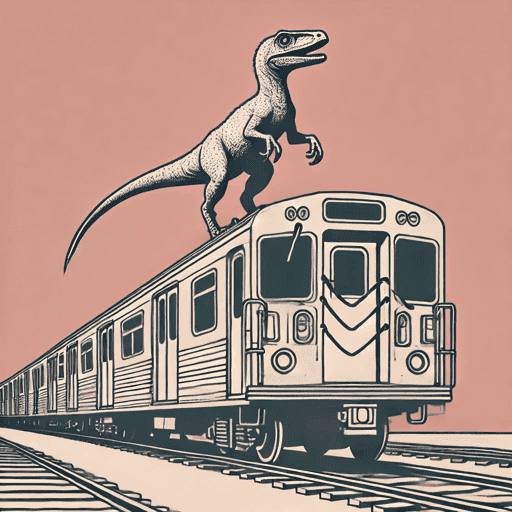
This idea is embedded in the series from the start, with Carl choosing his class, Compensated Anarchist, which features a focus on bomb and trap skills. Because of his class, Carl acquires the in-game book that gives the novel its title, The Dungeon Anarchist’s Cookbook, which serves as a literal guide to disrupting the system. Its contents have been recorded over numerous dungeons (Carl is the 25th owner) by crawlers who, like Carl, are interested in breaking down the system. Carl’s creative application of its principles demonstrates that thinking outside the prescribed rules yields far greater results than compliance. For instance, with insight from the book, he weaponizes the Protective Shell spell, transforming a simple defensive shield into a “bulldozer” that clears an entire train of monsters. This unintended use of a basic spell showcases how clever exploitation of game physics offers a powerful advantage that standard play does not.
The idea that, in this world, success and survival are secured by breaking the rules deepens as Carl’s anarchic tactics evolve from exploiting minor loopholes to manipulating the game on a systemic level. The plan to transform Katia, a doppelganger, into a living plow to attach to the front of a train is just one example of this new approach. This strategy weaponizes the unique abilities of her Doppelganger race in a grotesque but effective way that subverts the dungeon’s design. It also results in her accumulation of a vast amount of mob kills that raises her level above everyone else, save Quan Ch. This idea of success through subversion of the rules culminates in Carl’s party’s ambitious scheme to summon the war god Grull. Rather than simply fighting the powerful deity, the team conspires to purposely summon him once to defeat a city boss and a second time to banish him to a different location. This scheme is a massive exploitation of game mechanics, turning an overwhelming threat into a controllable, disposable tool. Through these acts of rebellion, from individual spell usage to god-level manipulation, the novel posits that the only rational response to a fundamentally unfair system is to reject its premises and rewrite the rules of engagement.
The Fragility of Identity and Fabricated Memory
The novel interrogates the nature of selfhood by presenting a world in which memory and personality are not intrinsic qualities; instead, they can be artificially shaped and manipulated by external powers. This exploration suggests that identity is a fragile concept, easily exploited or transformed according to one’s own, or even someone else’s, whim.
The narrative explores this idea through the plight of the dungeon’s non-player characters, the majority of whom are biological constructs, made by the corporation that runs the dungeon. Vernon, the train conductor, operates under a set of fabricated memories, believing he has a wife and a life outside the dungeon. However, his memory is wiped at the end of each run, trapping him in a cycle he cannot comprehend. He tells Carl that he only knows rumors about what happens at the end of the line. Similarly, Fire Brandy, who stokes the fires on the Nightmare Express, is programmed with a complete personality and backstory designed to fulfill a narrative role. Like Vernon, she gradually comes to realize that her identity has been implanted and eventually decides to look for answers. These NPCs are living beings whose consciousness is dictated by a false past, reducing their identity to a set of programmed responses for the sake of the game.
This examination of the malleability of identity extends to the crawlers themselves, as the game forces them to blur the lines between their genuine and artificial selves. Katia, a Doppelganger, constantly struggles with her identity, questioning what it means to “be yourself” when her very nature is to assume other personas. Her existential crisis is heightened by the game itself, which forces crawlers to adopt new races. When Carl’s friend Elle becomes a Frost Maiden, she changes from an elderly woman in a wheelchair to a fairy-like flying creature who wields dangerous icicles. In addition to the physical changes, the transformation comes with a significant personality shift: Elle becomes abrupt and crude, constantly cursing, demonstrating how even a real the game’s mechanics can overwrite person’s selfhood. These changes are not merely cosmetic; they fundamentally alter who the characters are, suggesting that identity is not a stable, internal construct but a malleable state subject to the whims of the system. By undermining the stability of memory and personality for both NPCs and crawlers, the narrative questions what remains of an individual when their core experiences are not their own.

Unlock every key theme and why it matters
Get in-depth breakdowns of the book’s main ideas and how they connect and evolve.
- Explore how themes develop throughout the text
- Connect themes to characters, events, and symbols
- Support essays and discussions with thematic evidence