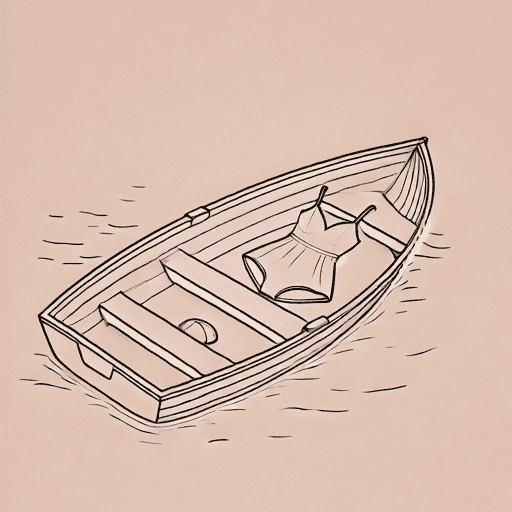
The Elements: A Novel
58 pages • 1-hour read
John BoyneThe Elements: A Novel
A modern alternative to SparkNotes and CliffsNotes, SuperSummary offers high-quality Study Guides with detailed chapter summaries and analysis of major themes, characters, and more.
Important Quotes
Content Warning: This section of the guide features sexual violence and harassment, rape, child sexual abuse, child abuse, death by suicide, child death, emotional abuse, physical abuse, antigay bias, bullying, suicidal ideation, and self-harm.
“Taking a glass off the shelf, I fill it and drink. I cannot remember when I last experienced such purity. I drink more and feel something inside me spring to life. I wonder, could a person get drunk on this water?”
(Part 1, Chapter 1, Page 4)
Throughout The Elements, John Boyne uses imagery of the elements to reflect the characters’ experiences. For Vanessa, water is often in competition in her mind between a symbol of death and destruction and of rebirth. In this excerpt, she feels water as a rejuvenating force. This is a stark difference from other moments, when she sees it as deadly.
“I am, I suppose, part of that last generation of Irish women who did not recognize that they had the right to a career outside the home, and the courage to demand one. I just took it for granted that, one day, I would meet a suitable man, marry, bear children, and live a standard middle-class existence. I didn’t expect or ask for more.”
(Part 1, Chapter 4, Page 27)
As Vanessa considers her role in the death of Emma and Brendan’s assaults of eight girls, she considers how her expectations contributed to her ignorance. She realizes that the vision of her life she once held kept her confined to that vision, not allowing her to expect any deviation and forcing her to protect it. She was so committed to the idea of being a good wife and mother, that she ignored warning signs about Brendan. This introduces the theme of Complicity and Enabling in Abuse.
“From above, the chorus of hissing from a group of mothers who would have tumbled into the dock to tear my husband limb from limb if they could, turning their fury on anyone who tried to stop them, their teeth bared, their fingers curled like claws.”
(Part 1, Chapter 5, Page 37)
Boyne uses descriptive language to create the imagery that women at Brendan’s trial are furious. By describing them in an animalistic sense, he amplifies their rage and suggests that their violence toward him would be severe and unending. With words like “hissing” and a simile comparing their fingers to claws, he demonstrates just how deep their anger is.
“I’m in the old pub, reading a novel, when Tim Devlin walks in. He stops and looks me up and down, as if I’m a car or a piece of livestock that he’s considering putting in an offer on, and I stare back, challenging his gaze, but neither of us says a word.”
(Part 1, Chapter 9, Page 65)
Vanessa is wary of the male gaze while on the island, and does her best to avoid Tim Devlin, whom she believes wants to speak with her. When she finds him staring, she compares his gaze to that of him evaluating something he would purchase. Boyne uses a simile comparing Vanessa to a car or livestock in Tim’s mind. This embodies the male gaze and the way in which so many men throughout the novel do not recognize women’s humanity.
“She drops the cup in the marram grass that protrudes from the sand, and the lid falls off, tea spilling out and darkening the sand like a spreading sin, before making her way hurriedly in the direction of the world.”
(Part 1, Chapter 10, Page 79)
When Evan’s mother rushes to see him, Vanessa watches his mother’s tea spill, and it reminds Vanessa of how Brendan’s sin stains everything around him. This introduces the theme of Trauma as a Transmissive Force, showing that the effects of abuse spread far beyond the original crime: Brendan’s actions led to Emma’s death, Vanessa’s isolation, and Rebecca’s estrangement.
“I held the phone away from my face and stared at it as if it was my mortal enemy, before trying to locate the button to end the call, but my vision had grown blurry now, and I couldn’t seem to find it.”
(Part 1, Chapter 12, Page 92)
Once again, a simile captures Vanessa’s state of mind. In this excerpt, she compares the phone in her hand to a mortal enemy because she already feels defensive. It is the first call she receives after Brendan’s arrest, and it is a reporter investigating the story. The prospect of others investigating her life and passing judgment threatens her perception of her husband and family, as well as positions her as culpable in Emma’s death.
“I dreamed that I dream about the musty gray soil of the island and the sweet perfume it emits after rainfall, a double remove from a place I will never visit again.”
(Part 2, Chapter 1, Page 121)
Just as Vanessa connects to water, Evan connects with the earth. Descriptive language creates a connection between Evan and the soil, showing how disconnected he is from home and who he wants to be. The soil haunts him, to the point that he dreams about dreaming about it. Boyne not only includes visual images, but other senses too, describing how the soil smells and feels to intensify the emotional effect.
“Robbie’s father is studying my parents in the way that wealthy, privileged English people often do whenever they’re confronted by Irish people with accents as thick as ours. They assume that we’re barely literate and will be astonished by the fact that the room is illuminated by electric lightbulbs.”
(Part 2, Chapter 3, Page 136)
When Robbie and Evan’s trial begins, their parents meet for the first time, and the differences in their families and upbringing become apparent. While Robbie is from a wealthy English family, the Keoghs are Irish and of a lower socioeconomic class. The judgement in Robbie’s father’s eyes demonstrate the prejudices he holds and characterizes the divide between them. The scene foreshadows Rafe’s Resistance to Taking Responsibility, as he soon approaches Evan to take the fall for Robbie.
“I wanted him to invite me to stay, to suggest that we watch the rest of the film together, for him to run his hands through my hair and put me to bed afterward in the spare room, to tuck me in. To be my father, to be my kind father. For me to be his obedient son.”
(Part 2, Chapter 4, Page 147)
Evan’s desire to stay with Rafe demonstrates the depth of his own issues with his father. His relationship with his own father makes him desperate to find a substitute—even an abusive one. The little kindness and care Rafe shows him draws Evan in, and Evan immediately looks to Rafe as a father figure. This makes Evan more vulnerable and defines the relationship they have, even during the trial.
“When the teams emerged from the tunnel and ran onto the pitch, they were greeted by deafening cheers, and I pressed myself close to Dad, but he pushed me away in annoyance. His team was playing The Enemy, and before a ball had even been kicked he let loose a string of obscenities against those players who dared to jog along the sidelines down beneath us.”
(Part 2, Chapter 8, Pages 178-179)
When Evan attends his first football match with his father, his father introduces him to the toxic masculinity that defines the sport and their lives. When Evan needs comfort, his father pushes him away, not wanting to provide it, likely seeing it as a sign of weakness. Additionally, Evan’s father shocks him with the obscenities he unleashes on the players, a new kind of violence to which Evan is not accustomed.
“I remember how the soil gave way beneath me as I lay back, and wishing it could suck me down into its warm embrace. I remember worms. I remember weeds. I remember the smell of the earth and the glimmer of the stars above me.”
(Part 2, Chapter 11, Page 209)
Once again, soil pervades Evan’s memories. When he remembers the night he kissed Cormac, he thinks of the soil around him and the smell of it. It is this moment that forges the connection in Evan between his misery and soil. Soil not only represents his unwilling attachment to football or his horrible homelife, but also Cormac’s betrayal, which led to his flight to England.
“I became a different boy than the one I was supposed to be. I wanted to be a painter. I wanted to be good. I wanted to love someone, and to be loved in return. But none of these ambitions came to be.”
(Part 2, Chapter 13, Page 222)
Like Vanessa, Evan obsesses over what could have been and mourns the person he wanted to be. Deeper than this is the desire to be loved, a means of correcting the pain inflicted by his father and Cormac. He wanted love in his life because he could not find it in his youth, and even as he grew into an adult, he suffered one rejection after another. This highlights the theme of trauma as a transmissive force because Evan loses empathy for others as a result of his abusive childhood and early adult life.
“The child is subdued, nursing a dummy in his mouth, his eyes half closed, barely alert. Soft, wounded whimpers escape him from time to time, like an animal caught in a trap who’s slowly losing the will to fight on.”
(Part 3, Chapter 2, Page 252)
This image evokes the helplessness of the child as well as explores Freya’s perception of the relationship between victim and assailant. She believes the child has no agency or ability escape and is therefore trapped, while more powerful people in its life control and abuse it.
“My frantic longing for water. The sound of the earth as they flung spadefuls down upon my improvised coffin. And my desperate need for air as I sucked what I could through the small breathing tube they had left me with. Only one of the four elements—fire—was missing that night, but its time would come.”
(Part 3, Chapter 4, Page 265)
When Freya is buried by Arthur and Pascoe, she recognizes how three of the four elements are present either around her or in her mind. She is under the earth with only a tenuous connection to air and thirsts for water. The absence of fire, and her hint that it will appear eventually, acts as foreshadowing for her eventual revenge for this moment of abuse.
“He steps closer to the car now, glancing around but remaining silent. He has surprisingly large brown eyes and long eyelashes that put me in mind of a fawn.”
(Part 3, Chapter 5, Page 273)
This description of Rufus emphasizes his innocence, comparing him to a fawn. The image of a baby deer, with trusting eyes and an unstable gait, establishes Rufus as a helpless victim that will defer to those around him. It also characterizes the relationship between him and Freya, with Rufus being the prey and Freya the predator.
“I notice that my left hand is tapping nervously on the armrest, and I force myself to remain still. I don’t want him to feel that he has any hold over me.”
(Part 3, Chapter 8, Page 303)
When George finds Freya and demands sex from her, Freya feels as though she’s losing control for the first time since she was 12 years old. In this moment, she reverts back to who she was the summer she was buried, the last time she felt as though she was not in control of what was happening around her. This represents her experience of trauma as a transmissive force.
“He didn’t reply, merely raised a hand in the air without looking back. Beth, on the other hand, wore a hopeful expression on her face. I found it surprising that she would address him in such a formal way. If they had slept together, as I assumed they had, then surely she could at least call him by his first name.”
(Part 3, Chapter 10, Page 318)
When Freya witnesses how her mother and Kitto Teague interact, she notices a power imbalance between the two. Even though they are intimate, Beth defers to Kitto, who does not seem to acknowledge her. It is a dynamic she is familiar with, as Arthur and Pascoe were dismissive of her needs, forcing her to submit to theirs. Even though Beth and Kitto are together consensually, his dismissiveness is a form of emotional abuse.
“He visits every summer for a month, just as I did with Beth when I was a child, but he tells me that she barely tolerates his presence, while his stepfather and step-siblings actively resent him.”
(Part 3, Chapter 11, Page 321)
When George reveals information about his family, Freya realizes that they are actually quite similar to each other. Like Freya, George has a fractured family and a mother who does not care about him. Whereas this could be a moment when Freya empathizes with George, she does not internalize the similarities, exemplifying resistance to taking responsibility for her actions.
“I do a little work on my laptop, answering a few emails and updating some events on my calendar as he stares at me in terror. His eyes are focused on mine, consumed by fear, but I do nothing to help him. As it happens, I become so involved with the case studies I’m reading that I don’t even notice when he dies.”
(Part 3, Chapter 14, Page 351)
This excerpt reveals the depths of Freya’s desire for power over her victims. After poisoning George, she occupies herself with something else so she doesn’t have to intervene and save him. She maintains her dismissiveness, not giving into his need for help, which makes her feel empowered. This represents the theme of trauma as a transmissive force because as a doctor, her duty is to help those who need medical attention. She disregards the Hippocratic Oath of “do no harm” to fulfill her need for revenge.
“Most parents are at their most protective when their children are infants, but I’m the opposite, having become increasingly vigilant since he turned fourteen a few months ago. I can’t help myself. I know the dangers out there for boys his age.”
(Part 4, Chapter 1, Page 363)
When Aaron considers why he is so protective of Emmet, he reveals how his trauma impacts him. When Freya assaulted him at the age of 14, she disrupted his life, making it difficult for him to grow emotionally past this point. Now, watching his son reach that same age and vulnerability takes Aaron back to his time of trauma.
“I nodded, looking around, uncertain what to do. Having missed out on all the rites of passage that train people how to behave in such moments, I felt absurdly anxious. In life, I was seen as a successful, confident young man. But emotionally, I was still a stunted fourteen-year-old boy.”
(Part 4, Chapter 3, Page 383)
Aaron is aware throughout The Elements that he struggles with his trauma and that his life is far different than people perceive it. He can maintain an outward appearance of being successful and well-adjusted, but inside, he is anxious, confused, and afraid. This passage reveals the depths to which some people can mask their trauma, making them seem much less vulnerable than they really are.
“He throws his head far back over the seat, staring up at the ceiling, remaining silent for a moment, as if he can’t quite comprehend the duplicity of adults. I know he’s telling himself that he’ll never be the same when he’s older. But he will. We all are.”
(Part 4, Chapter 7, Page 417)
The defining characteristic of Emmet is his inability to understand his parents. Though this is not uncommon for teenagers, his confusion is amplified by the secrets Rebecca and Aaron keep from him. Aaron can see that Emmet believes he will never resemble his parents or their behavior but he knows from experience that as life becomes more complicated, people can rationalize behavior they believe is wrong if they think they’re preventing a greater evil.
“Somewhere at the back of my mind, an idea started to suggest itself to me, but like a ship lost at sea on a dark night, it was still partly hidden by fog.”
(Part 4, Chapter 8, Page 431)
In this excerpt, Aaron struggles to understand who Brendan is and describes his confusion as that of a ship lost on a foggy night. This creates the impression that external conditions are keeping him from understanding Brendan because he does not yet have all the information he needs. The passage foreshadows Rebecca’s ability to shed light on the situation.
“I see Emmet visibly spring to life, like a wilting flower, when he’s close to water again.”
(Part 4, Chapter 11, Page 457)
Unlike Aaron, who fears the water, Emmet loves it. This simile creates an image of rebirth and an association with water as a life-giving force. It ties the narrative back to the first novella, Water, which represents the root of the pain damaging Aaron’s relationship with Emmet and Rebecca. This highlights the theme of trauma as a transmissive force as the events that took place decades ago still affect them.
“I think about my conversation with Rebecca from earlier and know how right she was. Freya Petrus stole so much of my life, and I simply can’t allow her to lay claim to another minute. I refuse to be her victim any longer; I want to be her survivor. But how?”
(Part 4, Chapter 12, Page 479)
Aaron finally acknowledges that he is ready to start the next phase of his life when he accepts what happened to him. This highlights the theme of resistance to taking responsibility. Usually characters resist taking responsibility for their crimes, but Aaron has resisted taking responsibility for his healing. Though he always knew he was a victim, he did not fully embrace that identity, preventing him from becoming a survivor. Now, he knows that he has to fully confront the damage he’s suffered if he wants to release himself from Freya’s control.

Unlock every key quote and its meaning
Get 25 quotes with page numbers and clear analysis to help you reference, write, and discuss with confidence.
- Cite quotes accurately with exact page numbers
- Understand what each quote really means
- Strengthen your analysis in essays or discussions