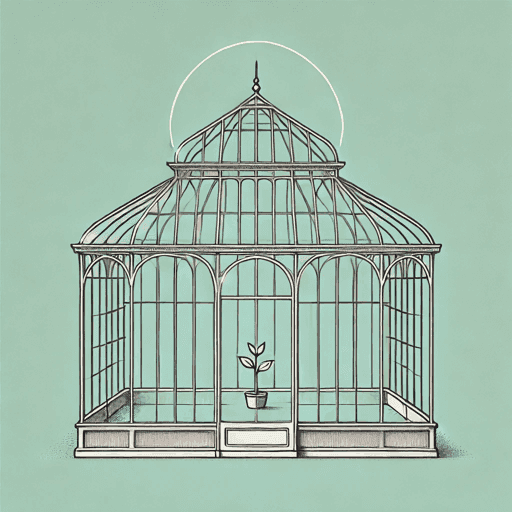
The Enchanted Greenhouse
50 pages • 1-hour read
Sarah Beth DurstThe Enchanted Greenhouse
A modern alternative to SparkNotes and CliffsNotes, SuperSummary offers high-quality Study Guides with detailed chapter summaries and analysis of major themes, characters, and more.
Background
Series Context: The Spellshop Series
Although The Enchanted Greenhouse is not a direct sequel, it takes place in the world of the Crescent Islands that Durst created in The Spellshop (2024). The series’s first installment establishes many worldbuilding details that influence the second book. For example, The Spellshop’s protagonist, Kiela, works at the Great Library of Alyssium and lives through the revolution in the capital and the library’s subsequent destruction, which occur while Terlu is a statue. Because Durst’s novels belong to the cozy fantasy subgenre rather than to epic fantasy, they are less concerned with cataclysmic events like the rise and fall of empires and instead focus on the everyday circumstances of working-class people. For example, the poverty and natural disasters that afflict the people of Caltrey in The Spellshop are the direct result of the emperor’s hoarding of magic. These sociopolitical factors contribute to the migration of refugees from Alyssium to Belde in the sequel.
The parallels between the novels’ main characters and themes resonate with “cottagecore” fiction’s emphasis on tranquility and nature. Kiela and Terlu both work in the Great Library of Alyssium and leave the bustling capital city for a rural setting. The theme of Second Chances and the Search for Redemption figures prominently throughout the series. Kiela and Terlu experience symbolic rebirths, find healing in their new homes, and are able to help others in return. Nature plays an important role in Durst’s examination of restoration and new beginnings, such as when Kiela tends to sick trees and merhorses and when Terlu revives Lotti and the other sentient plants. In another parallel, finding love plays an important role in the protagonists’ personal growth and healing processes. As examples of “cottagecore” fiction and “cozy romantasy,” the novels utilize their close-knit island settings and love stories to express the importance of connection and community.
The character of Caz helps to unite the two books, and each presents different aspects of his journey. The sentient spider plant is one of the most important supporting characters in The Spellshop, which relates how he finds happiness and friendship alongside Kiela on Caltrey. The first book mentions that the librarian who brought him to life was turned into a statue as punishment and implies that she perished during the revolution. Durst saw the sequel as an opportunity to right these injustices:
[T]he one thread that runs through every single story I’ve ever written is hope. When I wrote The Spellshop, there was one character whom I’d left without hope: Terlu [….] I wrote The Enchanted Greenhouse because I believe that everyone deserves hope and love and friendship and second chances and magic in their lives (373).
Although Caz appears only briefly in the sequel, he has a profound influence on the story.
Terlu’s condemnation for granting Caz sentience is The Enchanted Greenhouse’s inciting incident, and her proven skill with botanical magic leads Rijes to send her to Belde. Near the end of the story, Terlu receives a spellbook penned by Caz and Kiela, which helps her to find closure with her past and reaffirms the rightness of her decisions. With The Enchanted Greenhouse, Durst continues her cozy fantasy series in a way that aligns with her personal ethos as a storyteller and The Spellshop’s gentle worldview that centers compassion, belonging, and forgiveness.

Unlock all 50 pages of this Study Guide
Get in-depth, chapter-by-chapter summaries and analysis from our literary experts.
- Grasp challenging concepts with clear, comprehensive explanations
- Revisit key plot points and ideas without rereading the book
- Share impressive insights in classes and book clubs