The Enchanted Greenhouse
50 pages • 1-hour read
Sarah Beth DurstThe Enchanted Greenhouse
A modern alternative to SparkNotes and CliffsNotes, SuperSummary offers high-quality Study Guides with detailed chapter summaries and analysis of major themes, characters, and more.
Symbols & Motifs
The Enchanted Greenhouse of Belde
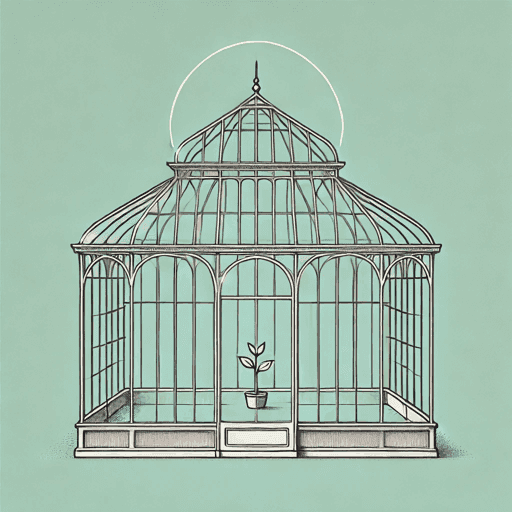
The enchanted greenhouse is the novel’s namesake, its primary setting, and a motif of the theme of Escaping Isolation Through Empathy. From its creation, the structure is associated with isolation because Laiken built the greenhouse in an unsuccessful attempt to distract his ailing daughter from her dreams of exploring the world. After Ria’s departure and death, the remote island of Belde, which was once “almost […] a village” (143), became even more secluded as Laiken isolated himself and drove most of Yarrow’s family away. One of the novel’s plot twists and a key development for the theme is the revelation that the sorcerer is responsible for the destruction afflicting his creation: “[The spell] was supposed to isolate the entire greenhouse from the rest of the world. He thought it was the only way his creations could be safe—if they were severed from everyone else. Alone” (311). By making Laiken’s final spell go disastrously awry, Durst emphasizes that severing oneself from the outside world is damaging even though it might seem safer at times. In contrast, Terlu and Yarrow demonstrate that empathy is the cure for isolation by reviving the dormant plants, welcoming back Yarrow’s displaced family and opening the island to other refugees. Laiken’s efforts to isolate his creation nearly turn the wondrous complex into “a graveyard” (244). However, Terlu and Yarrow’s compassion for their fellow living creatures remakes it into a sanctuary for both plants and humans, and the greenhouse’s restoration illustrates how connection can transform people’s lives as well.
Enchanted Sleep
Many characters in The Enchanted Greenhouse experience isolation for reasons ranging from their own fear to others’ cruelty, and the protagonist and several supporting characters are subjected to the severest seclusion possible when they are magically cast into suspended animation. Enchanted sleep is a common plot device in fantasy and fairy tales, and this convention can depict the damaging effects of isolation and people’s need for empathy. The judge who presides over Terlu’s case condemns her to be turned into a statue because he sees her not as a person who deserves compassion but as an opportunity to deliver a grim warning to “all librarians, scholars, and patrons who might be tempted to defy the law” (5). Terlu spends her sentence trapped in a solitary state, and her dreams make her longing for connection painfully clear: “In her favorite dream, […] there were people all around her, voices and laughter that were the most beautiful music” (8). Later in the novel, the motif reappears through Lotti and the other sentient plants who have gone dormant due to Laiken’s misguided efforts to protect them. Dendy describes their decades of slumber as “a living death” (137), reiterating the damaging effects of loneliness. In a testament to Terlu’s empathy, she sees the parallels between her own trauma and the plants’ situation and awakens them despite the risks of working magic. The motif of enchanted sleep shows that people must be empathetic and in community with others to be fully alive.
Honey Cakes
Baking is frequently featured in “cottagecore” subculture and stories, which prize self-sufficiency and creature comforts. Durst’s cozy fantasy novel presents many homemade delicacies, the most significant being the honey cakes that symbolize Yarrow’s care. The “thick slice of honey cake” that Yarrow sets out for Terlu’s breakfast in Chapter 5 is one of the first acts of kindness that she has received in years (38), and the narration makes it clear that the cake is special not only because of its delectable taste but also because of the emotional warmth it conveys: “She took a bite—it was perfection: vanilla and honey and lightness. It tasted like sunrise, and all of a sudden she didn’t mind that she was alone. She didn’t feel alone anymore” (40). The reserved gardener prefers to express his emotions through actions rather than words, and baking helps him do so. For example, he shows that he loves his family despite his mixed feelings about their return by making batches of honey cakes for them each day. Near the end of the novel, the author reinforces the symbolic significance of Yarrow’s baking when Terlu realizes that he’s been trying to prove that he cares about her and that she isn’t alone anymore “with every honey cake he’d baked, every greenhouse he’d shared with her, every afternoon he’d spent with her experimenting with spells” (334). Honey cakes support the novel’s cozy, “cottagecore” genre and develop Yarrow’s reticent but sweet and loving character.

Unlock the meaning behind every key symbol & motif
See how recurring imagery, objects, and ideas shape the narrative.
- Explore how the author builds meaning through symbolism
- Understand what symbols & motifs represent in the text
- Connect recurring ideas to themes, characters, and events